
Parsun F50/F60 päramootori hooldusjuhend
Sisukord
- Lahtivõtmise skeem (D/T mudel)
- Lahtivõtmise skeem (CD/CT mudel)
- Lahtivõtmine ja kontroll
- Sõukruvivõll ja siduriplokk
- Nukksiduri paigaldamine
- Alumise korpuse üksuse korpuse kaas
- Edasikäigu hammasratta laager
- Alumise korpuse üksuse korpuse kontroll
- Veetoru kontroll
- Alumise üksuse korpuse kokkupanek
- Alumise korpuse üksuse paigaldamine
- Levinud rikked ja lahendused
Ülevaade
Tunnusmärgised
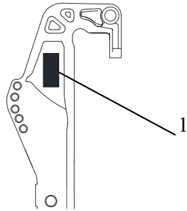
Päramootori seerianumber on trükitud sildile, mis on kinnitatud kinnitusklambri vasakule küljele või pöördklambri ülaosale. Seerianumber on märgitud sildi tühjale alale, et hõlbustada varuosade tellimist edasimüüjalt või kasutada seda viitena mootori varguse korral.
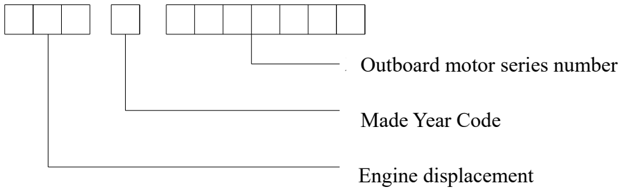
- Päramootori seerianumber SN
SN tähistab järgmist:
Sõukruvi valik
Sõukruvi valik mõjutab oluliselt päramootori jõudlust. Sobimatu sõukruvi võib mootorit kahjustada. Suure koormusega sõites töötab mootor pikka aega madalatel pööretel.
Sel juhul tuleb valida väiksema sammuga sõukruvi, vastupidisel juhul tuleb valida suurem samm.
Suurem sõukruvi mootori normaalse töö säilitamiseks.
Kui mootor töötab täisgaasiga, lähtuge sobivaima sõukruvi valikul mootori pöörlemiskiirusest ja kütusetõhususest. Nii saab sõukruvi tagada suurima jõudluse.
| Mudel | Sõukruvi mõõtmed | Materjal |
|---|---|---|
| C/D mudel Ülekandearv: 1.85:1 Käigukasti maht:430cc | 3-11 " 8 3 ×12" | Alumiiniumisulam |
| C/D mudel Ülekandearv: 1.85:1 Käigukasti maht:430cc | 3-11 " 8 1 ×13" | Alumiiniumisulam |
| CD/CT mudel Ülekandearv: 2.0:1 Käigukasti maht:610cc | 3-13 " 4 1 ×17" | Alumiiniumisulam |
| CD/CT mudel Ülekandearv: 2.0:1 Käigukasti maht:610cc | 3-13 " 8 5 ×13" | Alumiiniumisulam |
Kaitsemeetmed töö ajal
Hoolduse ajal ohtude ja õnnetuste vältimiseks ning töö kvaliteedi parandamiseks järgige järgmisi ohutusnõudeid.
- Tuleohutus
Bensiin ning mitmesugused määrdeõlid ja määrded on väga tuleohtlikud. Hoidke neid töötamisel eemal soojusallikatest, sädemetest ja lahtisest tulest.
- Ventilatsioon. Bensiiniaur ja mootori heitgaasid on väga mürgised. Nende rohke sissehingamine võib

põhjustada šokki ja isegi surma. Tagage mootori katsetamisel ja seadistamisel siseruumis hea ventilatsioon.
- Isikukaitse
Kandke puurimisel, lihvimisel või õhukompressori kasutamisel kaitseprille. Vajaduse korral kandke kaitsekindaid ja turvajalatseid.
- Määrdeainete ja hermeetikute kasutamine
Päramootorite hooldamisel ja remontimisel tohib kasutada ainult Parsuni tarnitud või soovitatud tooteid.
Tavatingimustes ei kahjusta juhendis nimetatud määrdeained nahka. Ohtude vähendamiseks võtke siiski enne kasutamist kaitsemeetmed.
○ 1 Kandke enne päramootori kapitaalremonti mõlemale käele kaitsekreemi.
○ 2 Kui riided määrduvad määrdeainega, vahetage ja puhastage need võimalikult kiiresti.
○ 3 Vältige kokkupuudet nahaga.
○ 4 Pärast määrdeaine puudutamist peske käsi ja nahka hoolikalt seebi ning kuuma veega.
○ 5 Pühkige mahavoolanud määre puhta ebemevaba lapiga.
- Heade tööharjumuste kujundamine
○ 1 Pingutage mutreid, polte ja kruvisid ettenähtud momendiga keskelt väljapoole ning suurematest väiksemateni.
○ 2 Kasutage soovitatud eritööriistu, et vältida detailide kahjustamist. Kasutage õigeid tööriistu õigesti.
Lahtivõtmine ja kokkupanek
Päramootori lahtivõtmisel ja kokkupanekul järgige järgmisi põhimõtteid:
- Kasutage detailide lahtivõtmisel ja kokkupanekul eritööriistu.
- Eemaldage enne detailide lahtivõtmist tolm ja mustus.
- Kandke enne kokkupanekut liikuvate detailide kontaktpindadele mootoriõli.
- Paigaldage laager nii, et tootja märgistus oleks ettenähtud suunas, ning määrige see täielikult.
- Enne paigaldamist kandke õlitihendi väljaulatuvale osale ja ümbermõõdule õhuke kiht veekindlat määrdeõli;
- Kontrollige pärast kokkupanekut, kas liikuvad detailid töötavad korralikult.
Ühekordselt kasutatavad osad
Tihendid, õlitihendid, O-rõngad, splindid ja vedrurõngad on ühekordselt kasutatavad detailid ning need tuleb päramootori uuesti kokkupanemisel asendada.
Kontroll enne üleandmist
Toodete normaalse kasutamise tagamiseks klientide poolt tehke enne üleandmist järgmised kontrollid.
- Kontrollige kütusesüsteemi.
Kontrollige, et kütusevoolik oleks kindlalt ühendatud ja kütusepaak täis.
Tähelepanu:
See on neljataktiline mootor ja eelsegatud kütust ei tohi kasutada.
- Kontrollige õlitaset.
- 1 Kontrollige mootoriõli taset.
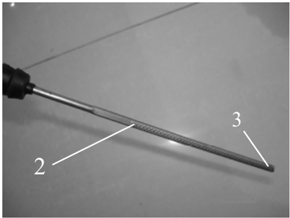
Tõmmake õlivarras välja ja vaadake sellelt õlitaset.
- Õlivarras 2. Ülemise taseme märgis 3. Alumise taseme märgis
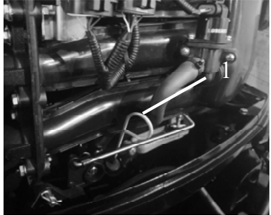
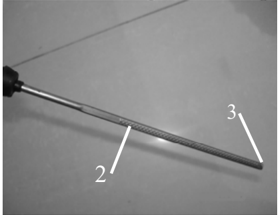
Veenduge, et õlitase oleks ülemise ja alumise märgise vahel. Kui tase on ülemisest märgisest kõrgem, laske õli välja; kui see on alumisest madalam, lisage õli.
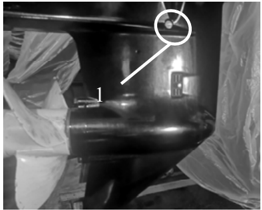
○ 2 Kontrollige käigukastiõli taset
Keerake õlitaseme ava kork lahti ja vaadake, kas õli voolab avast välja.
Kui jah, paigaldage õlitaseme ava kork ja pingutage ettenähtud momendiga. Kui mitte, lisage õli.
1.Õlitaseme ava kork
- Kontrollige roolisüsteemi. Kontrollige, kas rool liigub sujuvalt;
- Kontrollige käiguvahetuse ja gaasi tööd. Kontrollige käiguvahetuse sujuvust ning seda, kas gaasikäepide
liigub sujuvalt täiesti suletud asendist täiesti avatud asendisse.
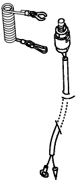
- Kontrollige hädaseiskamislüliti koostu.
Kontrollige, kas mootor seiskub hädaseiskamislüliti koostu vajutamisel või mootori seiskamise turvanööri väljatõmbamisel.
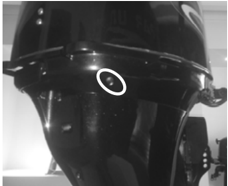
- Kontrollige jahutusvee kontrollava. Kontrollige töötava mootori korral, kas jahutusvesi
voolab jahutusvee kontrollavast välja.
- Jahutusvee kontrollava
- Sissetöötamine.
- ① 1. tund: käitage mootorit 2000 rpm juures või umbes poole gaasiga.
- ② 2. tund: käitage mootorit 3000 rpm juures või umbes 3/4 gaasiga.
- ③ Järgmised 8 tundi: vältige mootori töötamist täisgaasiga 5 järjestikuse minuti jooksul.
- Kontroll pärast sissetöötamist
- ① Kontrollige, kas reduktoriõlis on vett.
- ② Kontrollige kütusetorustikku lekete suhtes.
- ③ Pärast sissetöötamist käitage mootorit tühikäigul ja loputage jahutusvee kanalit loputustööriistade abil puhta mageveega.
- Pärast sissetöötamist kontrollige mootori tühikäigukiirust.
- ① Soojendage mootorit 5 minutit.
- ② Mõõtke mootori tühikäigupöördeid tahhomeetriga.
Kui need ei vasta ettenähtud väärtusele, reguleerige vastavalt. Tühikäiguväärtus: 750 ~ 850rpm.
- ③ Pöörake gaasi piirdekruvi päri- või vastupäeva kuni ettenähtud tühikäigupööreteni.
- ④ Pärast tühikäigu reguleerimist suurendage mitu korda pöördeid, et kontrollida mootori stabiilsust.
Tähelepanu:
Tühikäiku peab reguleerima kvalifitseeritud hoolduspersonal professionaalsete seadmetega. Juhuslik reguleerimine võib põhjustada käivitusraskusi, jõuetust, vibratsiooni ja muid mootoririkkeid.
Eritööriistad ja katsetusseadmed
Päramootorite remondil ja hooldusel kasutatakse mitmesuguseid eritööriistu ja katseseadmeid. Nende oskuslik ja õige kasutamine parandab töö tõhusust ning aitab vältida inimeste vigastusi ja päramootorite kahjustusi. Eritööriistad:
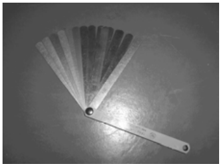
Lehtkaliiber Kolvirõngaste kokkusurumisrakis Hoorattahoidik ja hoorattatõmmits
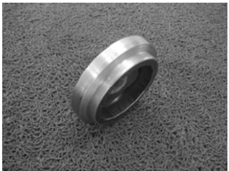
Õlifiltrivõti Laagritõmmits Klapivedru kokkusurumise tööriistakomplekt
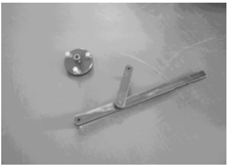
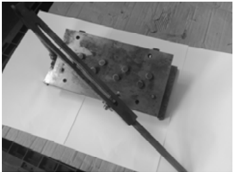
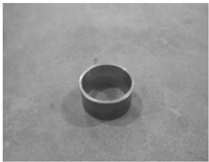
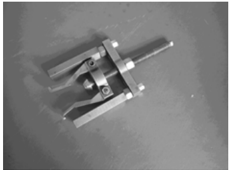
Laagri paigaldustööriist, õlitihendi paigaldustööriist, nõellaagri paigaldustööriist, alumine üksus, alumine üksus, alumine üksus
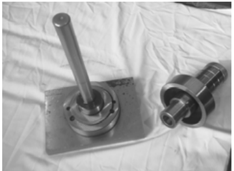
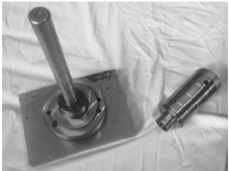
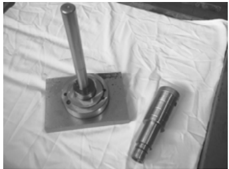
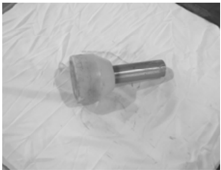
Korpuse kaane tööriist, nõellaagri tööriist, veovõlli laager
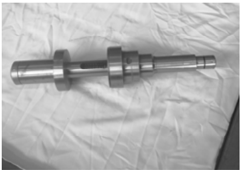
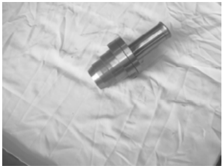
Veovõlli laagri paigaldustööriist, veovõlli pesa õlitihendi paigalduskomplekt, edasikäigu hammasratta laagri paigaldustööriistade komplekt
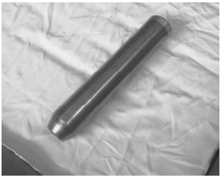
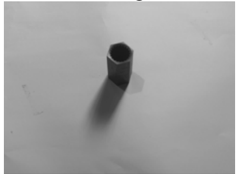
Alumine üksus, alumise üksuse kaane paigaldustööriist
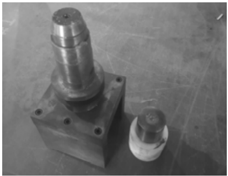
Veovõlli nuuthülss, väikehammasratta mutri võti
Katsetusseadmed:
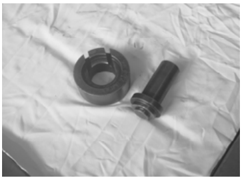
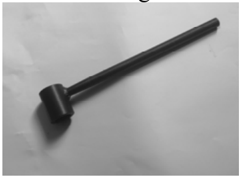
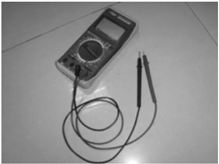
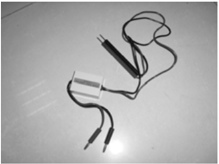
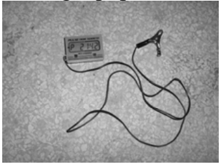
Digitaalne tahhomeeter Digitaalne multimeeter Tipp-pingeadapter
Lahtivõtmise skeem ja sümbolite kirjeldus
Lahtivõtmise skeemi kirjeldus
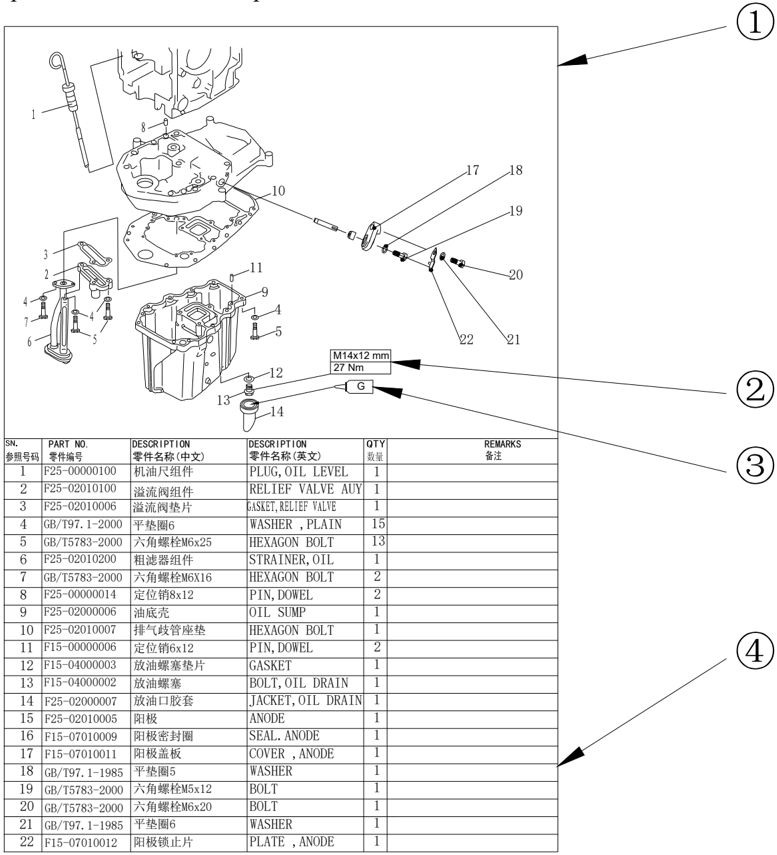
- 1 Detailide lahtivõtmise skeem.
- 2 Keerme spetsifikatsioon ja ettenähtud pingutusmoment.
- 3 Õli, hermeetiku või keermelukusti pealekandmise koht.
- 4 Detailide loend
Sümbolite kirjeldus
O
G
L
1277
L
1243
GM
Kandke mootoriõli
Kandke veekindlat määret
Kandke keermelukustit 1277
Kandke keermelukustit 1243
Kandke hermeetikut

Tehnilised andmed
Päramootori parameetrid
| Kategooria | Tehniline näitaja | Üksikasjad | Väärtus | Kategooria | Tehniline näitaja | Väärtus |
|---|---|---|---|---|---|---|
| Mõõtmed | Kogupikkus (BE/FE) | Kogupikkus (BE/FE) | 1383/713mm | Mootor | Süüteküünal | DPR7EA-9 (NGK)) |
| Mõõtmed | Üldlaius | Üldlaius | 427mm | Mootor | Jahutussüsteem | Vesijahutus |
| Mõõtmed | Üldkõrgus | D/T | 1435mm | Mootor | Väljalaskesüsteem | Läbi sõukruvi rummu |
| Mõõtmed | CD/CT | 1476mm | Mootor | Määrimissüsteem | Survemäärimine | |
| Mõõtmed | Ahtripeegli kõrgus | Ahtripeegli kõrgus | 508mm | Kütuse tüüp | Tavaline pliivaba bensiin | |
| BEL-D/BEL-CD | BEL-D/BEL-CD | 113 kg/126.5 kg | Kütuse klass | PON86 | ||
| BEL-T/BEL-CT | BEL-T/BEL-CT | 114.5 kg/128 kg | Mootoriõli tüüp | Neljataktilise mootori õli | ||
| FEL-T/FEL-CT | FEL-T/FEL-CT | 113.5 kg/127 kg | Mootoriõli klass API SAE | SE, SF, SG, SH, SJ | ||
| Jõudlus | Maksimaalne võimsus | F50 | 36.8Kw@5500 r/min | Mootoriõli klass API SAE | 10W30, 10W40 | |
| Jõudlus | Maksimaalne võimsus | F60 | 44.1Kw@5500 r/min | Mootoriõli kogus | 2.2L (filtri vahetamisel) | |
| Jõudlus | Töövahemik täisgaasil | Töövahemik täisgaasil | 5000 ~ 6000 r/min | Mootoriõli kogus | 2.0L (filtrit vahetamata) | |
| Jõudlus | Maksimaalne kütusekulu | F50 | 18.5 L/h@6000 r/min | Käigukastiõli tüüp | Hüpoidülekande õli | |
| Jõudlus | Maksimaalne kütusekulu | F60 | 20 L/h@6000 r/min | Käigukastiõli klass API | GL-4 | |
| Jõudlus | Tühikäik (neutraal) | Tühikäik (neutraal) | 800±50 r/min | SAE | 90 | |
| Mootor | Mootori tüüp | Mootori tüüp | Neljataktiline ridamootor, ülanukkvõll | Käigukastiõli tase D/T CD/CT | 0.43L | |
| Mootor | Silindrite arv | Silindrite arv | 4 | Käigukastiõli tase D/T CD/CT | 0.61L | |
| Mootor | Töömaht | Töömaht | 996 cm³ | Kronstein | Üleskallutusnurk | 69° |
| Mootor | Silindri läbimõõt×Kolvikäik | Silindri läbimõõt×Kolvikäik | 65 mm×75mm | Kronstein | Pöördenurk | 40°+40° |
| Mootor | Surveaste | Surveaste | 9.3 | Kronstein | Trimminurk | -4° ~ 20° (kui ahtripeegel on 12°) |
| Mootor | Kütuse etteandeviis | Kütuse etteandeviis | Elektrooniliselt juhitav kütuse sissepritse | Ajamiüksus | Hammasülekanne | F-N-R |
| Mootor | Juhtimisviis | BE | Juhtkäepide | Ajamiüksus | Ülekandearv D/T | 2.08 |
| Mootor | Juhtimisviis | FE | Kaugjuhtimine | Ajamiüksus | CD/CT | 2.0 |
| Mootor | Käivitusviis | Käivitusviis | Elektriline käivitus | Ajamiüksus | Ülekande tüüp | Spiraalhambumisega koonushammasratas |
| Mootor | Süütesüsteem | Süütesüsteem | ECU | Ajamiüksus | Siduri tüüp | Nukksidur |
| Mootor | Süüteajastus | TDC | 2°±0.5° | Ajamiüksus | Sõukruvivõlli tüüp | Nuudid |
| Mootor | Süüteajastus | BTDC | 25°±0.5° | Ajamiüksus | Sõukruvi pöörlemissuund | Päripäeva (tagantvaates) |
Remondiinfo
Mootor
| Kategooria | Nimetus | Üksikasjad | Andmed | Kategooria | Nimetus | Üksikasjad | Andmed |
|---|---|---|---|---|---|---|---|
| Minimaalne surverõhk | Minimaalne surverõhk | 840 kPa | Kolvi läbimõõt | Kolvi läbimõõt | Kolvi läbimõõt | 64.950~64.965mm 5mm (kolvi | |
| Määrdeõli rõhk | Määrdeõli rõhk | 100 kPa | Mõõtepunkti kõrgus | Mõõtepunkti kõrgus | Mõõtepunkti kõrgus | alumisest osast) | |
| Kõveruse piir | Kõveruse piir | 0.03mm | Kolvi ja silindri vaheline lõtk | Kolvi ja silindri vaheline lõtk | Kolvi ja silindri vaheline lõtk | 0.035~0.065mm | |
| Nukkvõlli ava siseläbimõõt | Nukkvõlli ava siseläbimõõt | 37.00~37.02mm | Kolvisõrme ava läbimõõt | Kolvisõrme ava läbimõõt | Kolvisõrme ava läbimõõt | 15.974~15.985mm | |
| Nookuri võlliava siseläbimõõt | Nookuri võlliava siseläbimõõt | 16.000~16.01mm | Kolvisõrme välisläbimõõt | Kolvisõrme välisläbimõõt | Kolvisõrme välisläbimõõt | 15.965~15.970mm | |
| Silindri läbimõõt | Silindri läbimõõt | 65.00~65.013mm | Kolvirõngas | Ülemine rõngas | Paksus | 1.17~1.19mm | |
| Kulumispiir | Kulumispiir | 65.1mm | Kolvirõngas | Ülemine rõngas | Otsapinna laius | 2.25~2.4mm | |
| Koonilisuse piir | Koonilisuse piir | 0.08mm | Kolvirõngas | Ülemine rõngas | Otsavahe | 0.15~0.30mm | |
| Ümaruse piirväärtus | Ümaruse piirväärtus | 0.05mm | Kolvirõngas | Hambalõtk | Hambalõtk | 0.02~0.06mm | |
| Teine rõngas | Paksus | 1.47~1.49mm | Vaba pikkus | Vaba pikkus | 40.0mm | ||
| Teine rõngas | Otsapinna laius | 2.60~2.80mm | Minimaalne vaba pikkus | Minimaalne vaba pikkus | 38.4mm | ||
| Teine rõngas | Otsavahe | 0.30~0.50mm | Kalde piir | Kalde piir | 1.7mm | ||
| Teine rõngas | Hambalõtk | 0.02~0.06mm | Väikese silma siseläbimõõt | Väikese silma siseläbimõõt | 15.985~15.998mm | ||
| Õlirõngas | Paksus | 2.36~2.48mm | Suure silma siseläbimõõt | Suure silma siseläbimõõt | 36.000~36.016mm | ||
| Õlirõngas | Otsapinna laius | 2.75mm | Suure silma õlilõtk | Suure silma õlilõtk | 0.020~0.052mm | ||
| Õlirõngas | Otsavahe | 0.20~0.70mm | Suure silma paksus | A must | 1.496~1.490mm | ||
| Õlirõngas | Hambalõtk | 0.04~0.18mm | Suure silma paksus | B pruun | 1.490~1.484mm | ||
| Kõrgus | Sisselaskenukk | 30.83~31.03mm | Tüüp | Tüüp | Tsükloidpump | ||
| Kõrgus | Väljalaskenukk | 30.83~31.03mm | Rõhuvabastusklapi avanemisrõhk | Rõhuvabastusklapi avanemisrõhk | 382~442 kPa | ||
| Põhiringi läbimõõt | Põhiringi läbimõõt | 25.90~26.10mm | Välisrootori ja korpuse lõtk | Välisrootori ja korpuse lõtk | 0.09~0.15mm | ||
| Laagrikaela läbimõõt | Laagrikaela läbimõõt | 36.935~36.955 mm | Välisrootori ja sisemise rootori lõtk | Välisrootori ja sisemise rootori lõtk | 0.12mm | ||
| Ümaruse piirväärtus | Ümaruse piirväärtus | 0.03mm | Rootori ja kaane lõtk | Rootori ja kaane lõtk | 0.03~0.08mm | ||
| Laagrikaela õlilõtk | Laagrikaela õlilõtk | 0.045~0.085mm | Väntvõlli pealaagrikaela läbimõõt | Väntvõlli pealaagrikaela läbimõõt | 42.984~43.000 mm | ||
| Klapilõtk (külmalt) | Sisselaskeklapp | 0.15~0.25mm | Väntkaela läbimõõt | Väntkaela läbimõõt | 32.984~33.000 mm | ||
| Klapilõtk (külmalt) | Väljalaskeklapp | 0.25~0.35mm | Väntkaela laius | Väntkaela laius | 21.00~21.07mm | ||
| Klapi koonuspinna laius | Sisselaskeklapp | 1.84~2.97mm | Väntvõlli suure silma külglõtk | Väntvõlli suure silma külglõtk | 0.05~0.22mm | ||
| Klapi koonuspinna laius | Väljalaskeklapp | 1.98~3.11mm | Ümaruse piirväärtus | Ümaruse piirväärtus | 0.05mm | ||
| Pesaga kontaktpinna laius | Sisselaskeklapp | 0.9~1.1mm | Avanemistemperatuur | Avanemistemperatuur | 58~62ºC | ||
| Sisselaskeklapp | 0.8mm | Täieliku avanemise temperatuur | Täieliku avanemise temperatuur | 70ºC | |||
| Serva paksus | Väljalaskeklapp | 0.9mm | Klapi minimaalne avanemiskõrgus | Klapi minimaalne avanemiskõrgus | 3mm | ||
| Klapitaldriku läbimõõt | Sisselaskeklapp | 31.9~32.1mm | Töömaht | Töömaht | 70 L@6000 r/min | ||
| Väljalaskeklapp | 25.9~26.1mm | Rõhk | Rõhk | 49kPa | |||
| Sisselaskeklapp | 5.475~5.490mm | Pumbakolvi käik | Pumbakolvi käik | 5.85~9.65mm | |||
| Sääre läbimõõt | Väljalaskeklapp | 5.460~5.475mm | Väntvõlli pealaagrikaela siseläbimõõt | Väntvõlli pealaagrikaela siseläbimõõt | 46.000~46.024mm | ||
| Juhiku siseläbimõõt | Juhiku siseläbimõõt | 5.500~5.512mm | Väntvõlli pealaagrikaela õlilõtk | Väntvõlli pealaagrikaela õlilõtk | 0.012~0.044mm | ||
| Juhiku ja klapisääre lõtk | Juhiku ja klapisääre lõtk | 0.025~0.052mm | Väntvõlli laagriliua paksus | A must | 1.500~1.494mm | ||
| Klapisääre ümaruse piir | Klapisääre ümaruse piir | 0.03mm | Väntvõlli laagriliua paksus | B pruun | 1.494~1.488mm |
Mõõtmistingimused:
Ümbritseva õhu temperatuur 20 ℃.
- Andmed on ainult informatiivsed
Alumise korpuse paigaldus
| Kategooria | Nimetus | Andmed | Nimetus | Andmed |
|---|---|---|---|---|
| Hambalõtk | Väikehammasratta ja sirghammasratta vahe | 0.18~0.54mm | Valitav hammasratta reguleerimisseib | 0.10,0.12,0.15,0.18, 0.30,0.40,0.50 mm |
| Hambalõtk | Väikese hammasratta ja tagasikäigu hammasratta vahel | 0.71 ~ 1.07mm | Valitav hammasratta reguleerimisseib |
Elektrisüsteem
Süüte- ja süütejuhtimissüsteem
| Kategooria | Nimetus | Andmed | Kategooria | Nimetus | Andmed |
|---|---|---|---|---|---|
| Süüteajastus | Tühikäigul | TDC 2º±0.5° | Magneeto takistus (roheline-roheline) | Magneeto takistus (roheline-roheline) | 0.59±0.1Ω |
| Süüteajastus | Valikuline hammasratta täiteplaat | BTDC 25°±0.5º | Elektroonilise süüteseadme väljundi tipupinge Alaldi-regulaator | Sekundaarne väljundpinge | ≥ 34KV |
| Süüteküünla elektroodide vahe | Süüteküünla elektroodide vahe | 0.8~0.9mm | Elektroonilise süüteseadme väljundi tipupinge Alaldi-regulaator | Primaarmähise takistus | 2.2±0.22Ω |
| Päästikpool | Tipupinge | ≥13 V@1000 r/min | Elektroonilise süüteseadme väljundi tipupinge Alaldi-regulaator | Sekundaarmähise takistus | 9.84±0.98KΩ |
| Päästikpool | Takistus* | 260 ~ 290 Ω | Väljundi tipupinge voltmeeter | 1500 r/min (koormuseta) | 41.9V |
| Magneeto väljundi tipupinge | 1500 r/min (koormuseta) | 47.2V | Väljundi tipupinge voltmeeter | 3500 r/min (koormuseta) | 99.8V |
| Magneeto väljundi tipupinge | 3500 r/min (koormuseta) | 106V |
Pingutusmoment
Ettenähtud pingutusmoment:
| Asukoht | Üksikasjad | Nimetus | Keerme andmed | Pingutusmoment |
|---|---|---|---|---|
| Süüteküünal | - | - | - | 18 Nm |
| Hooratas | - | Mutter | M20 | 160 Nm |
| Silindripea | 1. pingutamine | Polt | M9 | 23 Nm |
| Silindripea | 2. pingutamine | Polt | M9 | 47 Nm |
| Silindripea | 1. pingutamine | Polt | M6 | 6 Nm |
| Silindripea | 2. pingutamine | Polt | M6 | 12 Nm |
| Õlifilter | - | - | - | 18 Nm |
| Õlifiltri tikkpolt | - | - | - | 40 Nm |
| Lukustusmutter (nookur) | - | Mutter | M6x0.75 | 14 Nm |
| Mootori koost | - | Polt | M8 | 21 Nm |
| Väljalaskekatte plaat | 1. pingutamine | Polt | M6 | 6 Nm |
| Väljalaskekatte plaat | 2. pingutamine | Polt | M6 | 12 Nm |
| Termostaadi kaas | - | Polt | M6 | 7 Nm |
| Karter | 1. pingutamine | Polt | M8 | 15 Nm |
| Karter | 2. pingutamine | Polt | M8 | 30 Nm |
| Karter | 1. pingutamine | Polt | M6 | 6 Nm |
| Karter | 2. pingutamine | Polt | M6 | 12 Nm |
| Keps | 1. pingutamine | Polt | M6 | 6 Nm |
| Keps | 2. pingutamine | Polt | M6 | 17 Nm |
| Veetav rihmaratas | Veetav rihmaratas | Polt | M10 | 38 Nm |
| Alumise korpuse koost | Alumise korpuse koost | Polt | M10 | 40Nm |
| Rõngasmutter | Rõngasmutter | - | - | 105Nm |
| Vee sisselase | Vee sisselase | Kruvi | M5 | 5 Nm |
| Õli väljalaskepolt | Õli väljalaskepolt | Polt | - | 7Nm |
| Õli kontrollava | Õli kontrollava | Polt | - | 7 Nm |
| Väikehammasratas | Väikehammasratas | Mutter | M22 | 95 Nm |
| Sõukruvi mutter | Sõukruvi mutter | Mutter | M14 | 35 Nm |
| Juhtkäepide | Juhtkäepide | Mutter | M10 | 10 Nm |
| Juhtkäepide | Juhtkäepide | Iselukustuv mutter | M10 | 22 Nm |
| Väljalaskekollektor | Väljalaskekollektor | Polt | M6 | 10 Nm |
| Gaasikäepide | Gaasikäepide | Kruvi | M5 | 3 Nm |
| Käiguhoovastiku kronstein | Käiguhoovastiku kronstein | Polt | M6 | 10 Nm |
| Käiguvedru plaat | Käiguvedru plaat | Polt | M6 | 10 Nm |
| Alumise katte lameosa | Alumise katte lameosa | Polt | M6 | 10 Nm |
| Kinnituskronstein | Kinnituskronstein | Iselukustuv mutter | - | 45 Nm |
| Õli väljalaskepolt | Õli väljalaskepolt | Polt | M14 | 27 Nm |
| Kallutussilindri ots | Kallutussilindri ots | Kruvi | - | 90 Nm |
| Kallutusmootor | Kallutusmootor | Kruvi | M5 | 4 Nm |
| Kütusepaagi kork | Kütusepaagi kork | - | - | 6.5 Nm |
| Trimmsilindri ots | Trimmsilindri ots | Kruvi | - | 80 Nm |
| Kallutuskolb | Kallutuskolb | Polt | M12 | 61 Nm |
| Rõhuvabastusklapi kronstein | Rõhuvabastusklapi kronstein | Polt | M5 | 5.3 Nm |
| Hammasrataspumba koost | Hammasrataspumba koost | Polt | M6 | 6.5 Nm |
| Hammasrataspumba kronstein | Hammasrataspumba kronstein | Polt | M5 | 5.3 Nm |
| Päästikpool | Päästikpool | Kruvi | - | 4 Nm |
| Mutter | - | 30 Nm | ||
| Starter | Starter | Polt | M8 | 30 Nm |
| Starteri klemm | Starteri klemm | Mutter | - | 7 Nm |
| Magneetopool | Magneetopool | Polt | M6 | 7 Nm |
Üldised pingutusmomendid
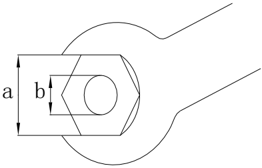
| Mutter a | Polt b | Pingutusmoment |
|---|---|---|
| 8mm | M5 | 5Nm |
| 10mm | M6 | 8 Nm |
| 12mm | M8 | 18 Nm |
| 14mm | M10 | 36 Nm |
| 17mm | M12 | 43 Nm |
Mõõtmed
Välismõõtmed (D/T mudel)
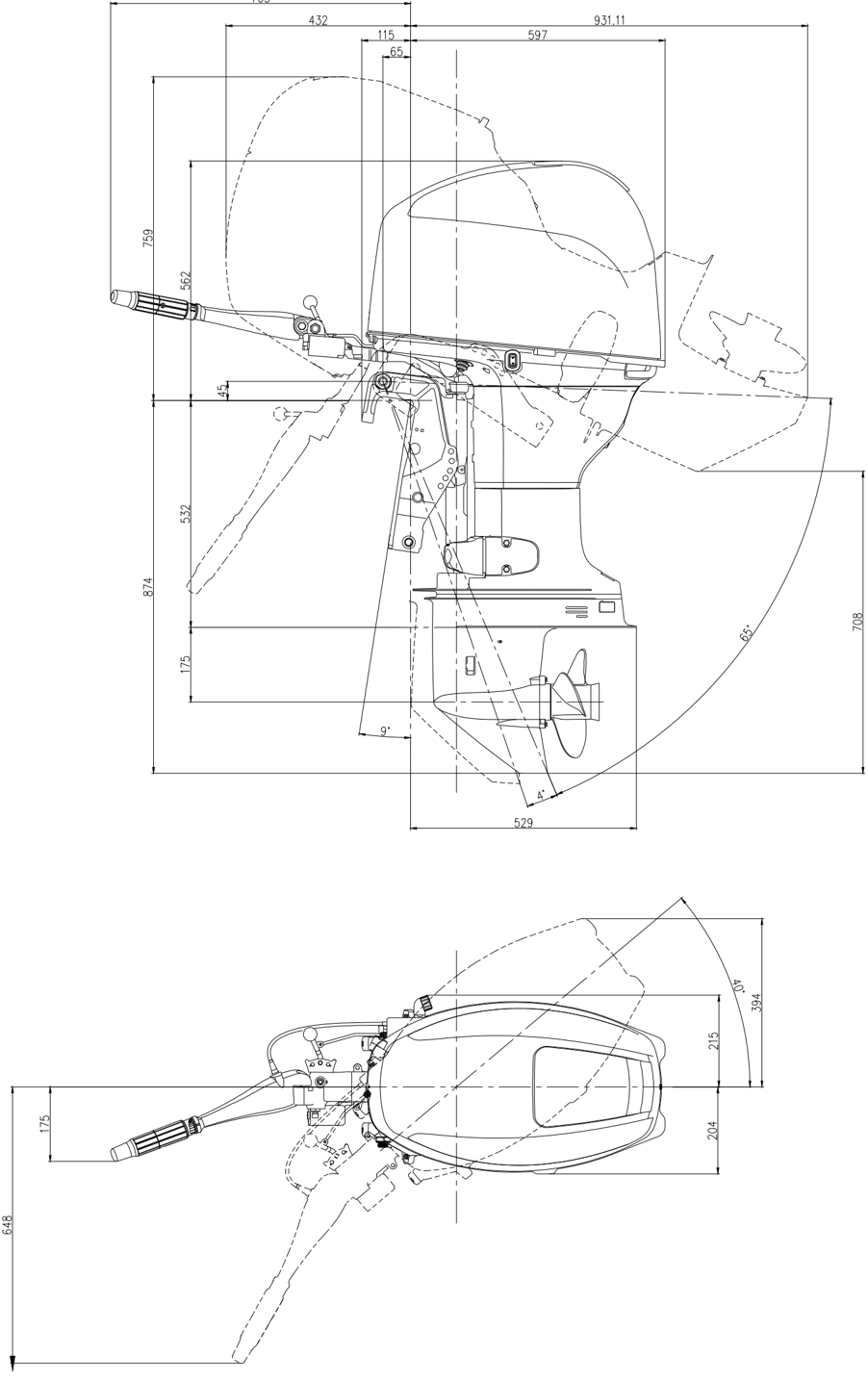
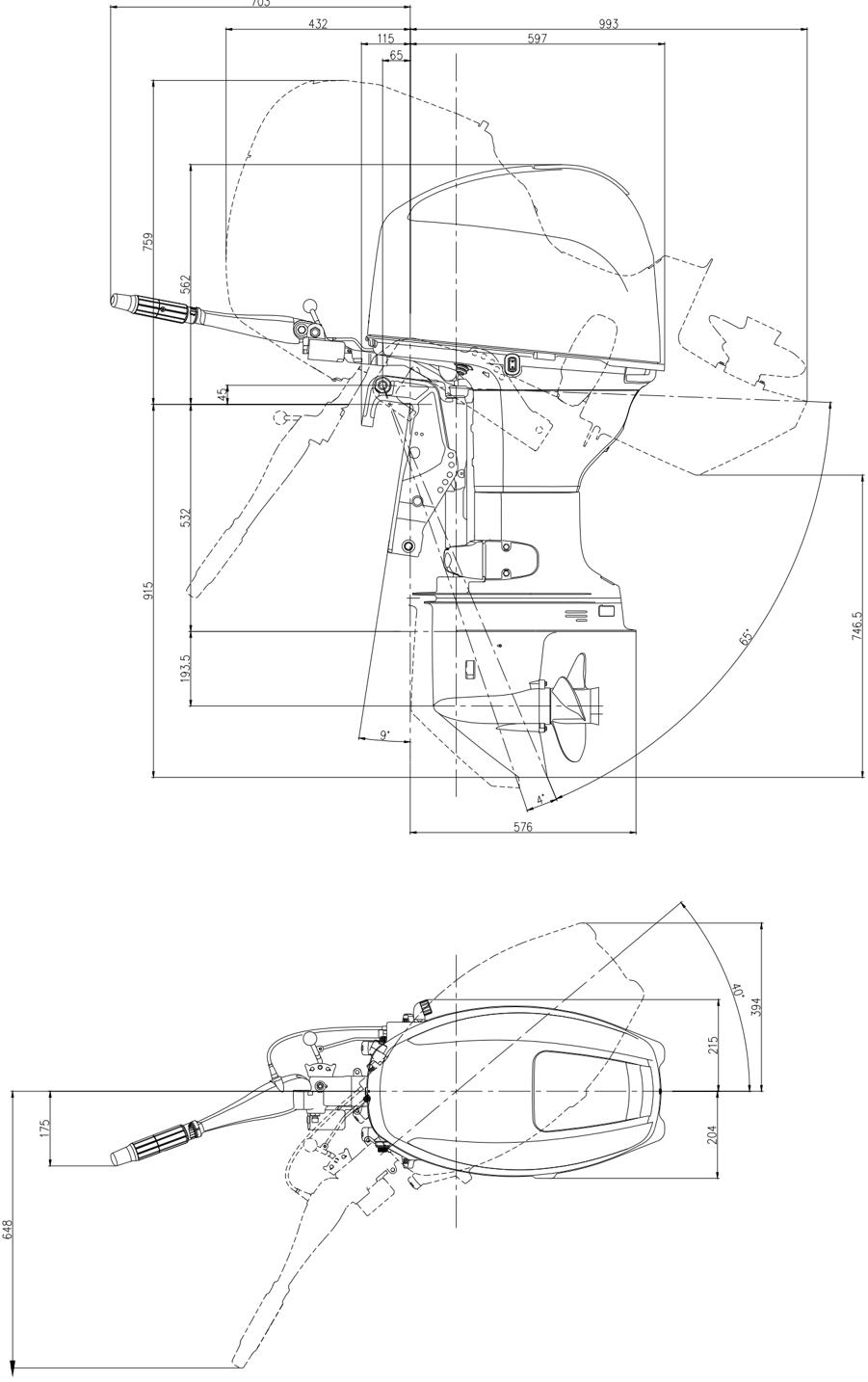
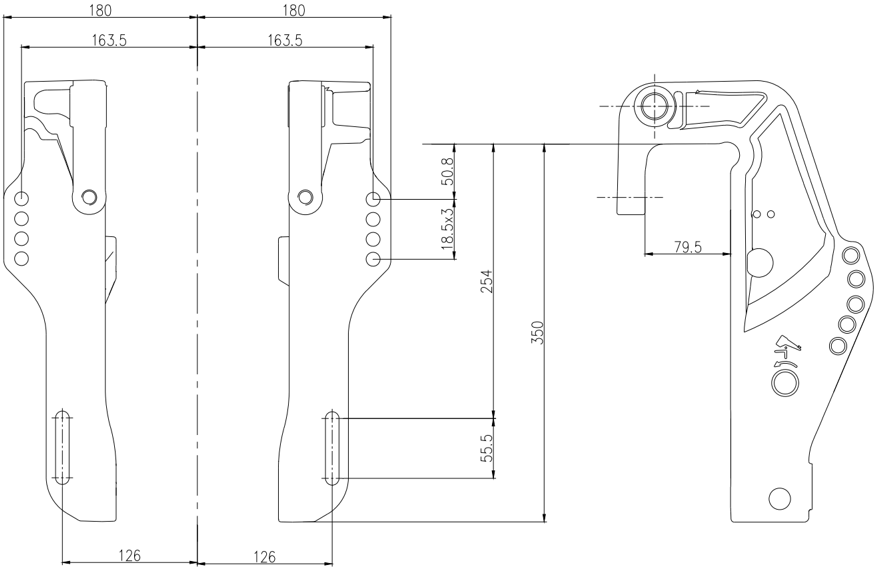
Kinnitusklambri paigaldusmõõtmed
Põhihooldus
Hooldusvälpade tabel
| Esmane hooldus | Esmane hooldus | Üldine hooldusvälp | Üldine hooldusvälp | ||
|---|---|---|---|---|---|
| Nimetus | Sisu | 10 tundi (1 kuu) | 50 tundi (3 kuud) | 100 tundi (6 kuud) | 200 tundi (1 aasta) |
| Anood | Kontroll/vahetamine | ○ | ○ | ||
| Anood (sisemine) | Kontroll/vahetamine | ○ | |||
| Jahutusveekanal | Puhastamine | ○ | ○ | ||
| Süüteküünal | Puhastamine/reguleerimine/vahetamine | ○ | ○ | ||
| Määrde lisamiskoht | Määrde lisamine | ○ | |||
| Kütusefilter | Kontroll/vahetamine | ○ | ○ | ○ | |
| Kütusesüsteem | Kontroll | ○ | ○ | ○ | |
| Kütusepaak | Kontroll/puhastamine | ○ | |||
| Tühikäigukiirus | Kontroll/reguleerimine | ○ | ○ | ||
| Mootoriõli | Asendage | ○ | ○ | ||
| Õlifilter | Asendage | ○ | |||
| Klapilõtk (OHC) | Kontroll/reguleerimine | ○ | ○ | ||
| Süüteajastus | Kontroll | ○ | ○ | ||
| Termostaat | Kontroll | ○ | |||
| Reduktoriõli | Asendage | ○ | ○ | ||
| Veepump | Kontroll | ○ | |||
| Sõukruvi ja splint | Kontroll/vahetamine | ○ | ○ | ||
| Hammasrihm | Kontroll/vahetamine | ○ | ○ | ||
| Gaasitross | Kontroll/reguleerimine | ○ | |||
| Käiguhoob/käigutross | Kontroll/reguleerimine | ○ |
Tähelepanu:
Loputage päramootorit mageveega kohe pärast kasutamist soolases, reovees või mudases vees.
Kui kasutatakse sageli pliibensiini, kontrollige klappe ja nendega seotud detaile iga 100 tunni järel.
Vahetage hammasrihm iga 1000 tunni järel (5 aastat).
Kütusesüsteem
- Kontrollige kütusepaaki, kütusepumpa ja kütusetoru.
Kontrollige kütusepaaki, kütusepumpa ja kütusetoru lekete või kahjustuste suhtes ning vahetage vajaduse korral.
Kontrollige paagi kütusefiltri elementi mustuse suhtes ning puhastage või vahetage vajaduse korral.
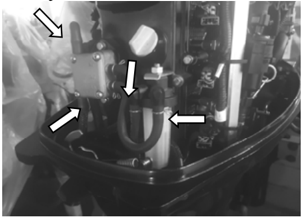
- Kontrollige kütuseliitmikku.
Kontrollige kütuseliitmikku pragude, lekete või kahjustuste suhtes. Vahetage vajaduse korral.
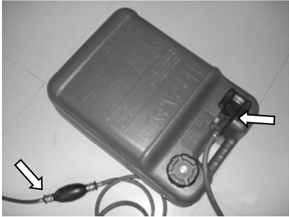
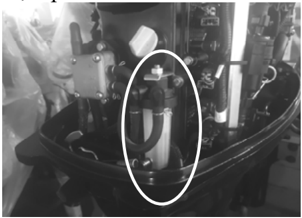
- Kontrollige kütusefiltrit.
Kontrollige kütusefiltrit pragude või kahjustuste suhtes ning vaadake, kas filtris on mustust.
Kui jah, vahetage kütusefilter välja.
Tähelepanu:
Pühkige mahavoolanud kütus ära.
Tähelepanu:
Seisake mootor pärast töötamist ja laske sellel mõni minut seista. Kontrollige õlivardaga uuesti õlitaset.
Kui õlitase pole ettenähtud vahemikus, lisage õli või laske seda välja ettenähtud tasemeni.
Mootoriõli vahetamine
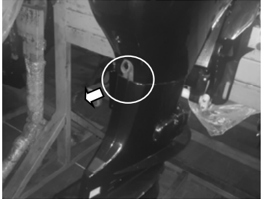
- Eemaldage õlikork, õli tühjenduspolt ja poldi tihend. Laske õli välja.
- Paigaldage uus poldi tihendusseib ja õli tühjenduspolt.
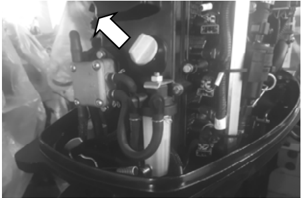
- Lisage mootoriõli õliava kaudu.
- Paigaldage õlifiltri kork.
- Kontrollige õlitaset.
Mootoriõli tase: 2.0 L (õlifiltrit ei vahetata)
2.2 L (õlifilter vahetatakse)
Õli tüüp: API: SE, SF, SG, SH, SJ või SAE: 10W30, 10W40
Mootor
Mootoriõli tase
- Eemaldage õlimõõtevarras ja kontrollige, kas õlitase jääb mõõtevarda ülemise ning alumise märgise vahele;
- Kui õli on ülemisest märgisest kõrgemal, laske seda välja; kui alumisest madalamal, lisage õli.
- Õlivarras 2. Ülemise taseme märgis 3. Alumise taseme märgis
Klapivahe
- Eemaldage mootori seiskamise turvanöör hädaseiskamislüliti koostust ja eemaldage süüteküünla piip süüteküünlalt.
- Eemaldage rihmakate.
- Eemaldage kütusepump ja silindripea kaas.
- Kontrollige hammasrihma lõtvuse, vananemise või kahjustuste suhtes. Vahetage vajaduse korral.
- Pöörake hooratast päripäeva. Joondage veetava rihmaratta "1" silindripea märgisega "▼".
Kontrollige silindrite 1# ja 2# sisselaskeklappide ning silindrite 1# ja 3# väljalaskeklappide lõtku. Vajaduse korral korrigeerige.
- Pöörake hooratast 180° päripäeva. Joondage veetava rihmaratta "●" silindripea märgisega "▼".
- Kontrollige silindrite 3# ja 4# sisselaskeklappide ning silindrite 2# ja 4# väljalaskeklappide lõtku. Vajaduse korral korrigeerige.
Tähelepanu:
Hooratta vastupäeva pööramine on rangelt keelatud, et vältida klapisüsteemi kahjustamist.
Märkus:
Reguleerige klapilõtku külma mootoriga.
| Klapilõtk (külmalt) | Sisselaskeklapp | 0.15~0.25mm |
|---|---|---|
| Väljalaskeklapp | 0.25~0.35mm |
- Lõdvendage kontramutrit ja pöörake reguleerkruvi kuni ettenähtud klapilõtkuni.
Märkus:
Klapilõtku vähendamiseks pöörake reguleerkruvi päripäeva.
Klapilõtku suurendamiseks pöörake reguleerkruvi vastupäeva.
- Paigaldage eemaldatud osad tagasi.
Süüteküünal
- Eemaldage süüteküünla piip ja seejärel süüteküünal.
- Eemaldage süüteküünla elektroodidelt süsinikusetted.
- Kontrollige elektroodide korrosiooni ja sadestisi ning tihendi kahjustusi. Vajaduse korral vahetage süüteküünlad.
Süüteküünla mudel: DPR7EA-9
- Kontrollige, kas elektroodide vahe vastab ettenähtud väärtusele. Vajaduse korral vahetage süüteküünlad.
- Paigaldage süüteküünal ja pingutage küünlavõtmega ettenähtud momendiga.
Ettenähtud pingutusmoment: 18 Nm
Juhtimissüsteem
Gaasitross
- Viige gaasikäepide suletud asendisse. Eestjuhtimisega mudelil viige käigukang neutraalasendisse.
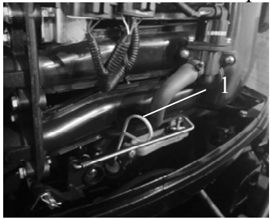
- Kontrollige, kas gaasiajami veetava rihmaratta rullik on nähtav gaasiajami vedava rihmaratta kontrollaknas. Kui rullikut pole näha, reguleerige trossiliitmiku pikkust.
- Gaasiajami vedav rihmaratas; 2. Kontrollaken.
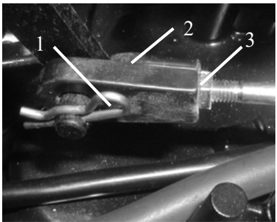
- Eemaldage splint, trossiliitmik ja lõdvendage trossiliitmiku kontramutrit.
- 4.Reguleerige liitmiku sissekeeramissügavust nii, et liitmiku ava oleks gaasiajami vedava rihmaratta tihvtiga kohakuti.
- Splint 2. Trossiliitmik 3. Kontramutter
Tähelepanu:
Trossiliitmikud tuleb sisse keerata rohkem kui 8mm.
- 5.Paigaldage splint ja pingutage kontramutter.
Käiguvahetus
- Kontrollige käiguvahetuse sujuvust.
- Viige käigukang neutraalasendisse.
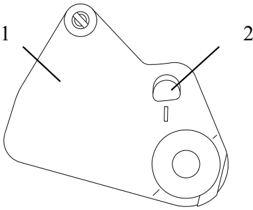
- Kontrollige, et kiikhoova tihvt oleks gaasi kiikhoova pesa märgisega kohakuti.
- Kui tihvt pole märgisega kohakuti, reguleerige trossiliitmiku sissekeeramissügavust. (Vt gaasitrossi liitmiku reguleerimise meetodit.)
- Gaasi kiikhoova pesa; 2. Märgis.
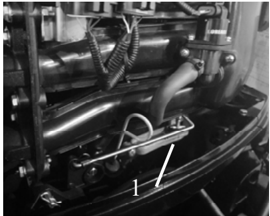
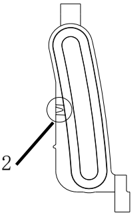
Märkus:
Kontrollige väljalastud käigukastiõli. Kui see on emulgeerunud, kontrollige tihendit ja vahetage vajaduse korral. Kui käigukastiõlis on metallipuru, kontrollige hammasrattaid ja laagreid.
Tähelepanu:
Tühjenduskruvi tihend tuleb iga kord uuega asendada.
Alumise korpuse üksuse õhutiheduse kontroll
Ühendage lekketester õlitaseme korgi avaga, et kontrollida alumise korpuse üksuse õhutihedust. Kui rõhk langeb (rõhk on 1kg/cm 3 ), kontrollige õlitihendit ja muid komponente.
Üldhooldus
Anood
Kontrollige alumise korpuse üksuse ja mootori anoode (paigaldatud termostaadi kaanele). Eemaldage õli ja katlakivi. Kui kahjustus või korrosioon ületab 1/2, vahetage anood.
Tähelepanu:
Ärge kandke anoodile õli ega värvi, et vältida selle toime kadumist.
Kontrollige käigukastiõli taset
Eemaldage õlitaseme korgi kruvi. Kui õli voolab välja, on tase õige. Kui õli ei voola välja, lisage õli.
- Õlitaseme korgi kruvi
Käigukastiõli vahetamine
- Asetage päramootor püstiasendisse.
- Asetage päramootori alla piisava mahutavusega anum.
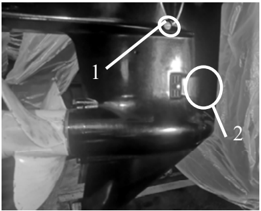
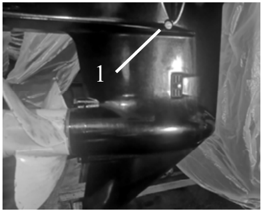
- Eemaldage õli tühjenduskruvi ning seejärel õlitaseme korgi kruvi, et käigukastiõli välja lasta.
- Sisestage käigukastiõli tühjenduskruvi avasse survega täitmise seadmega.
- Kui käigukastiõli voolab õlitaseme korgi avast välja, paigaldage õlitaseme korgi kruvi.
- Paigaldage õli väljalaskekruvi; pühkige mahavalgunud reduktoriõli ära.
- Õlitaseme korgi kruvi 2. Õli väljalaskekruvi
Alumise korpuse üksus
Reduktoriõli
Määrimiskoht
- Täitke või katke joonisel näidatud osad veekindla määrdega, kasutades määrdepritsi.
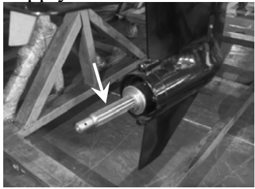
- Kandke sõukruvivõllile korrosioonivastast määrdeõli.
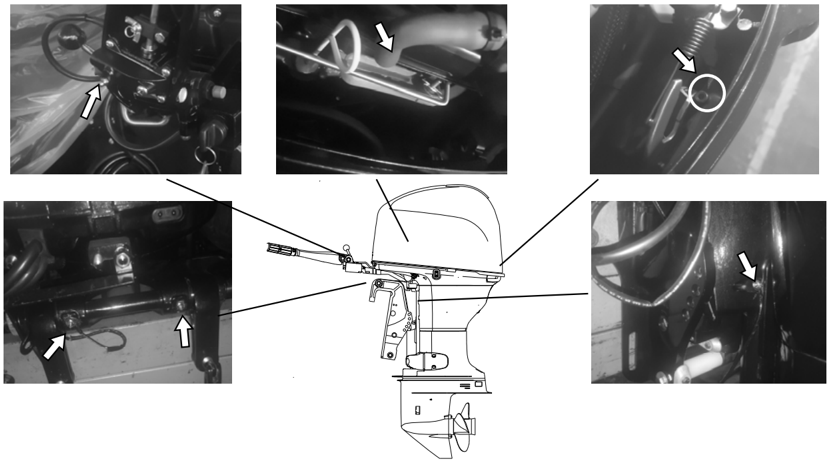
Jahutusveekanal
- Kontrollige jahutusvee kanali sisselaset ummistuse suhtes. Puhastage vajaduse korral.
- Asetage päramootor vette nii, et veetase oleks ventilatsioonivastasest plaadist kõrgemal, ja käivitage mootor.
- Kontrollige, kas jahutusvesi voolab kontrollavast välja. Kui vett pole või vool on katkendlik, kontrollige päramootori jahutusvee kanalit.
- Jahutusvee kontrollava
- Termostaat
- Eemaldage termostaadi kaas ja seejärel termostaat.
- Jahutusveekanali sissevooluava
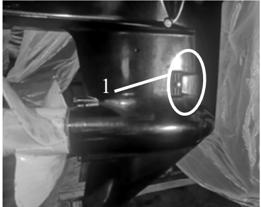
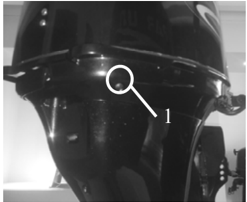
- Riputage termostaat veega täidetud anumasse.
- Kuumutage anumat.
- Kontrollige termostaadi klapi avanemist ettenähtud veetemperatuuril. Kui see ei vasta nõuetele, vahetage termostaat.
- Paigaldage termostaat ja termostaadi kaas ning pingutage poldid ettenähtud väärtusteni.
| Veetemperatuur | Klapi avanemiskõrgus |
|---|---|
| Alla 60℃ | Ei avane |
| Üle 70℃ | Üle 3mm |
Sõukruvi
Kontrollige sõukruvi labasid ja sisemisi nuute murdude, kahjustuste või kulumise suhtes. Vahetage vajaduse korral.
Elektrisüsteem
Tähelepanu:
Olge süütesüsteemi kontrollimisel ja remontimisel ettevaatlik. Ärge viige käsi, riideid, juukseid ega tarvikuid pöörleva hooratta lähedale.
Katsetage süütepooli isoleeritud töölaual, et vältida elektrileket ja elektrilööki. Ärge puudutage töötava mootori süütepooli ega süüteküünalt, et vältida elektrilööki. Veenduge, et juhe oleks pöörlevast hoorattast eemal, et vältida juhtme läbilõikamist või isolatsiooni kulumist.
Kinnitusdetailide (mutrite ja poltide) asendamisel kasutage tootja tarnitud või sama materjali ja tugevusega detaile ning pingutage need ettenähtud momendiga.
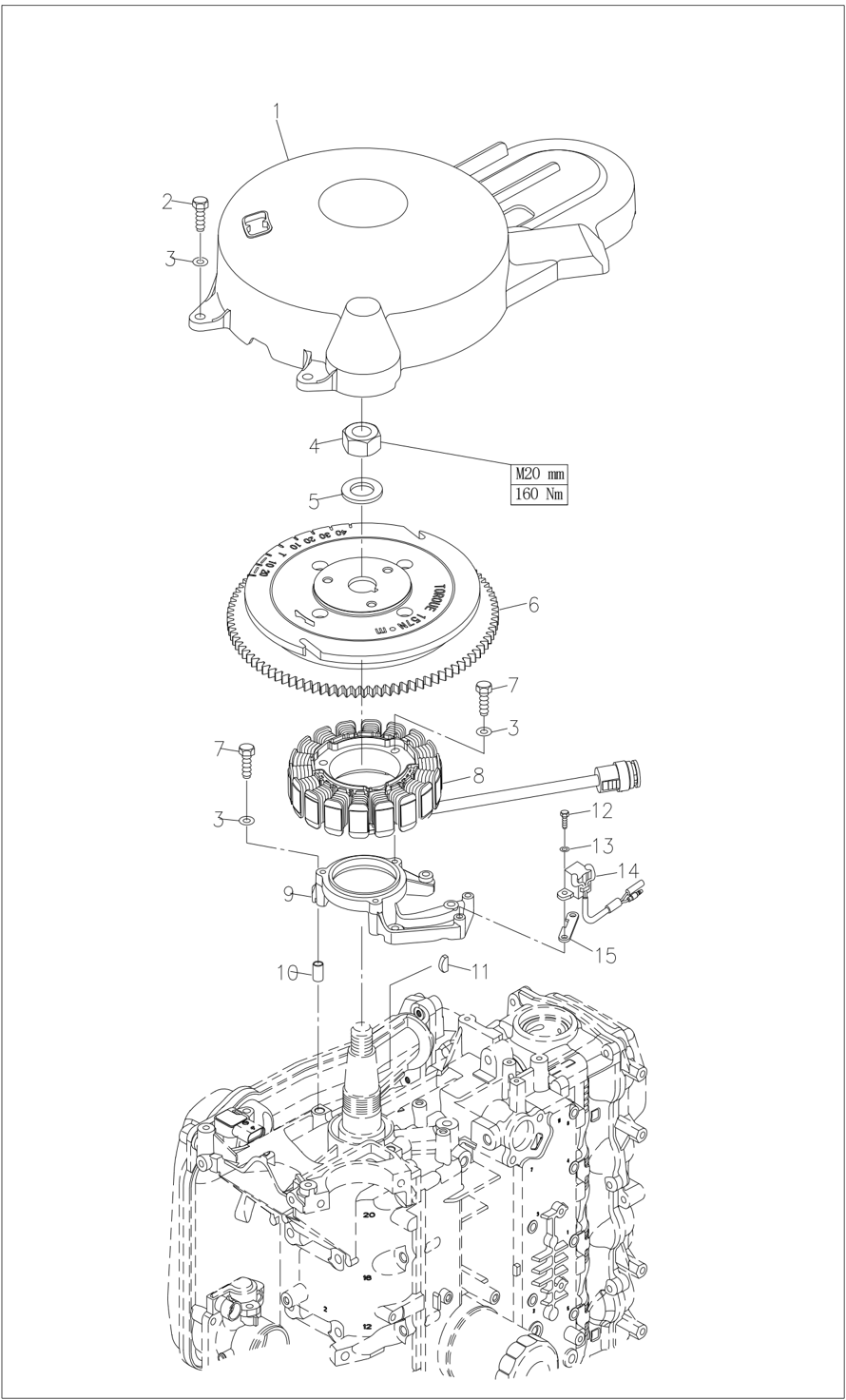
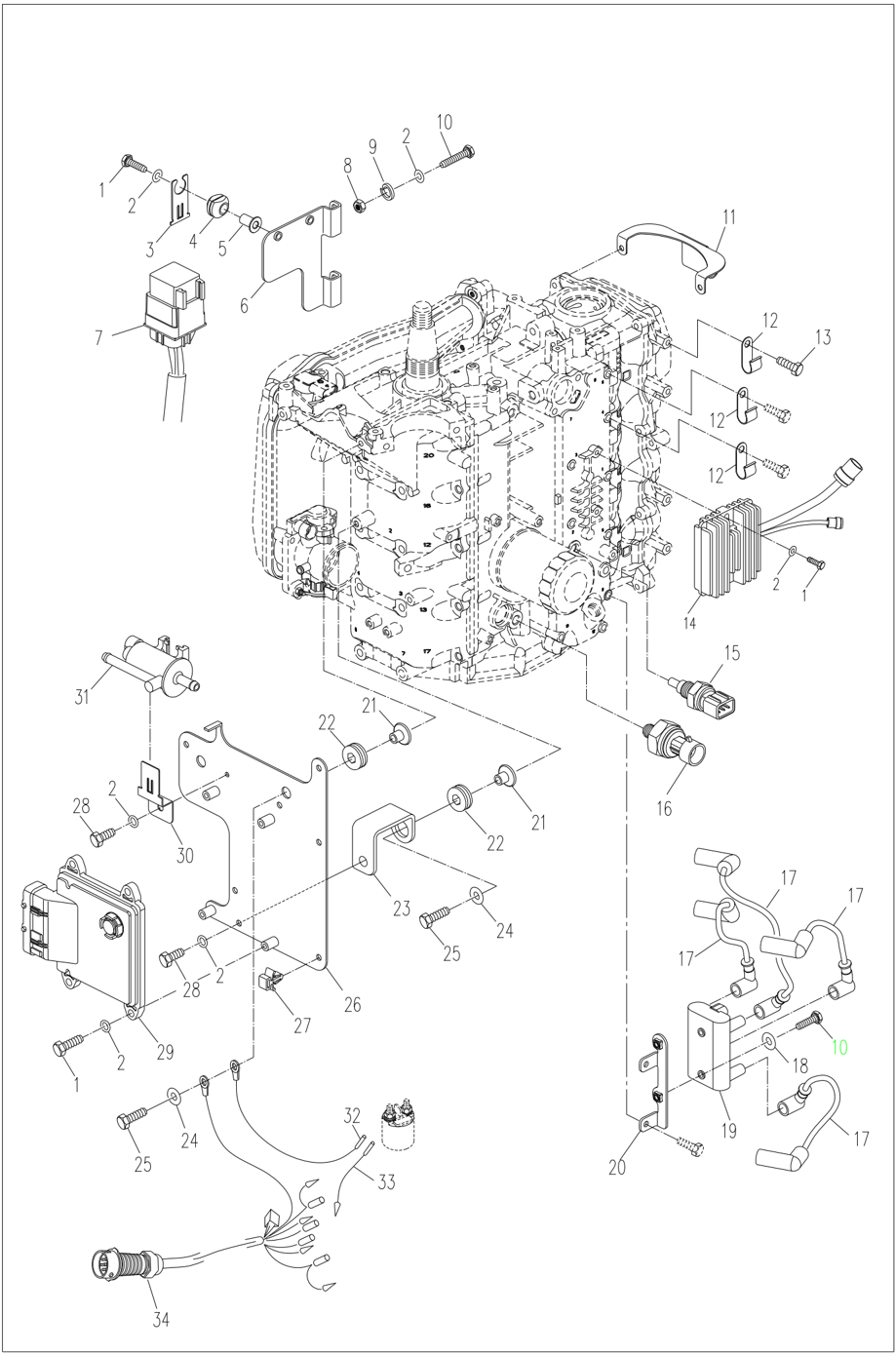
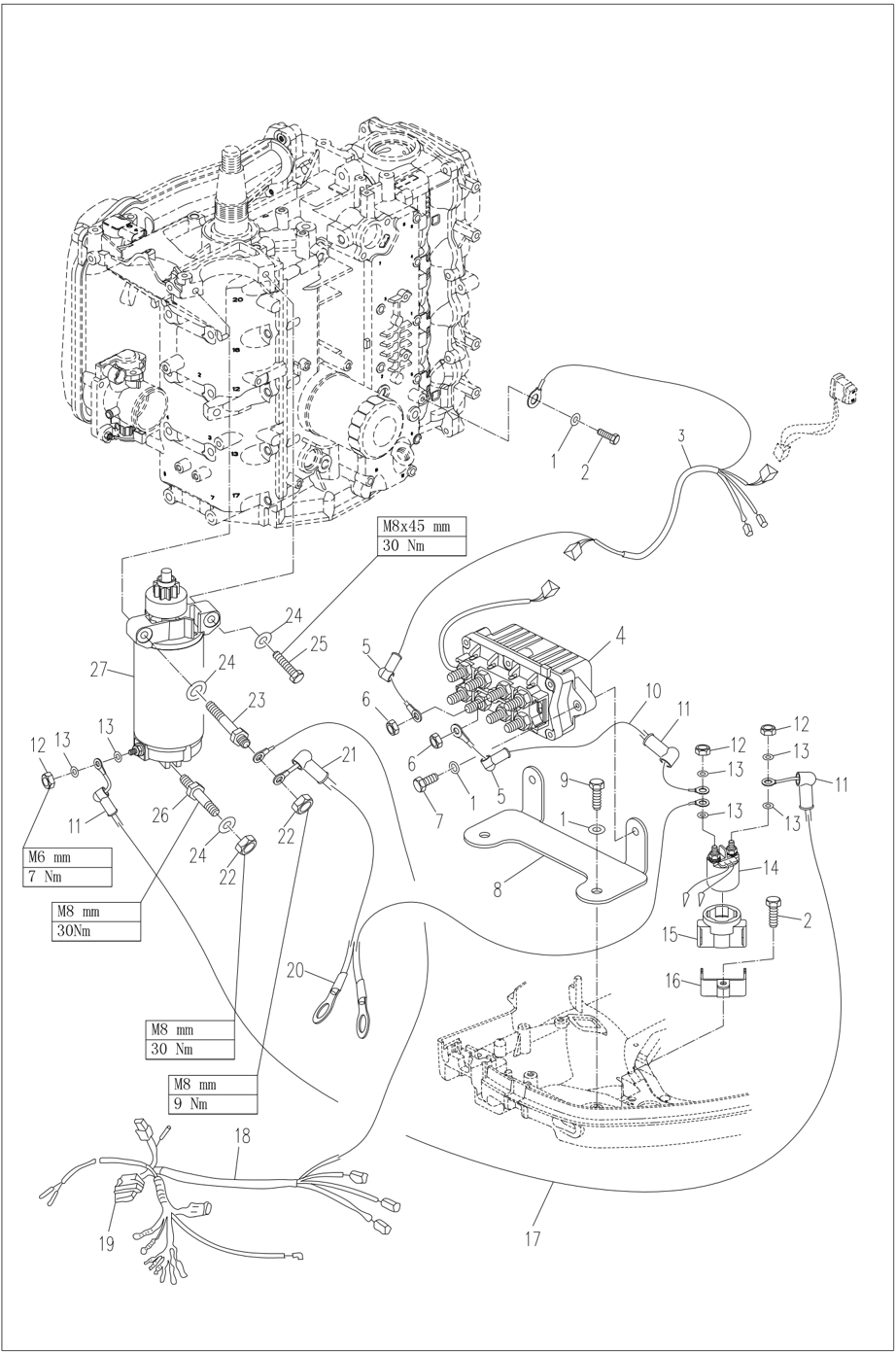
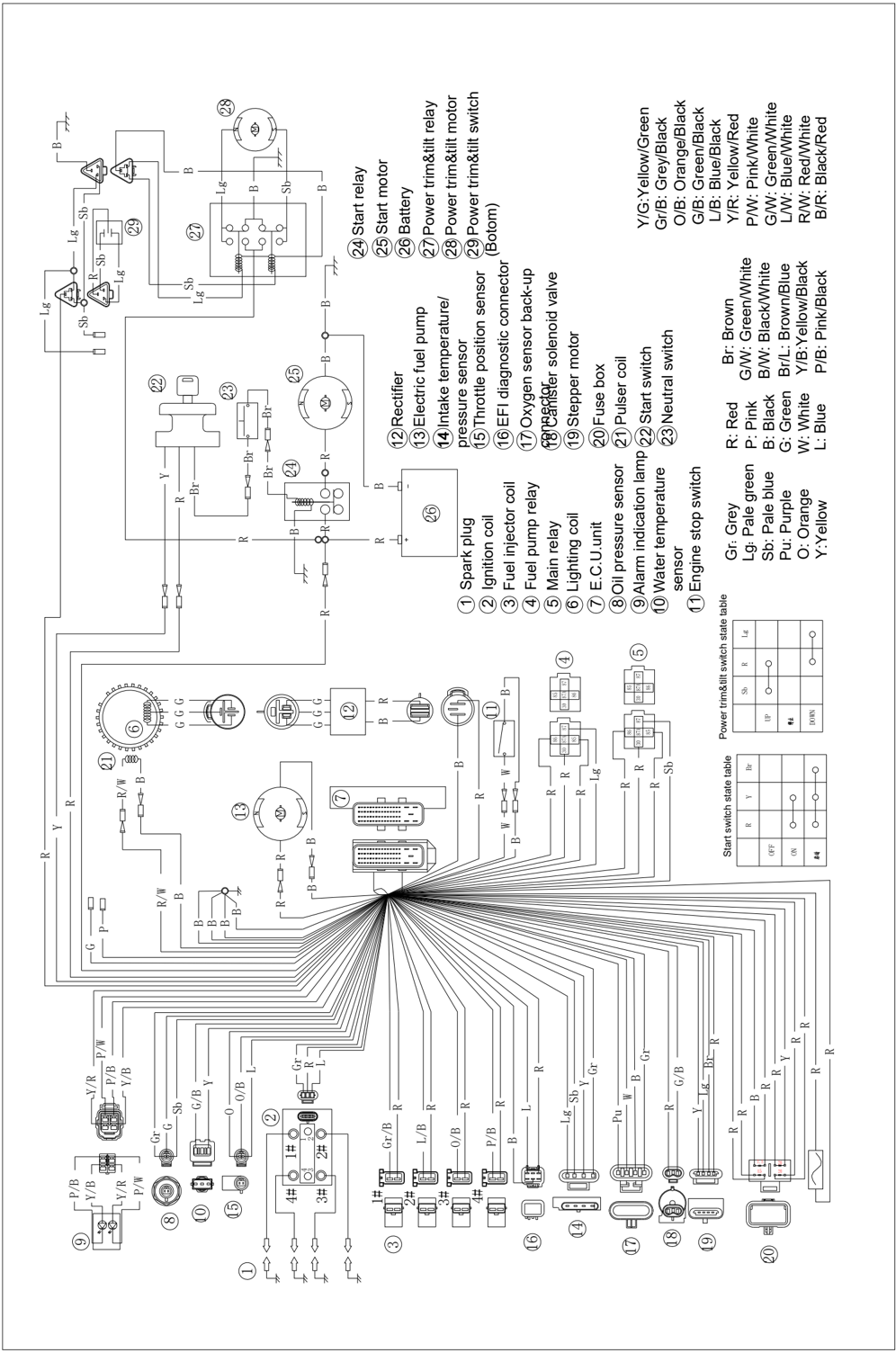
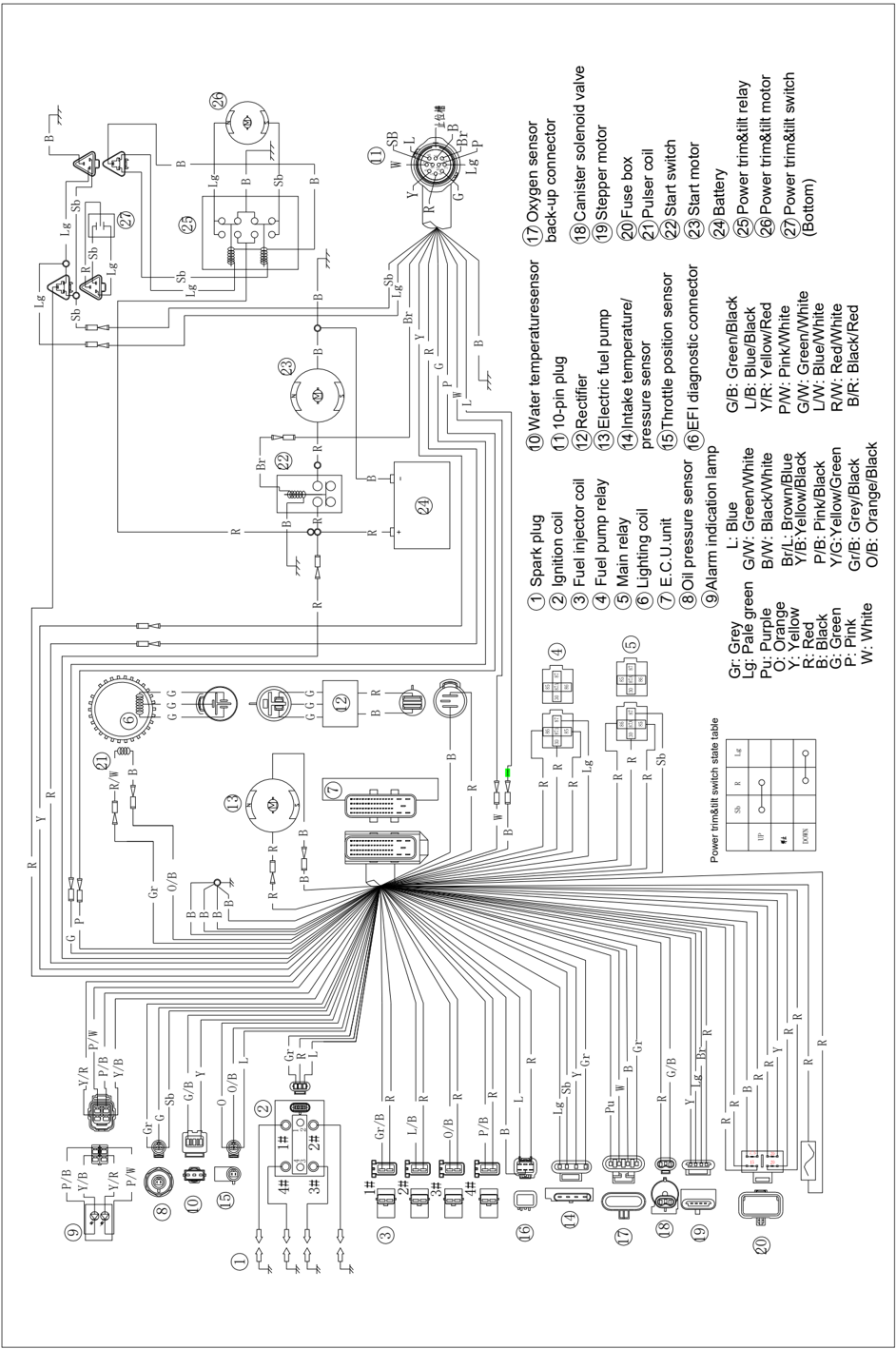
Elektriline käivitus eestjuhtimisega mudelil
Süüteküünla süüde
- Eemaldage süüteküünla piip süüteküünlalt.
- Ühendage süüteküünla piibiga süütetester.
- Käivitage mootor ja vaadake sädet testri lahendusaknast.
- Süüteküünla piip; 2. Süüteküünal
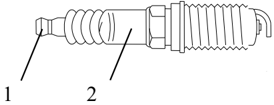
Ärge puudutage testri juhtme ühtegi ühenduskohta.
Hoiatus:
Hoiduge põlevatest gaasidest ja vedelikest, et vältida sädemest süttimise õnnetusi.
Süüteküünla piip
- Keerake süüteküünla piip lahti. Kontrollige seda kahjustuste suhtes. Vahetage vajaduse korral.
- Paigaldage süüteküünla piip.
Hooratta hooldus
- Eemaldage hooratta mutter hoorattahoidiku abil; eemaldage hooratas hoorattatõmmitsaga.
- Kontrollige, kas hooratas on kahjustatud ja püsimagnet kindlalt kinnitatud. Vajaduse korral vahetage see välja.
Süütepooli kontroll
- Eemaldage süütepool ja süüteküünla piip.
- Mõõtke süütepooli takistust. Kui ettenähtud väärtust ei saavutata, vahetage pool. Primaartakistus: 2.2±0.22Ω Sekundaartakistus 9.84±0.98kΩ
Päästikpooli kontroll
- Päästikpooli tipupinge
Mõõtke pooli väljundi tipupinget digitaalse multimeetri ja tipupingeadapteriga. Kui see on ettenähtud väärtusest madalam, kontrollige päästikpooli takistust.
Digitaalne multimeeter, tipupingeadapter, impulsspooli tipupinge: ≥13 V@1000 r/min (koormusega)
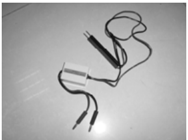
- Päästikpooli takistus
Mõõtke pooli takistust. Kui ettenähtud väärtust ei saavutata, vahetage pool.
Takistus: 260 ~ 290 (testri positiivne elektrood ühendatakse punase/valge juhtmega ja negatiivne elektrood musta juhtmega)
Märkus:
Andmed on ainult võrdluseks.
Mootori käivituslüliti kontroll
Kontrollige mootori käivituslüliti elektrijuhtivust. Kui ühendus ei juhi, vahetage lüliti.
Märkus:
Käivituslüliti olekutabelit vt elektriskeemilt,
Mootori seiskamislüliti kontroll
Kontrollige mootori seiskamislüliti elektrijuhtivust. Kui see ei juhi elektrit, vahetage see välja.
Lukustusplaadi eemaldamine: juhib
Lukustusplaadi paigaldamine: ei juhi
Nupu vajutamine: juhib
Käivitusrelee kontroll
- Ühendage pruun juhe aku positiivse klemmiga.
- Ühendage must juhe aku negatiivse klemmiga.
- Kontrollige relee klemmide vahelist elektrijuhtivust. Kui need ei juhi elektrit, vahetage relee välja.
- Lahutage juhtmed akust ja kontrollige relee klemmide vahelist elektrijuhtivust. Kui ühendus juhib, vahetage relee.
Magneetopooli kontroll
Mõõtke magneetopooli tipupinget (roheliste juhtmete vahel).
Mõõtke pooli väljundi tipupinget digitaalse multimeetri ja tipupingeadapteriga. Kui see on ettenähtud väärtusest madalam, vahetage magneetopool.
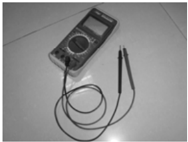
| Magneetopooli tipupinge | 1500 r/min (koormuseta) | 47.2V |
|---|---|---|
| 3500 r/min (koormuseta) | 106V |
Alaldi-regulaatori kontroll
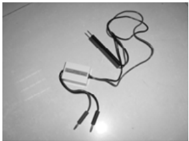
Mõõtke alaldi-regulaatori tipupinget (dc).
Avage alaldi väljundahel (punane ja must juhe) ning mõõtke digitaalse multimeetriga punase ja musta juhtme vahelist pinget alaldi-regulaatori väljundis.
Kui pinge on ettenähtud väärtusest madalam, kontrollige magneetopooli väljundi tipupinget. Kui magneetopooli väljundi tipupinge on ettenähtud väärtusest kõrgem, vahetage alaldi-regulaator.
| Alaldi-regulaatori tipupinge | 1500 r/min (koormuseta) | 41.9V |
|---|---|---|
| Alaldi-regulaatori tipupinge | 3500 r/min (koormuseta) | 99.8V |
Diagnostilise skanneri kasutamine
Kui töötava mootori alumise katte rikketuli põleb pidevalt või hooldustuli põleb pidevalt/summer heliseb pidevalt, on mootoris rike. Ühendage skanner mootori vastava kontrollpordiga. Mobiiltelefoni laaditud APP-tarkvara kaudu saab telefoni ekraanil kuvada mootori tööparameetreid ja veakoode. Seejärel leidke veakoodide tabelist mootori rike ja vahetage rikkis elektrikomponendid.
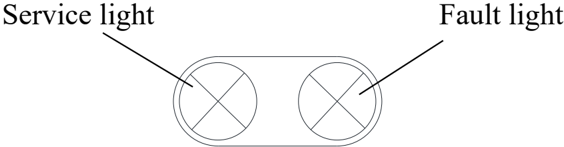
Veakoodide tabel
| Rikke tüüp | Rikke kirjeldus | Kood |
|---|---|---|
| Sisselaskerõhu rike | Sisselaskerõhu anduri ahela lühis massi või katkestus | 107 |
| Sisselaskerõhu rike | Sisselaskerõhu anduri ahela lühis kõrgele tasemele | 108 |
| Sisselaskeõhu temperatuuri rike | Sisselaskeõhu temperatuurianduri ahela lühis kõrgele tasemele | 112 |
| Sisselaskeõhu temperatuuri rike | Sisselaskeõhu temperatuurianduri ahela lühis massi või katkestus | 113 |
| Veetemperatuuri rike | Jahutusvedeliku temperatuurianduri ahela lühis massi | 117 |
| Veetemperatuuri rike | Jahutusvedeliku temperatuurianduri ahela lühis kõrgele tasemele | 118 |
| Gaasi rike | Gaasi asendianduri ahela lühis massi | 122 |
| Gaasi rike | Gaasi asendianduri ahela lühis kõrgele tasemele | 123 |
| Hapnikuanduri rike | Hapnikuanduri lühis massi | 131 |
| Hapnikuanduri rike | Hapnikuanduri lühis kõrgele tasemele | 132 |
| Hapnikuanduri soojenduse rike | Hapnikusoojendi rike | 135 |
| Kütusepihusti rike | Silindri 1 pihusti ahela rike | 201 |
| Kütusepihusti rike | Silindri 2 pihusti ahela rike | 202 |
| Kütusepihusti rike | Silindri 3 pihusti ahela rike | 203 |
| Kütusepihusti rike | Silindri 4 pihusti ahela rike | 204 |
| Kütusepumba rike | Õlipumba relee rike | 230 |
| Väntvõlli asendianduri rike | Väntvõlli asendianduri ahela signaalihäire | 336 |
| Väntvõlli asendianduri rike | Väntvõlli asendianduri ahela signaal puudub | 337 |
| Süütepooli rike | Silindri 1 süütepooli rike | 351 |
| Süütepooli rike | Silindri 2 süütepooli rike | 352 |
| Tühikäigupöörete rike | Liiga kõrged tühikäigupöörded | 507 |
| Tühikäigupöörete rike | Madalad tühikäigupöörded | 506 |
| Süsteemipinge rike | Madal süsteemipinge | 562 |
| Süsteemipinge rike | Kõrge süsteemipinge | 563 |
| Rikketuli | Rikke märgutule rike | 650 |
| Õlirõhu rike | Õlirõhuanduri ahela lühis massi | 523 |
| Õlirõhu rike | Õlirõhuanduri ahela lühis kõrgele tasemele | 522 |
| Aktiivsöekanistri solenoidklapi rike | Aktiivsöekanistri solenoidklapi lühis massi | 443 |
| Pearelee rike | Pearelee rike | 685 |
Tähelepanu:
Kütus on väga tuleohtlik ja lenduv vedelik. Kütuseleke võib põhjustada tulekahju ja plahvatuse.
Ärge püüdke mootorit käivitada enne, kui olete veendunud, et kütusesüsteemi komponendid on ühendatud või paigaldatud. Pärast kõiki remonditöid survestage kütusesüsteemi lühidalt, et kontrollida lekkeid.
Kütusesüsteem
Kütuserõhu vabastamine kütusetorustikus
Enne kütusesüsteemi hooldamist ja kontrollimist tuleb vabastada kütusetorustiku rõhk. Vältige hoolduse ajal kõrgsurvega kütusepihustusest tingitud õnnetusi.
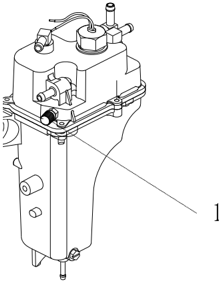
- Ühendage rõhuvabastustoruga manomeeter elektrilise kütusepumba kontrollklapiga.
- Kütusepumba kontrollklapp.
- Asetage rõhu vabastamise toru sobivasse anumasse;
Tähelepanu:
Ärge vabastage rõhku otse, sest rõhu vabastamisel väljub kütus. Kütuse pihustumine võib põhjustada õnnetusi ja rikkuda kohalikke heitenõudeid.
- Vajutage rõhuvabastusnuppu ja vabastage rõhk, kuni elektrilise kütusepumba siserõhk on välisrõhuga tasakaalus.
Kütuseliitmiku eemaldamine ja kontroll
- Eemaldage kütuseliitmiku kinnituspolt.
- Eemaldage kütuseliitmik.
- Kontrollige kütuseliitmikku pragude, lekete või kahjustuste suhtes.
- Ühendage kütuseliitmiku väljund vaakummanomeetriga.
- Kontrollige, kas ettenähtud rõhul püsib alarõhk üle 10 sekundi. Vajaduse korral vahetage liitmik. Ettenähtud rõhk: 50kPa
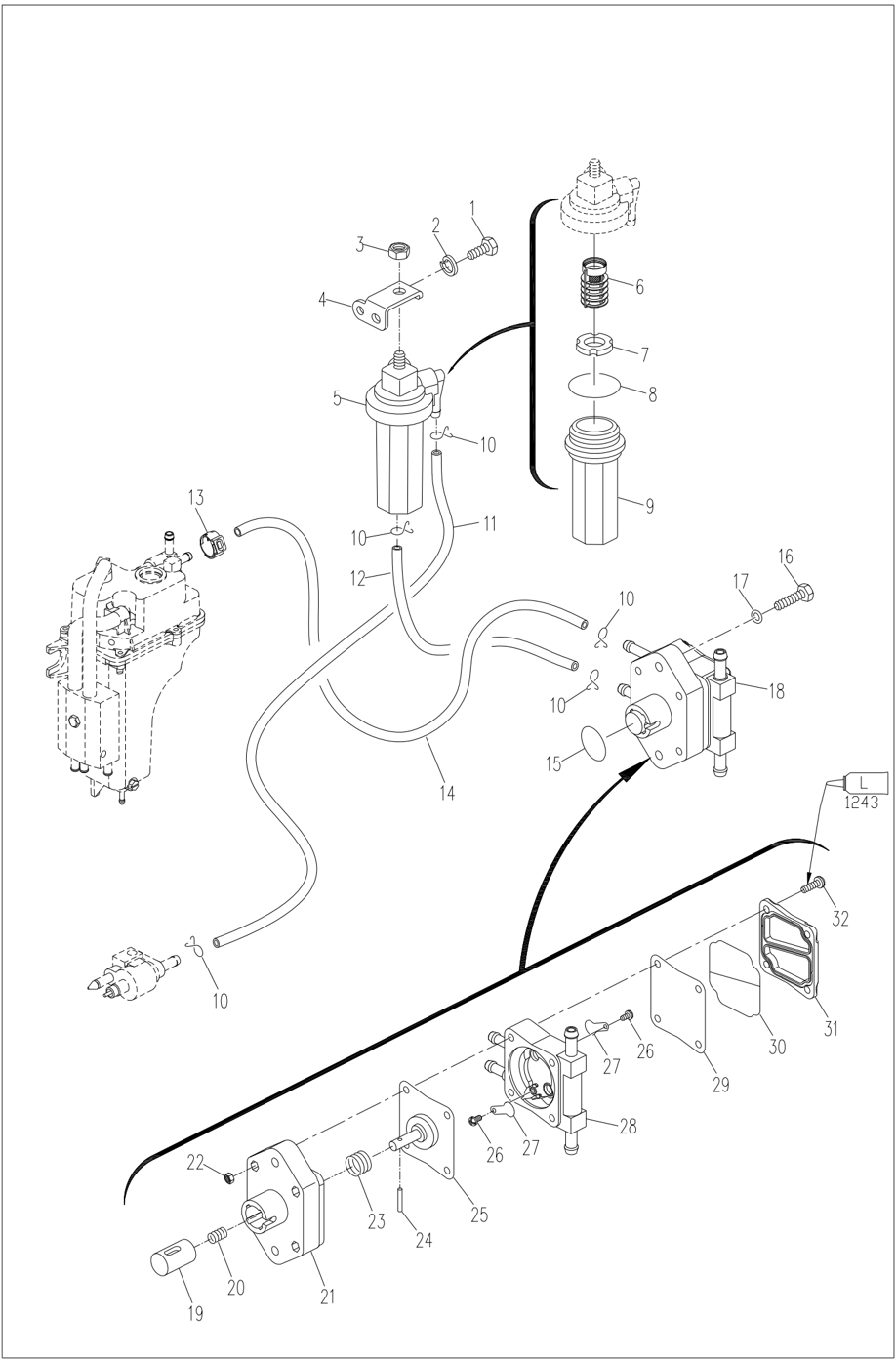
Kütusepumba eemaldamine ja kontroll
- Eemaldage kütusepumba kinnituspolt.
- Eemaldage kütusepump.
- Ühendage vaakummanomeeter kütusepumba sisendiga.
- Sulgege pumba väljund sõrmedega ja rakendage ettenähtud ülerõhk. Kontrollige õhulekkeid. Ettenähtud rõhk: 50kPa
- Rakendage ettenähtud alarõhk. Kontrollige õhulekkeid. Ettenähtud rõhk: 30kPa
- Ühendage vaakummanomeeter kütusepumba väljundiga.
- Sulgege pumba sisend sõrmedega ja rakendage ettenähtud alarõhk. Kontrollige õhulekkeid. Vajaduse korral võtke pump lahti ja kontrollige seda. Ettenähtud rõhk: 50kPa
- Eemaldage 4 polti ja eraldage kütusepumba kaas pumba pesast.
- Eemaldage kütusepumba korpusest klapiplaadi kruvi ning klapiplaat.
- Vajutage plunžrit ja membraani, pöörake kütusepumba pesa ning joondage sälk plunžri soonega. Eemaldage nõelrull.
- Kontrollige membraani pragusid, neetühenduse lõtvust ja klapiplaadi kahjustusi. Vahetage vajaduse korral.
- Järgige samme 8-10 vastupidises järjekorras ja pange pump kokku.
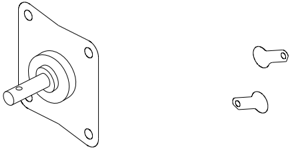
Kontrollige kütusefiltrit.
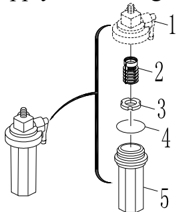
Kontrollige filtri sõela ummistuste või võõrkehade suhtes ning filtrikannu kahjustuste või lekete suhtes.
Vajaduse korral puhastage bensiiniga või vahetage filtri sõel.
Märkus:
Kandke enne filtrikannu kokkupanekut O-rõngale määrdeõli.
- Filtrikannu kaas
- Filtrivõrk
- Ujuk
- O-rõngas
- Filtrikann
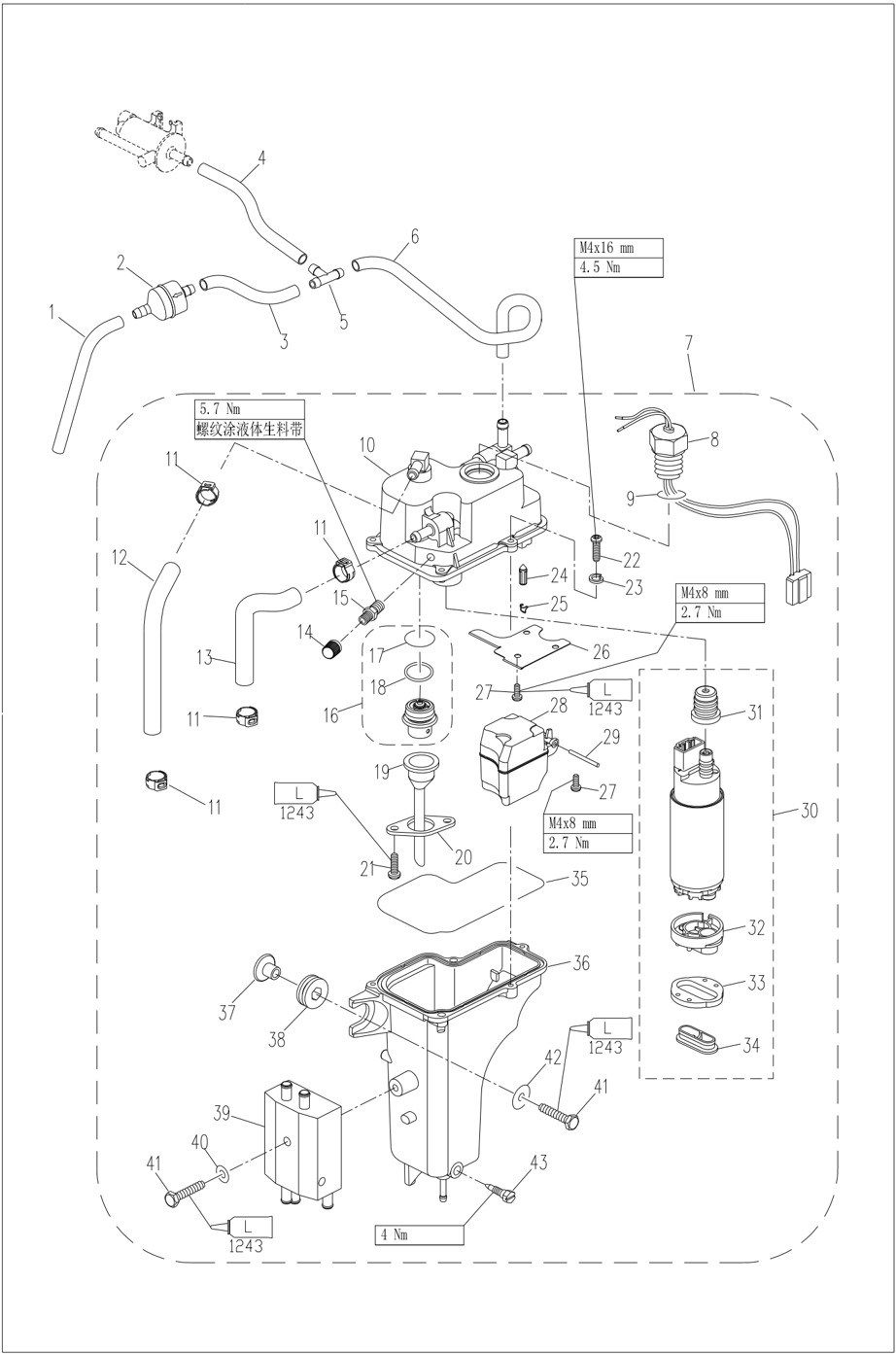
Elektrilise kütusepumba eemaldamine ja kontroll
Elektrilise kütusepumba lahtivõtmine
- Lõdvendage kütusekausi väljalaskekruvi ning laske kausis olev kütus sobivasse anumasse.
- Eemaldage kütusetoru ja jahutusveetoru ning lahutage juhtmestiku ühendus.
- Eemaldage elektrilise kütusepumba kinnituskruvid ning eemaldage pump mootorilt.
- Lahutage kütusejahuti ja elektrilise kütusepumba vaheline toruühendus ning eemaldage kütusejahuti.
- Eemaldage 5 ristpeaga ümarpeakruvi (M4×16) ja elektrilise kütusepumba korpuse koost.
- Tõmmake pumba koost välja ja lahutage pumba ühenduskoost.
- Kontrollige ja puhastage pumba koostu filtrivõrk;
- Kontrollige pumba otsaku kummihülssi ja vahetage see vananemise, kahjustuste või pragude korral.
- Lõdvendage ujuki tihvti kinnituskruvi ja eemaldage ujuk.
- Eemaldage vahesein; (vajaduse korral)
- Kontrollige ja puhastage elektrilise kütusepumba kütusekannu koost.
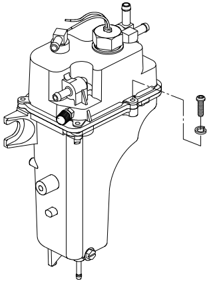
- Lõdvendage surveventiili surveplaadi kinnituskruvi ning eemaldage rõhureguleerimisventiil;
- Kontrollige rõhureguleerimisklapi O-rõngast. Vahetage vajaduse korral.
- Pärast kontrollimist puhastage osad ja paigaldage elektriline kütusepump vastupidises järjekorras. Tähelepanu: kasutage uut kannu tihendusrõngast. Kruvid tuleb pingutada ettenähtud momendiga!
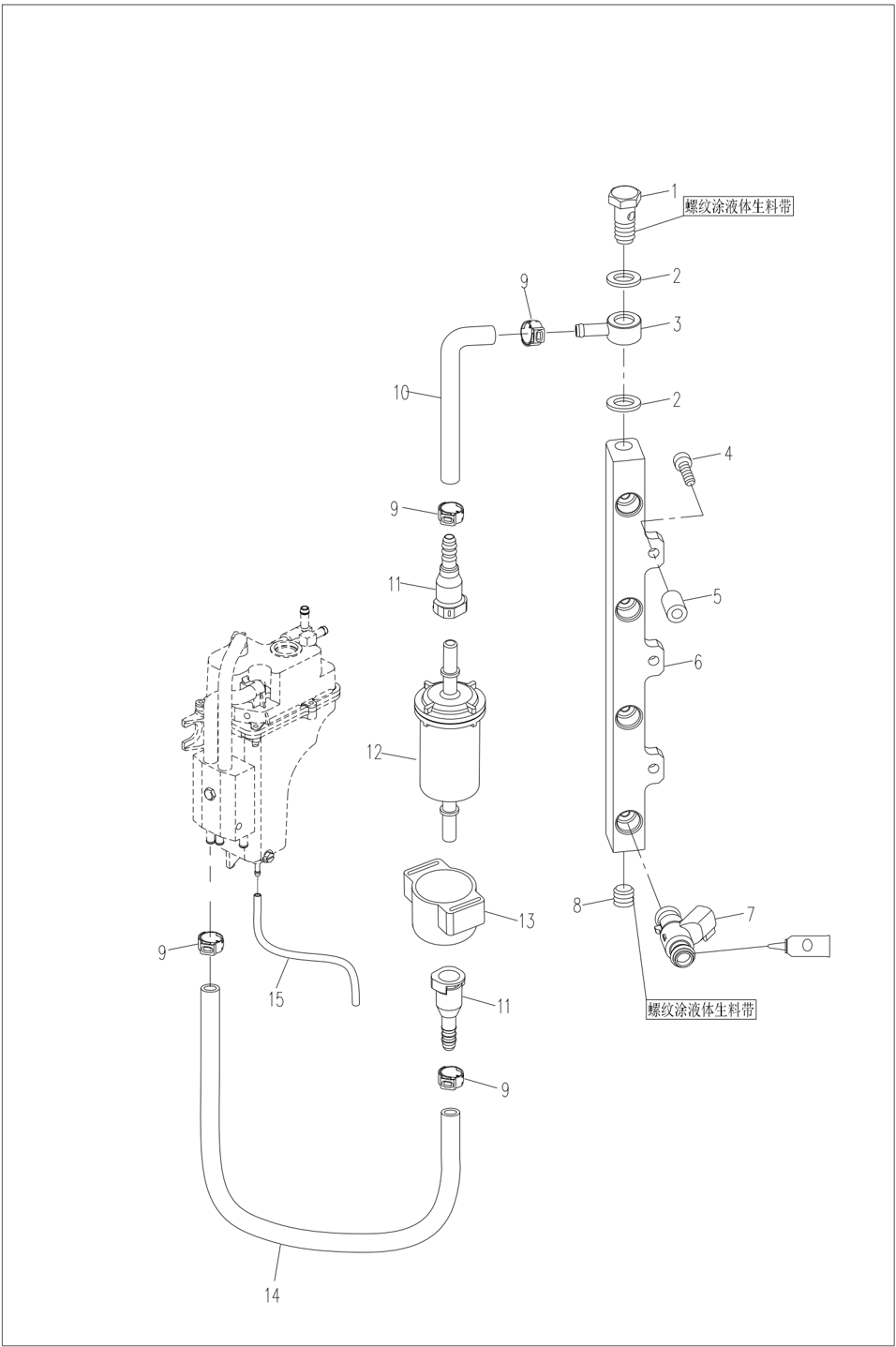
Kütusetoru ja kütusefiltri kontroll
- Kontrollige kütusetoru kahjustuste suhtes.
- Kontrollige kõrgsurve-kütusefiltrit pragude suhtes ning kütuse sujuvat voolamist; vajaduse korral vahetage see välja.
Kütuse ühisanuma kontroll
Kontrollige kütuse ühisanumat lekete, pragude ja kahjustuste suhtes ning vahetage vajaduse korral.
Mootor
Tähelepanu:
Mootori remontimisel juhusliku käivitumise vältimiseks võtke piisavad kaitsemeetmed süütesüsteemi lahutamiseks. Näiteks:
Eemaldage mootori seiskamise turvanöör hädaseiskamislüliti koostust ja eemaldage süüteküünla piip süüteküünlalt.
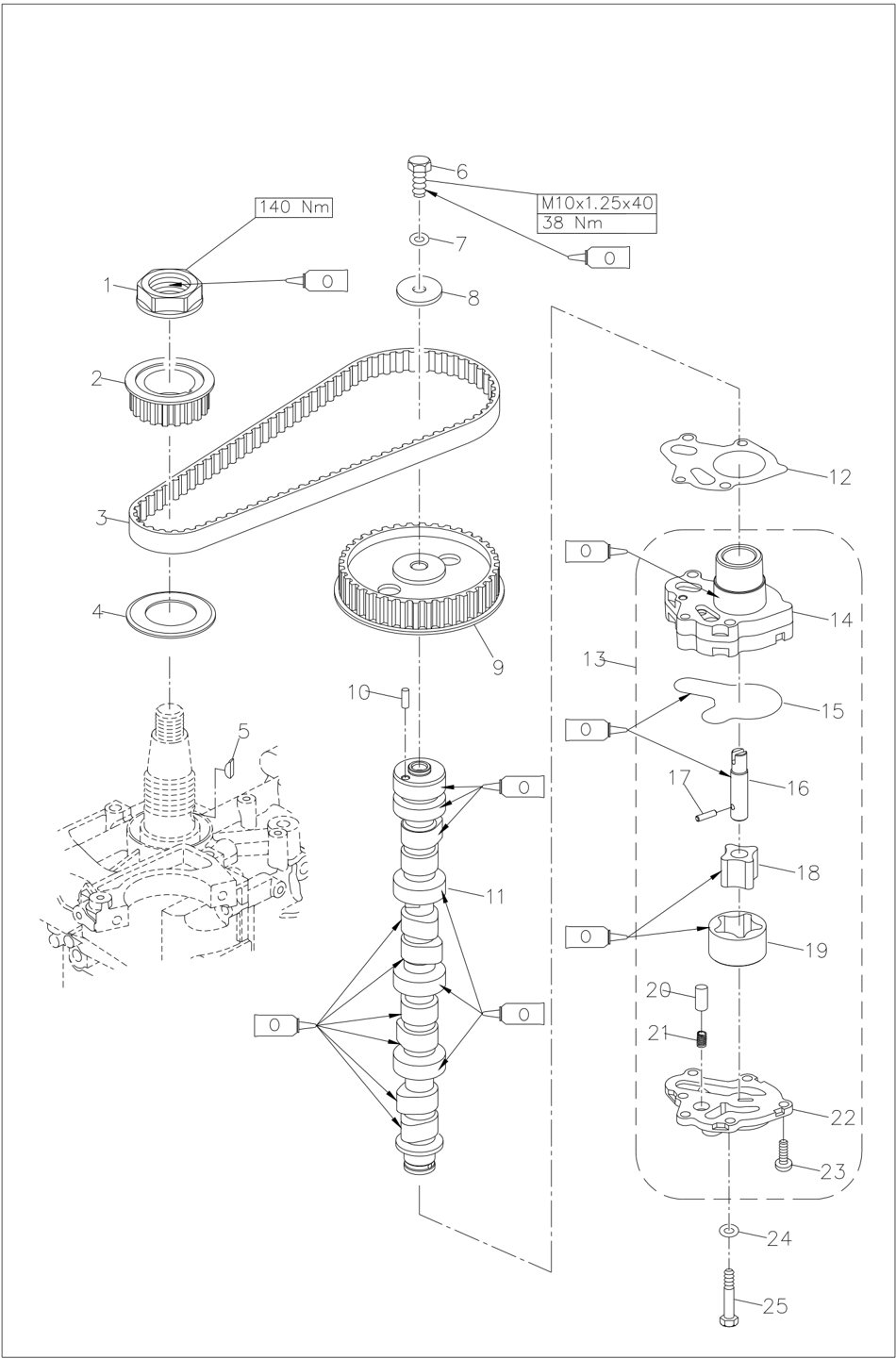
Märkus:
Kui silindri rõhk suureneb edasi, kontrollige kolbi ja kolvirõngast kahjustuste suhtes. Vahetage vajaduse korral.
Kui silindri rõhk ei suurene, kontrollige klapilõtku, klappi, klapipesa, silindrihülssi, silindripead ja silindripea tihendit.
Reguleerige või vahetage vajaduse korral.
Päramootoril on automaatne rõhuvabastusseade ja andmed ei saa olla täiesti täpsed.
Õlirõhu kontroll
- Käivitage mootor, soojendage seda 5 minutit ja seejärel seisake.
- Eemaldage õlirõhulüliti ja ühendage manomeeter.
Märkus:
Kasutage manomeetrit koos 1/8 sammuga keermeadapteriga.
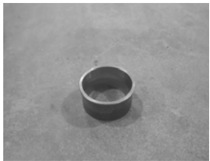
Eritööriistad:
Kolvi paigaldusjuhik, hooratta hoidik, klapivedru surumise komplekt
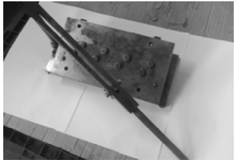
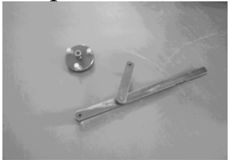
Lehtkaliiber Õlifiltrivõti
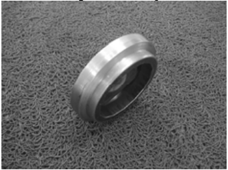
ja hooratta tõmmits
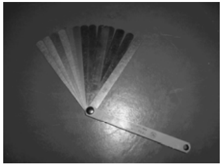
Surverõhu kontroll
- Käivitage mootor, soojendage seda 5 minutit ja seejärel seisake.
- Eemaldage mootori seiskamise turvanöör.
- Eemaldage süüteküünal ja ühendage manomeeter süüteküünla avaga.
Tähelepanu:
Enne süüteküünla eemaldamist puhastage süüteküünla süvend suruõhuga, et tolm või muud võõrkehad ei satuks silindrisse.
- Avage gaas täielikult, pöörake väntvõlli käiviti või starteriga ja kontrollige silindri rõhku, kui manomeetri näit on stabiilne.
Märkus:
Juhtkarbiga mudelitel eemaldage gaasi hoovastik, avage karburaatori gaasihoob käsitsi täielikult ja mõõtke seejärel rõhku.
- Kui rõhk on ettenähtud väärtusest madalam või silindrite vahel erinev, lisage silindritesse veidi õli ja korrake mõõtmist.
Surverõhk: 840 kPa
- Kontrollige õlirõhku. Õlirõhk (võrdlusandmed): 100kpa (800±50 r/min)
Mootori lahtivõtmine
- Avage ülemine kate.
- Eemaldage hooratta kate.
- Eemaldage gaasitross
- Eemaldage karburaator.
- Eemaldage hooratas eritööriistadega.
- Eemaldage poolkuukiil.
- Lahutage mootori seiskamislüliti juhe ja maandusjuhe.
- Eemaldage trossiliitmik.
- Eemaldage magneeto mähis.
- Lahutage elektrikomponentide juhtmed, nagu aku, starteri, käivitusrelee, kallutusrelee ja juhtkarbi pistiku juhtmed. Lahutage maandusjuhe ja veetoru.
- Eemaldage süütepool, ECU-seade, süütepool ja süüteküünal.
- Eemaldage mootori ja ülemise üksuse ühenduspoldid.
- Tõstke mootor üles ning eemaldage asenditihvt.
Hoorattahoidik ja hoorattatõmmits
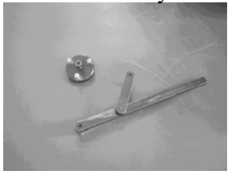
Rihmaratas ja hammasrihm
- Pöörake hooratast päripäeva. Joondage veetava rihmaratta "1" silindripea märgisega "▼".
Tähelepanu:
Ärge pöörake hooratast vastupäeva, muidu kahjustub klapisüsteem.
- Eemaldage hammasrihm veetava rihmaratta poolelt.
Tähelepanu:
Kui hammasrihm pole paigaldatud, ärge pöörake rihmaratast, muidu kahjustub klapisüsteem.
- Eemaldage veetava rihmaratta polt, veetav rihmaratas ja poolkuukiil.
Märkus:
Eemaldage veetava rihmaratta polt hoorattahoidiku abil.
Ärge pöörake nukkvõlle ajastusrihmaratta lõdvendamisel.
Märkus:
Enne nookurivõlli eemaldamist lõdvendage lukustusmutrit ning keerake reguleerimiskruvi lõdvaks.
- Eemaldage sisselaske- ja väljalaskeklapid klapivedru surujaga.
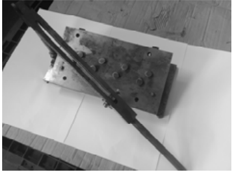
Klapid ja klapijuhikud
- Eemaldage ajastusrihmaratta seib, ajastusrihmaratas ja poolkuukiil.
- Kontrollige rihmaratast ja hammasrihma pragude, kahjustuste või kulumise suhtes. Vahetage vajaduse korral.
- Paigaldage poolkuukiil ja veetav rihmaratas.
Joondage veetava rihmaratta "1" silindripea märgisega "▼". Pingutage seejärel veetava rihmaratta poldid ajutiselt.
Tähelepanu:
Kui hammasrihm pole paigaldatud, ärge pöörake rihmaratast, muidu kahjustub klapisüsteem.
- Paigaldage poolkuukiil ja ajastusrihmaratas. Joondage ajastusrihmaratta sälgumärgis korpuse märgisega "▼".
- Paigaldage uus hammasrihm nii, et selle varuosanumber oleks õigetpidi.
Tähelepanu:
Ärge keerake, pöörake ega painutage hammasrihma, muidu see kahjustub.
Ärge kandke hammasrihmale õli ega määrdeõli.
Ärge pöörake rihmaratast vastupäeva, muidu kahjustub klapisüsteem.
- Paigaldage ajastusrihmaratta katteplaat ja pingutage ajastusrihmaratta mutter ajutiselt.
- Pöörake ajastusrihmaratast 2 pööret päripäeva, et kõrvaldada hammasrihma lõtvus.
Kontrollige, kas joondusmärgised on kohakuti.
- Pingutage poldid ja mutrid.
Pingutusmoment: veetava rihmaratta polt 38 Nm
Märkus:
Eemaldage veetava rihmaratta polt hoorattahoidiku abil.
Pingutage ajastusrihmaratta mutrid spetsiaalse ajastusrihmaratta mutrite padrunvõtmega.
Lahtivõtmine ja kontroll
Silindripea
Lahtivõtmine
- Eemaldage silindripea kaane poldid.
- Eemaldage silindripea poldid vastupidises järjekorras silindripea numbrimärgiste järgi.
- Eemaldage silindripea ning seejärel õlipump.
- Eemaldage nookurivõll, vedru ja nookurikoost.
- Kontrollige klapi tihenduspinna laiust. Kui see pole ettenähtud vahemikus, töödelge klapipesa rõngast.
Tihenduspinna laius:
| Sisselaskeklapp | 1.84 ~ 2.97mm |
|---|---|
| Väljalaskeklapp | 1.98 ~ 3.11mm |
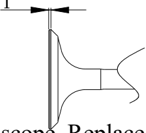
- Kontrollige klapiserva paksust T. Kui ettenähtud väärtust ei saavutata, vahetage klapp. Klapiserva paksus: T
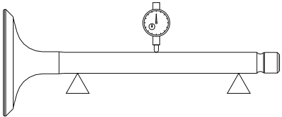
- Kontrollige klapisääre läbimõõtu. Kui see pole ettenähtud vahemikus, vahetage klapp. Klapisääre läbimõõt.
- Kontrollige klapisääre ümarust. Kui piirväärtus on ületatud, vahetage klapp. Klapisääre ümaruse piir 0.03mm
- Kontrollige klapijuhiku siseläbimõõtu. Klapijuhiku siseläbimõõt: 5.50 ~ 5.51 mm
| Sisselaskeklapp | 0.6 ~ 1.0mm |
|---|---|
| Väljalaskeklapp | 0.7 ~ 1.1mm |
| Sisselaskeklapp | 5.48 ~ 5.49mm |
|---|---|
| Väljalaskeklapp | 5.46 ~ 5.47mm |
Tähelepanu:
Klapi vahetamisel kasutage kindlasti uusi klapijuhikuid ja klapitihendit.
Klapivedru
- Kontrollige klapivedru vaba pikkust. Kui see on ettenähtud väärtusest väiksem, vahetage vedru. Vaba pikkus: 39.85 mm
- Kontrollige klapivedru kaldenurka. Kui piirväärtus on ületatud, vahetage vedru.
Minimaalne vaba pikkus: 37.85 mm
Kalde piirväärtus: 1.7 mm
Klapinookur ja nookurivõll
- Kontrollige klapinookuri ja nookurivõlli kontaktpinda kulumise suhtes. Vahetage vajaduse korral.
- Mõõtke, kas klapinookuri siseläbimõõt ja nookurivõlli välisläbimõõt vastavad ettenähtud väärtustele. Vahetage vajaduse korral. Klapinookuri siseläbimõõt: 16.000 ~ 16.01 mm
Nookurivõlli välisläbimõõt: 15.97
~ 15.99 mm
Nukkvõll
- Kontrollige nuki mõõtmeid.
Vajaduse korral vahetage nukkvõll välja.
| Nuki kõrgus | Sisselase | 30.89~30.99mm |
|---|---|---|
| Nuki kõrgus | Väljalase | 30.82~30.92mm |
| Põhiringi läbimõõt | Põhiringi läbimõõt | 25.95~26.05mm |
- Kontrollige nukkvõlli ümarust. Vahetage vajaduse korral. Ümaruse piir: 0.03mm

Märkus:
Kandke enne paigaldamist juhiku pinnale õli.
- Hõõritsege juhiku siseläbimõõt hõõritsaga ettenähtud väärtuseni. Klapijuhiku siseläbimõõt: 5.50 ~ 5.51 mm
Märkus:
Ärge pöörake hõõritsat väljavõtmisel vastupäeva.
Kontrollige klapipesa rõngast.
- Eemaldage klapilt tahmasadestised.
- Kandke klapipesa rõnga tihenduspinnale ühtlane õhuke kiht värvainet.
- Lihvige klappi klapipesal klapilihvimistööriistaga.
- Mõõtke klapi tihenduspinna laiust.
Värv jääb klapi tihenduspinnale.
Kui klapp ja klapipesa rõngas ei sobitu korralikult või tihenduspinna laius ei vasta ettenähtud väärtusele, töödelge klapipesa.
- Kontrollige nukkvõllikaela läbimõõtu ja silindripea võlliava siseläbimõõtu. Vahetage vajaduse korral.
Nukkvõlli ülemise kaela läbimõõt a1 (veetava rihmaratta paigaldusots): 36.93~36.94 mm Nukkvõlli keskmise ja tagumise kaela läbimõõt a2: 36.94~36.95 mm Silindripea võlliava siseläbimõõt b: 37.00~37.02 mm
- Arvutage nukkvõlli õlilõtk c (c=b-a). Kui ettenähtud väärtust ei saavutata, vahetage nukkvõll. Nukkvõlli ülaosa: 0.06~0.10 mm
Nukkvõlli kesk- ja tagaosa: 0.05~0.09 mm
Tähelepanu:
Nukkvõll ja silindripea tuleb vahetada koos.
Õlipumba kontroll
- Eemaldage õlipumba kinnituskruvid ja õlipump.
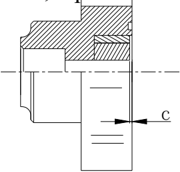
- Avage õlipumba kaas ja kontrollige rootori lõtku joonisel näidatud viisil. Kui ettenähtud väärtust ei saavutata, vahetage pump. a
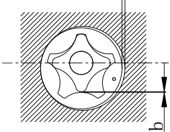
| Välisrootori ja korpuse lõtk a | 0.09~0.15mm |
|---|---|
| Välisrootori ja sisemise rootori lõtk b | 0.01~0.10mm |
| Rootori ja kaane lõtk c | 0.03~0.08mm |
Silindripea ja korpuse liitepind
- Eemaldage põlemiskambrist tahmasadestised ja kontrollige kahjustusi.
- Kontrollige liitepinna kõverust joonlaua ja lehtkaliibriga. Kui ettenähtud väärtust ei saavutata, vahetage detail.
Silindripea kõveruse piir: 0.03 mm
Klapijuhiku vahetamine
- Lööge klapijuhik välja põlemiskambri poolt.
- Lööge uus klapijuhik sisse silindripea ülapinnalt.
Kui kontakt on ebaühtlane, vahetage klapijuhik. Sisselaske- ja väljalaskeklapi tihenduspinna laius: 0.9 ~ 1.1mm
Klapipesarõnga töötlemine
- Töödelge klappi 45° klapipesarõnga lõikuriga ning reguleerige tihenduspinna laiust.
Pöörake lõikurit päripäeva, kuni pesarõnga pind on sile.
- Kui klapi tihenduspind on liiga lai ja klapipinna keskel, töödelge pesarõnga ülaserva 30° lõikuriga ja alaserva 60° lõikuriga ning reguleerige tihenduspinna laiust.
- Kui klapi tihenduspind on liiga kitsas ja klapipinna ülaservas, töödelge pesarõnga ülaserva 30° lõikuriga ning seejärel reguleerige tihenduspinna laiust 45° lõikuriga.
- Kui klapi tihenduspind on liiga kitsas ja klapipinna alaservas, töödelge pesarõnga alaserva 60° lõikuriga ning seejärel reguleerige tihenduspinna laiust 45° lõikuriga.
- Kandke klapipesa rõngale ühtlane õhuke kiht abrasiivi ja lihvige klappi klapilihvimistööriistaga.
- Eemaldage lihvimispasta jäägid.
- Kontrollige klapi tihenduspinna laiust uuesti.
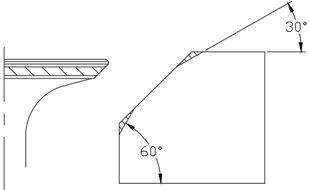
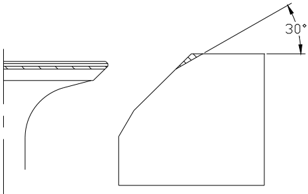
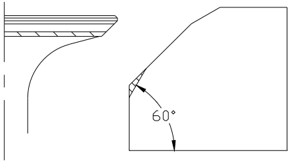
Tähelepanu:
Ärge lõigake klappi liiga palju. Pöörake lõikurit ühtlaselt, rakendades allapoole jõudu 40 ~ 50N. Ärge laske abrasiivi klapisäärele ega klapijuhikule.
Märkus:
Veenduge, et välisrootori märgis oleks õlipumba kaane poole.
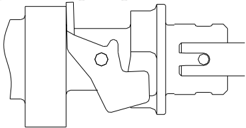
- Paigaldage õlipump, joondades õlipumba veovõlli ja nukkvõlli tihvti.
Tähelepanu:
Enne õlipumba paigaldamist veenduge, et õlikanal oleks vaba, ja täitke õlipump õliga.
Klapi paigaldamine
- Paigaldage uus klapi õlitihend ja katke klapijuhik mootoriõliga.
- Paigaldage järjest klapp, klapivedru alus, klapivedru ja vedrupesa.
- Suruge klapivedru surujaga kokku ja paigaldage klapivedru lukusti.
- Koputage klapivedru pesa kergelt plast- või kummihaamriga, et lukusti fikseerida.
Silindripea kokkupanek
- Paigaldage uus õlitihend eritööriistadega.
- Paigaldage nukkvõll silindripeasse õlipumba poolt.
- Kontrollige, et nukkvõlli pea paigaldustihvti ava oleks silindripea kaane suunas (nookuri poolel). Vajaduse korral reguleerige.
- Paigaldage nookurikoost, vedru ja nookurivõll.
- Pange õlipump kokku.
Karter
Lahtivõtmine
- Eemaldage õlifilter eritööriistadega.
Märkus:
Asetage õlifiltri alla lapp.
Filtrivõti
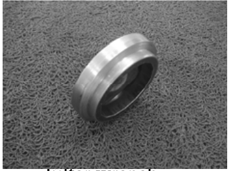
- Eemaldage poldid vastupidises järjekorras väljalaskekatte kruviavade servadel olevate numbrite järgi.
- Eemaldage termostaadi kaas, väljalaskekate, tihend ja paigaldustihvt.
Puhastage anoodi pind ja kontrollige anoodi. Vahetage anood, kui korrosioon ületab poole pinnast.
Kontrollige väljalaskekatte plaati pragude, deformatsiooni või korrosiooni suhtes. Vahetage vajaduse korral.
- Eemaldage korpuse poldid vastupidises järjekorras mootorialuse kruviavade serval olevate numbrite järgi ja eemaldage mootorialus.
- Eemaldage kepsupolt ja kepsukaas, eemaldage väntvõll ning seejärel kepsu ja kolvi koost.
- Eemaldage kolvisõrme lukustusrõngas tangidega, seejärel eemaldage kolvisõrm ja kolb.
- Eemaldage õlitihend, asenditihvt ja laagriliud.
Kolb
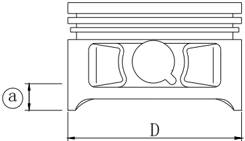
- Mõõtke kolvi välisläbimõõtu ettenähtud mõõtepunktis.
Kui ettenähtud väärtust ei saavutata, vahetage detail.
Kolvi läbimõõt: 64.950
~ 64.965 mm
Mõõtepunkt○
a : 5mm
- Kontrollige kolvisõrme ava siseläbimõõtu.
Kui ettenähtud väärtust ei saavutata, vahetage detail.
Kolvisõrme ava siseläbimõõt: 15.974~15.985mm
Silindri läbimõõt:
- Mõõtke kolvi välisläbimõõtu ○ 1 , ○ 2 ja ○ 3 ettenähtud mõõtepunktis. Mõõtke igas punktis vastavalt kuus läbimõõtu väntvõlli suunaga paralleelselt D1, D3, D5 ja risti D2, D4, D6.
- Arvutage koonilisuse ja ümaruse piir. Kui ettenähtud väärtus on ületatud, vahetage karter.
Mõõtepunkti kõrgus ○ 1 20 mm;
○ 260 mm;
○ 3100 mm
Silindri läbimõõt: 65.000
~ 65.013 mm
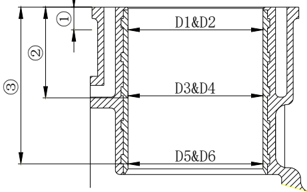
Koonilisuse piirväärtus: 0.08 mm (D1-D5, D2-D6)
Ümaruse piir:
0.05 mm (D2-D1, D6-D5)
Kolvisõrme välisläbimõõt
Kontrollige kolvisõrme välisläbimõõtu. Kui see ei vasta ettenähtud väärtusele, vahetage sõrm.
Kolvisõrme välisläbimõõt: 15.965
~ 15.970 mm
Kolvirõngas
- Kontrollige kolvirõnga ristlõike mõõtmeid. Kui ettenähtud väärtust ei saavutata, vahetage rõngas.
- Lükake kolvirõngas kolviga paralleelselt silindrisse ettenähtud mõõtepunktini (20mm liitepinnast).
- Mõõtke kolvirõnga otste vahet lehtkaliibriga. Kui see ei vasta ettenähtud väärtusele, vahetage rõngas.
| Paksus | Ristlõike laius | |
|---|---|---|
| Ülemine rõngas | 1.17 ~ 1.19mm | 2.39 ~ 2.41mm |
| 2. rõngas | 1.47~1.49mm | 2.49 ~ 2.51mm |
| Õlirõngas | 2.34 ~ 2.46mm | 2.75mm |
Otste vahe (paigaldamisel) ülemine rõngas 0.15 ~ 0.30 mm
2-ne
rõngas 0.30 ~ 0.50 mm
Õlirõngas 0.20 ~ 0.70 mm
- Paigaldage kolvirõngas kolvile ja mõõtke rõnga ning kolvirõnga soone vahet lehtkaliibriga. Kui see ei vasta ettenähtud väärtusele, vahetage rõngas.
Ettenähtud lõtk: ülemine rõngas 0.02 ~ 0.06 mm
2-ne
rõngas 0.02 ~ 0.06 mm
Õlirõngas 0.04 ~ 0.18 mm
Kepsu väikese silma siseläbimõõt. Mõõtke väikese silma siseläbimõõtu. Kui ettenähtud väärtust ei saavutata, vahetage keps.
Väikese silma siseläbimõõt: 15.985
~ 15.998 mm
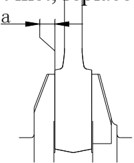
Kepsu suure silma külglõtk
Mõõtke suure silma külglõtku. Kui ettenähtud väärtust ei saavutata, vahetage keps või väntvõll või mõlemad. a
Suure silma külglõtk: 0.05
~ 0.22 mm
Kepsupoltide kontroll
- Kontrollige kepsupoldi keerme läbimõõtu näidatud kohas.
- Arvutage kahe keerme läbimõõdu erinevus. Kui see ei vasta ettenähtud väärtusele, vahetage polt.
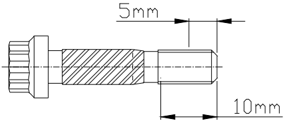
Kepsupoldi keerme läbimõõtude erinevus: 0 ~ 0.1 mm
Väntvõll
- Mõõtke väntvõllikaela läbimõõtu, väntkaela läbimõõtu ja väntkaela laiust. Kui ettenähtud väärtust ei saavutata, vahetage väntvõll.
- Kontrollige väntvõlli viskumist. Kui ettenähtud väärtus on ületatud, vahetage väntvõll.
| Väntvõlli laagrikaela läbimõõt | 42.984~43.000mm |
|---|---|
| Väntkaela läbimõõt | 32.984~33.000mm |
| Väntkaela laius | 21.000~21.070mm |
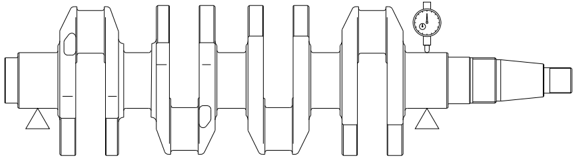
Väntvõlli viskumise piirväärtus: 0.04mm
Väntkaela õlilõtk
- Asetage väntkaelale plastist lõtkumõõteriba väntvõlliga paralleelselt.
- Asetage keps ja laagriliud väntkaelale.
- Pingutage kepsupoldid ettenähtud momendiga.
Märkus:
Ärge pöörake kepsu enne mõõtmise lõpetamist.
Pealaagrikaela õlilõtk
- Puhastage laagriliua paigalduspind, pealaagrikael, mootorikorpus ja mootorialus.
- Paigaldage laagriliud ja väntvõll korpusesse.
- Asetage plastist lõtkumõõdik pealaagrikaelale väntvõlliga paralleelselt.
Märkus:
Ärge asetage plastist lõtkumõõteriba pealaagrikaela õliavale.
- Paigaldage laagriliud mootorialusele ja mootorialus korpusele.
- Pingutage poldid ettenähtud momendiga mootorialuse numbrimärgiste järjekorras.
Pingutusmoment:
| 1. pingutamine | M8 | 15 Nm |
|---|---|---|
| 2. pingutamine | M8 | 30 Nm |
| 1. pingutamine | M6 | 6 Nm |
| 2. pingutamine | M6 | 12 Nm |
- Eemaldage mootorialus ja mõõtke iga kokkusurutud plastist lõtkumõõdiku laiust. Kui ettenähtud väärtus on ületatud, vahetage laagriliud.
Õlilõtk: 0.012
~ 0.044mm
Märkus:
Ärge pöörake väntvõlli enne mõõtmise lõpetamist.
Mootorikorpus ja alus
- Kontrollige mootorikorpust ja alust pragude, kahjustuste ning korrosiooni suhtes. Vajaduse korral vahetage.
- Kontrollige jahutusvee kanalit mustuse või ummistuste suhtes. Vajaduse korral puhastage.
- Eemaldage keps ja mõõtke kokkusurutud plastist lõtkumõõdiku laiust. Kui ettenähtud väärtus on ületatud, vahetage kepsu laagriliud.
Pingutusmoment: esimene kord 6 Nm
Teine kord 17 Nm
Õlilõtk: 0.020~0.052mm
Märkus:
Sisestage laagriliua kõrgem osa korpuse vastava osa soonde.
- Paigaldage väntvõll korpusesse ja õlitihend.
Märkus:
Kandke enne paigaldamist õlitihendi sisepinnale õli.
- Paigaldage kepsukaas kepsule ning pingutage poldid kahes etapis ettenähtud momendiga.
Pingutusmoment: esimene kord 6 Nm
Teine kord 17 Nm
Märkus:
Joondage kepsukaas kepsul oleva tähisega.
Kandke enne paigaldamist kepsupoltidele õli.
Mootori kokkupanek
- Kandke aluse liitepinnale hermeetikut ja paigaldage paigaldustihvt ning alus. Pingutage poldid kahes järgus alusel märgitud järjekorras.
Pingutusmoment:
Märkus:
Kandke enne paigaldamist liikuvale pinnale õli.
| 1. pingutamine | M8 | 15 Nm |
|---|---|---|
| 2. pingutamine | M8 | 30 Nm |
| 1. pingutamine | M6 | 6 Nm |
| 2. pingutamine | M6 | 12 Nm |
Tagasipaigaldamine
Kolvi ja kepsu kokkupanek
Paigaldage kolb, keps, kolvisõrm ja kolvisõrme lukustusklamber.
Märkus:
Paigaldamisel veenduge, et kepsu märgis oleks kolvi ülaosa märgisega samal küljel.
Kolvirõnga paigaldamine
- Paigaldage kolvirõngad järjekorras õlirõngas, teine rõngas ja ülemine rõngas.
Märkus:
Teise rõnga paigaldamisel veenduge, et märgis oleks kolvi ülaosa poole.
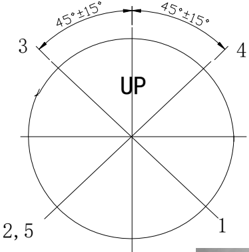
- Kolvirõnga pilu asend.
Õlirõnga alumine tugirõngas 1 Õlirõnga vedrurõngas 2 Õlirõnga ülemine tugirõngas 3 Teine rõngas 4 Ülemine rõngas 5
Kolvi paigaldamine
Paigaldage kolb kolvi paigaldusjuhikuga,
Veenduge, et kolvi ülaosa märgis "UP" oleks hooratta poole.
Märkus:
Paigaldamisel kandke kolvi ja kolvirõnga külgedele õli.
Väntvõlli paigaldamine
- 1.Paigaldage laagriliud korpusesse.
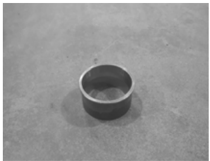
Märkus:
Enne paigaldamist sisestage õlikanalisse õli.
- Paigaldage väljalaskekate, termostaat ja termostaadi kaas.
Pingutage need ettenähtud momendiga kahes järgus väljalaskekatte plaadil märgitud järjekorras.
Pingutusmoment: esimene kord 6 Nm
Esimene kord 12 Nm
- Paigaldage asenditihvt, silindritihend ja silindripea koost.
- Kontrollige poolkuukiilu kiilusoone asendit nukkvõllil.
- Pingutage silindripea poldid ettenähtud väärtusteni 2 järgus silindripeal märgitud järjekorras.
Ettenähtud pingutusmoment:
| 1. pingutamine | M9 | 23 Nm |
|---|---|---|
| 2. pingutamine | M9 | 46 Nm |
| 1. pingutamine | M6 | 6 Nm |
| 2. pingutamine | M6 | 12 Nm |
Tähelepanu:
Ärge kasutage vanu silindritihendeid.
- Paigaldage ajastusrihmaratas, veetav rihmaratas, hammasrihm ja tuulutustoru.
Tähelepanu:
Hammasrihma paigaldamisel veenduge, et veetava rihmaratta märgis oleks silindripea märgisega "▼" kohakuti. Veenduge, et ajastusrihmaratta märgis oleks korpuse märgisega "▼" kohakuti.
- Reguleerige klapilõtku.
- Paigaldage silindripea kaas ja pingutage poldid silindripea kaanel märgitud järjekorras.
- Paigaldage elektrisüsteemi osad eemaldamisele vastupidises järjekorras
- Ühendage elektrisüsteemi juhe.
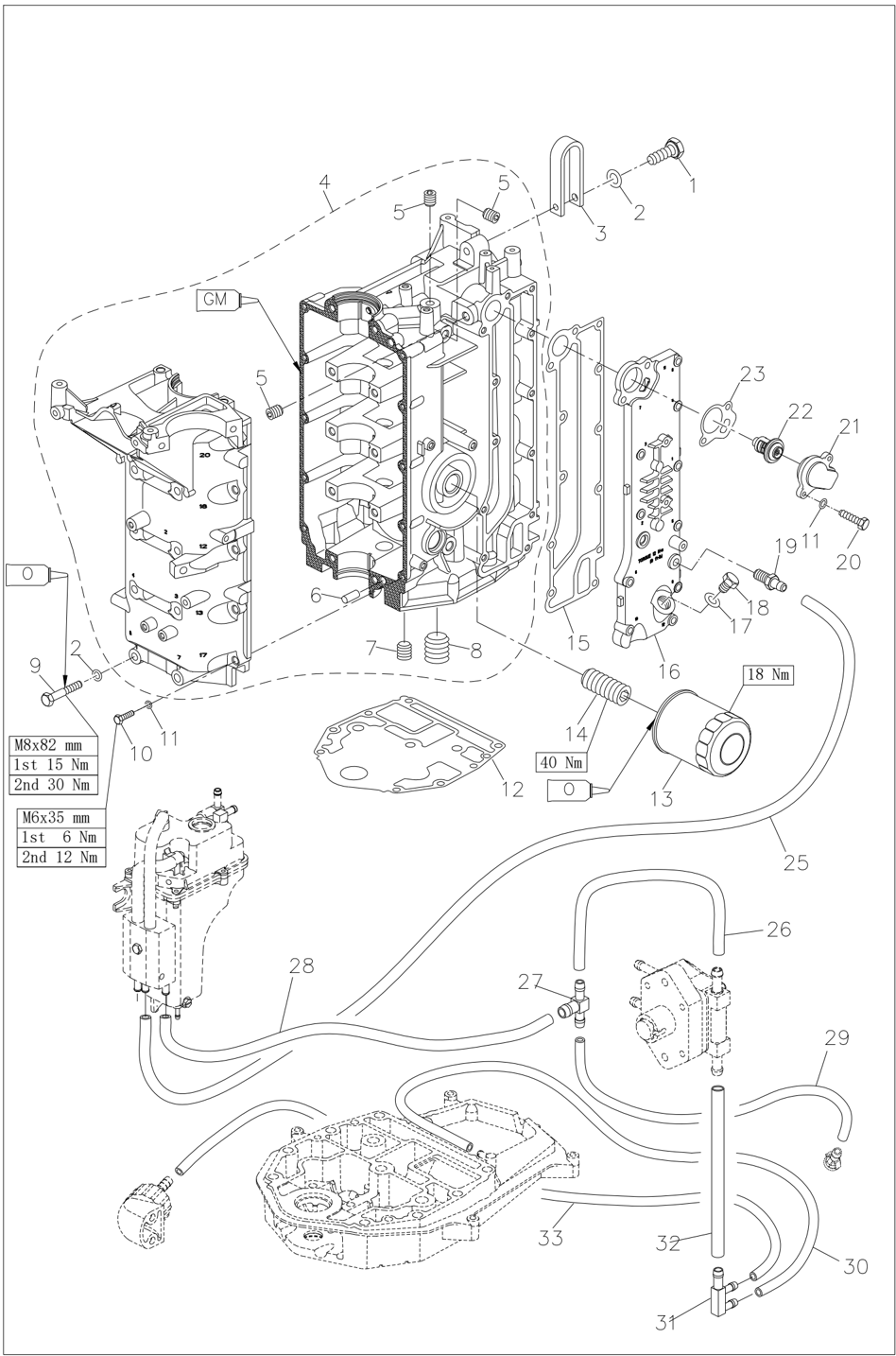
- Paigaldage kütusesüsteem.
Enne paigaldamist kandke poltidele õli.
- Paigaldage õlifilter eritööriistadega ja pingutage ettenähtud momendiga.
- Pingutusmoment: 18 Nm
Ülemine korpus
Ülemine mootorikate
Lahtivõtmise skeem
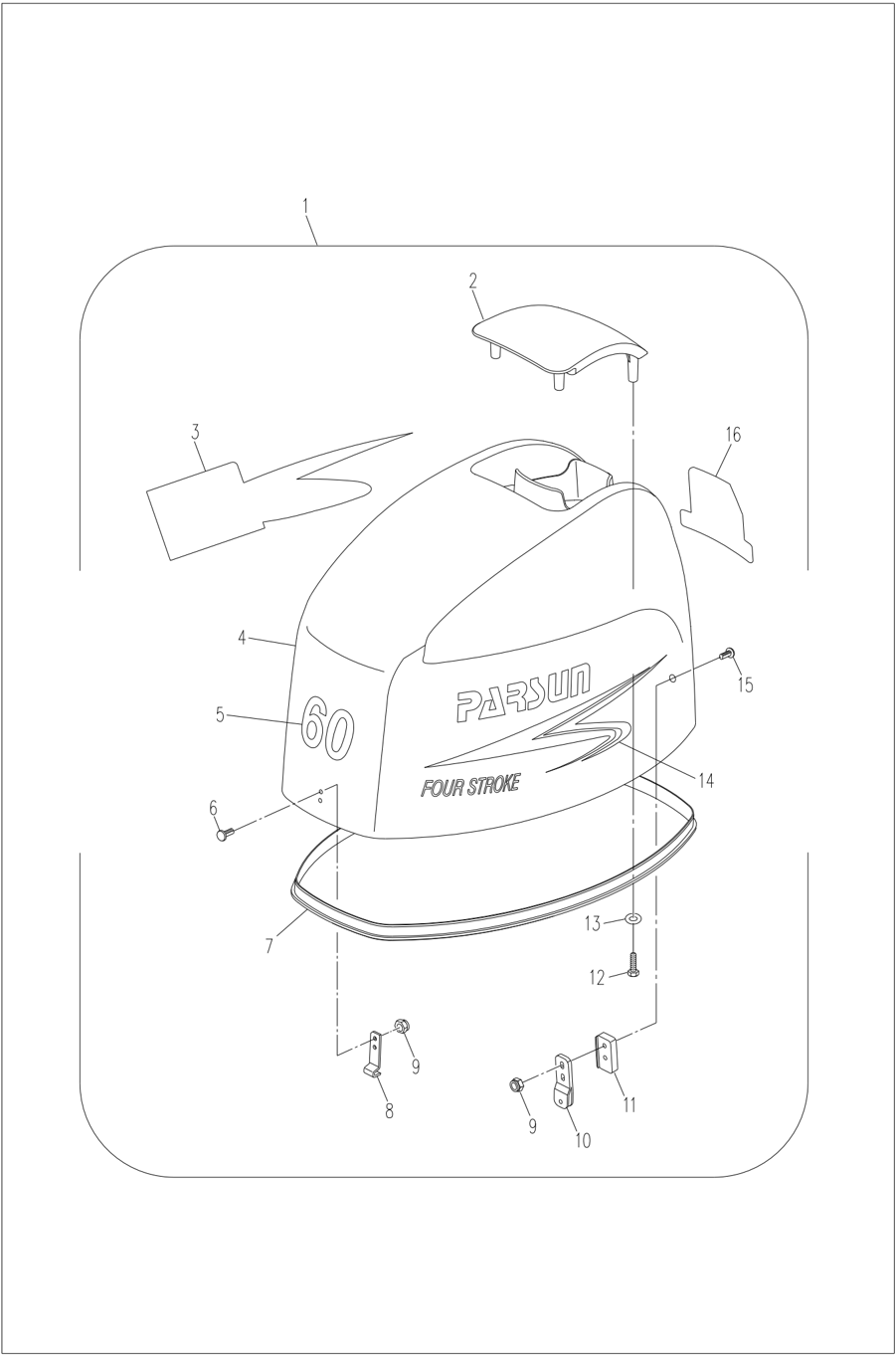
Lahtivõtmine ja kontroll
- Eemaldage kummist tihendusriba.
- Eemaldage ülemise katte kruvid.
- Eemaldage ülemine kate.
- Eemaldage lukustuskonks ja konks.
- Kontrollige ülemist katet pragude, kahjustuste või kulumise suhtes. Vahetage vajaduse korral.
- Kontrollige kummist tihendusriba pragude või kahjustuste suhtes. Vajaduse korral vahetage see välja.
- Kontrollige ülemise katte summutit pragude või kahjustuste suhtes. Vahetage vajaduse korral.
- Kontrollige lukustuskonksu ja konksu pragude, deformatsiooni või kahjustuste suhtes. Vahetage vajaduse korral.
Alumine mootorikate
Lahtivõtmise skeem
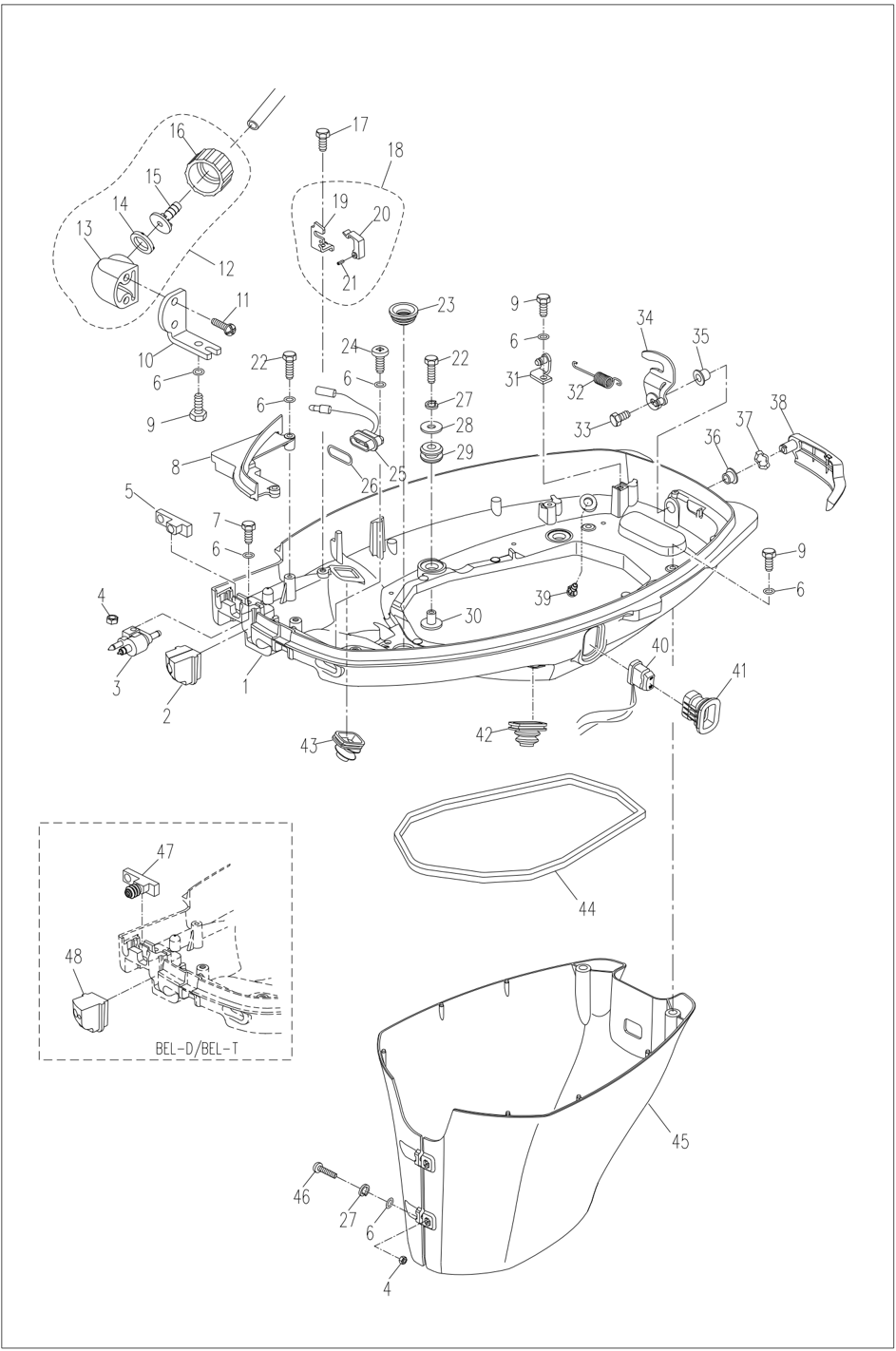
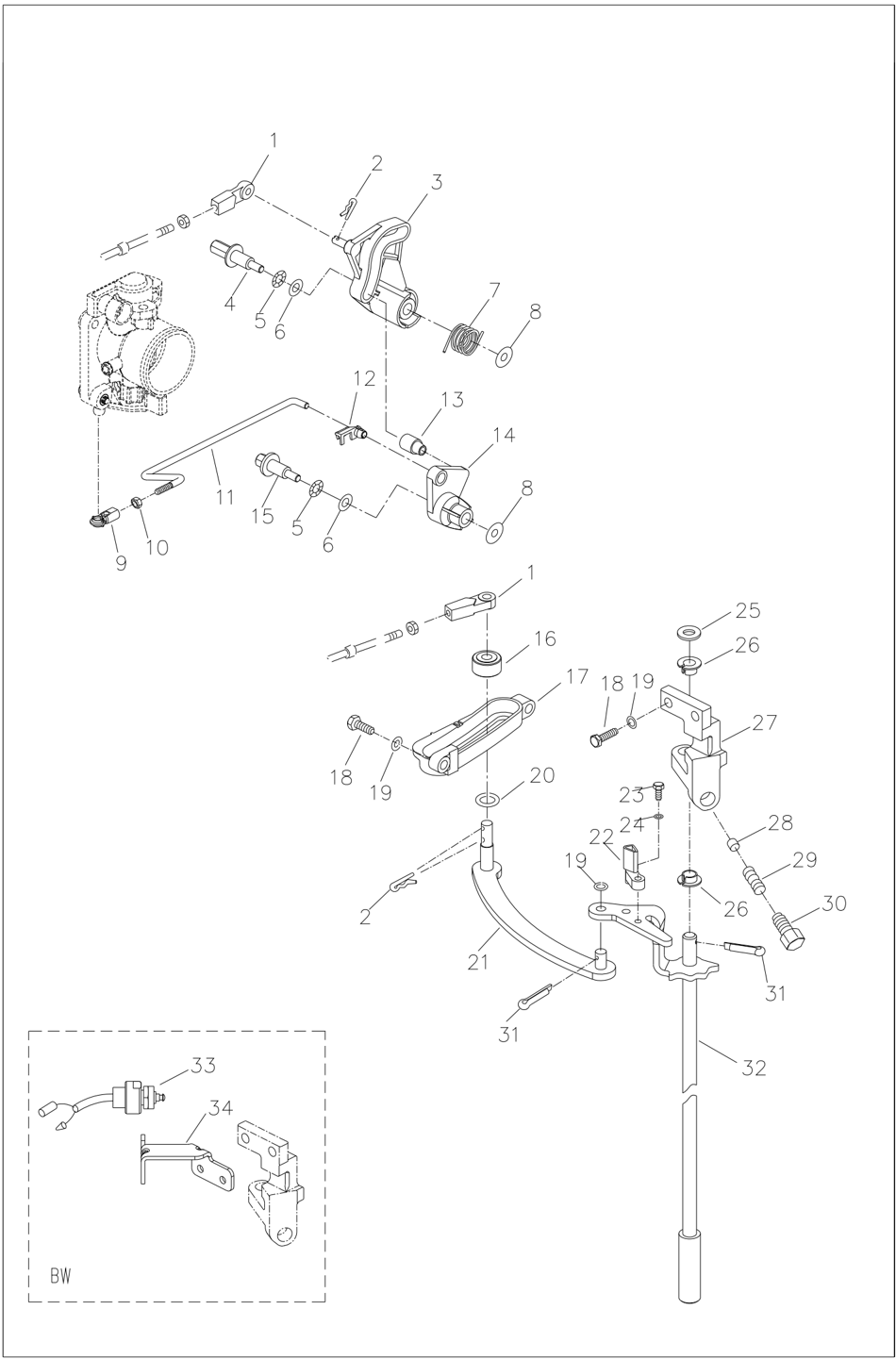
Lahtivõtmine ja kontroll
- Eemaldage kummist kork, gofreeritud kummihülss ja gaasitrossi kate. Eemaldage süütejuhtme koost.
- Eemaldage alumise katte väikese katteplaadi kinnituspoldid, väike katteplaat ja nelinurkne kummist tihendusriba. Eemaldage avamise piirplaat ja ristkülikukujuline kummist kork.
- Eemaldage ülemise katte lukustuskäepideme kruvi, lukustuskäepide ja ülemise katte lukustusplokk.
- Eemaldage ülemise katte lukustuskäepideme nailonhülss A ja nailonhülss B.
- Eemaldage laineline seib.
- Eemaldage juhttrossi liitmik A ja gaasi kiikhoova pesa poldid.
- Eemaldage gaasi kiikhoova pesa ja gaasi kiikhoova koostu splint.
- Eemaldage käiguvahetustugi, käiguvahetuse hoovastiku koost ja pidurinookur.
- Kontrollige ülemist katet pragude, kahjustuste või kulumise suhtes. Vahetage vajaduse korral.
- Kontrollige ülemise katte lukustuskäepidet ja lukustusplokki pragude või kahjustuste suhtes. Vajaduse korral vahetage need välja.
- Kontrollige lainelist seibi ja lukustuskäepideme nailonhülssi A pragude või kahjustuste suhtes. Vahetage vajaduse korral.
- Kontrollige gaasi kiikhoova pesa ja gaasi kiikhooba pragude või kahjustuste suhtes. Vahetage vajaduse korral.
- Kontrollige käiguvahetuse hoovastiku koostu paindedeformatsiooni või kahjustuste suhtes. Vahetage vajaduse korral.
- Kontrollige, kas käiguvahetusnuki plunžer käiguvahetustoel libiseb vabalt. Vahetage vajaduse korral.
- Tagantjuhtimisega mudelitel kontrollige mikrolüliti nookuri kulumist. Kontrollige mikrolüliti elektrijuhtivust. Vahetage vajaduse korral.
Juhtkäepide
Lahtivõtmise skeem
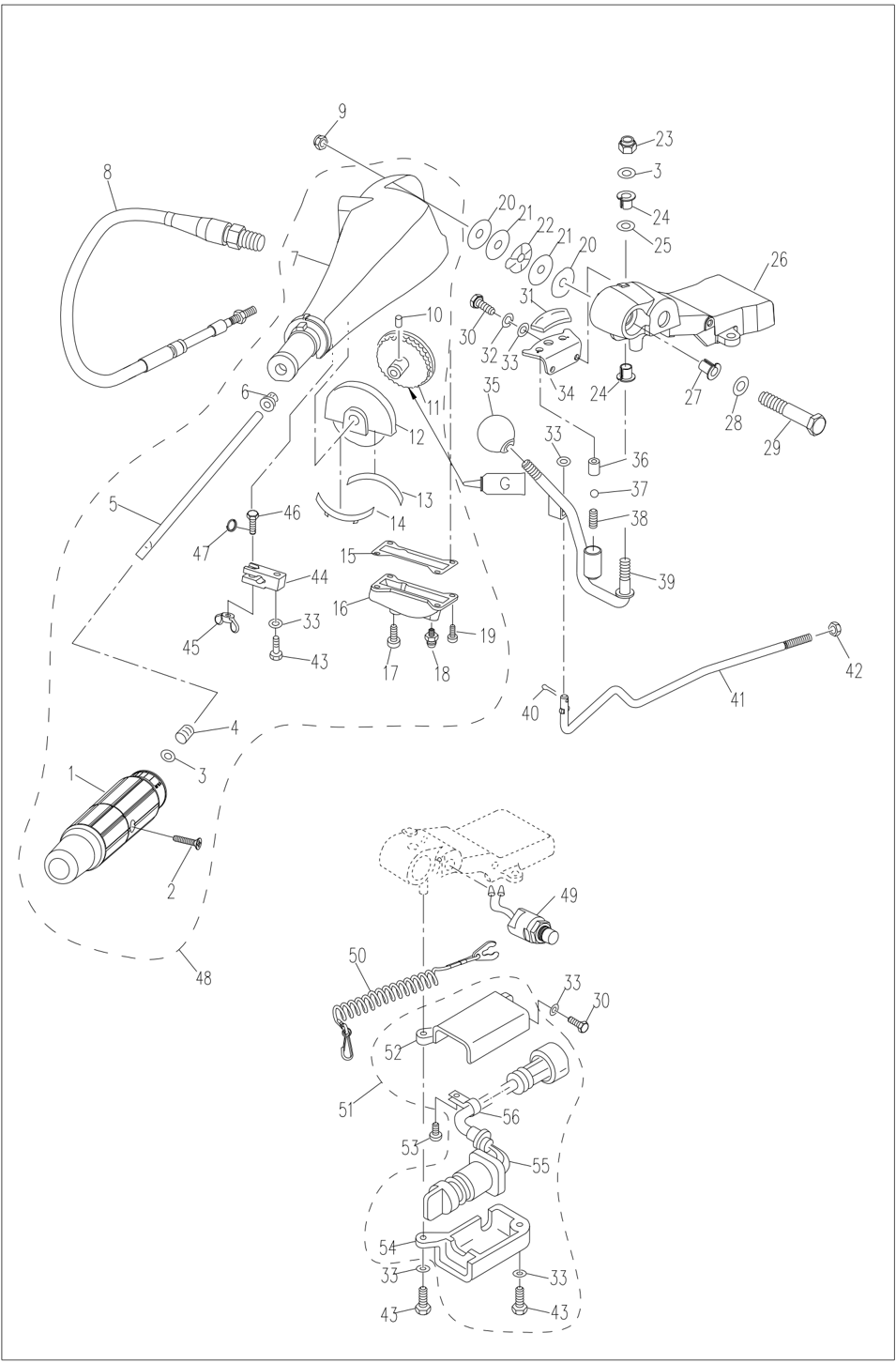
Lahtivõtmine ja kontroll
- Eemaldage käepideme kronstein, käiguvahetuskäepide ja roolikäepide.
- Eemaldage gaasitrossi koost.
- Eemaldage splint ja takistuse reguleerimisnupp.
- Eemaldage gaasikäepide.
- Eemaldage gaasikate ja gaasihoob.
- Eemaldage mootori hädaseiskamislüliti.
- Kontrollige käiguvahetuskäepideme koostu teraskuuli 12 ja käiguvahetuskäepideme vedru kulumise, murdumise ning kinnikiilumise suhtes. Vahetage vajaduse korral.
- Kontrollige roolikäepidet pragude või kahjustuste suhtes. Vahetage vajaduse korral.
- Kontrollige käepideme kulumisvastast rõngast ja lainelist seibi pragude või kahjustuste suhtes. Vahetage vajaduse korral.
- Kontrollige gaasitrossi koostu trossi kulumise või murdumise suhtes. Vahetage vajaduse korral.
- Kontrollige gaasihoova hammasratta koostu hambaid kulumise või puuduvate hammaste suhtes. Vajaduse korral vahetage.
- Kontrollige mootori hädaseiskamislüliti elektrijuhtivust. Kui see ei vasta nõuetele, vahetage lüliti.
Lukustusplaadi eemaldamine: juhib
Lukustusplaadi paigaldamine: ei juhi
Lülitinupu vajutamine: juhib
Ülemise korpuse üksus ja kronsteinid
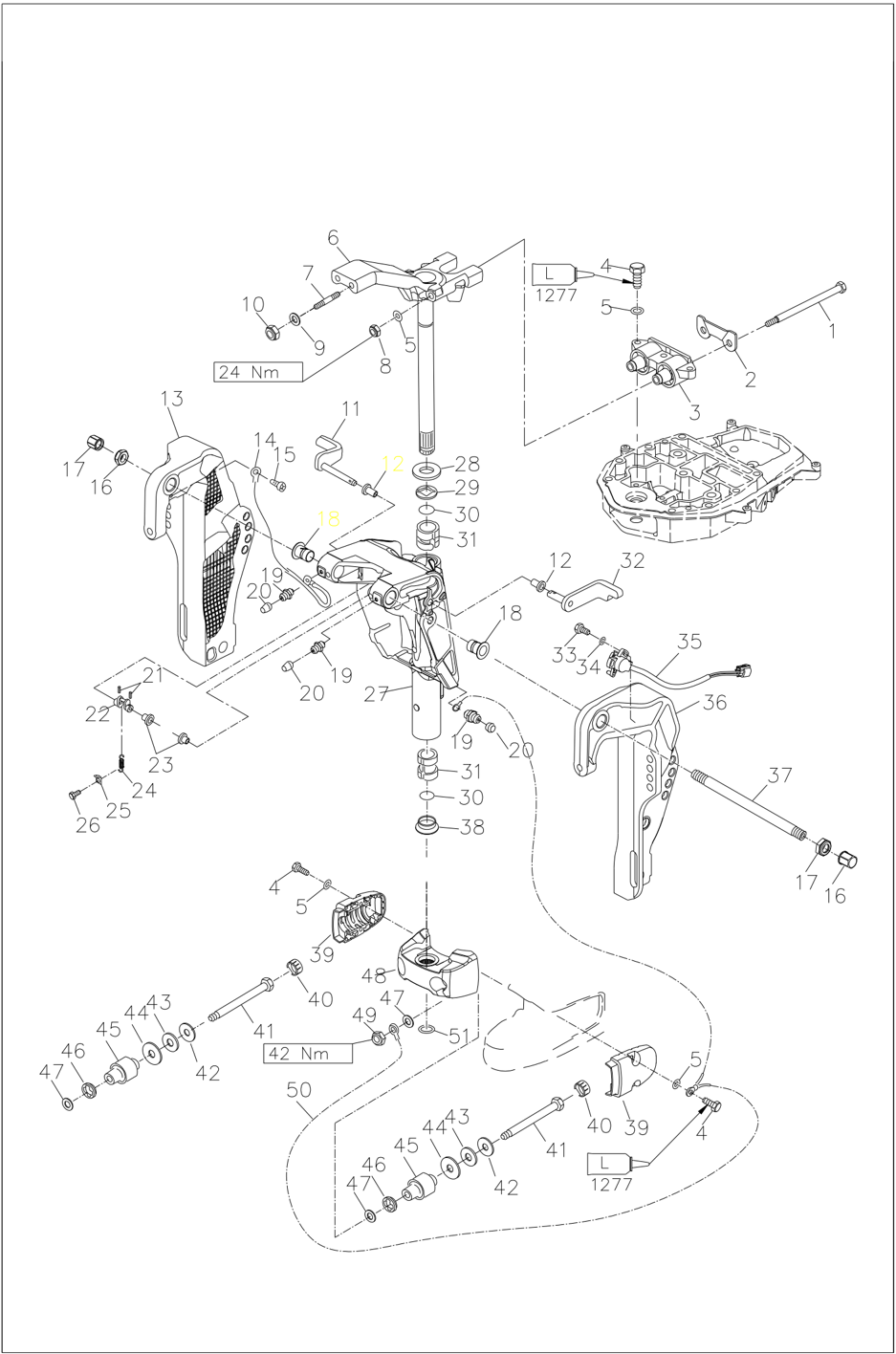
Kronsteini lahtivõtmine ja kontroll
- Eemaldage vasaku ja parema amortisaatori väliskate, vasak ja parem amortisaator ning kahe avaga amortisaatorite kinnitusmutrid.
- Eemaldage ülemine üksus, õlivann ja väljalaskekollektori pesa täielikult kronsteinilt.
- Eemaldage kronsteini kinnitusmutter ja kinnitusklambri kahepealise kruvi toru.
- Lahutage maandusjuhe A ja eemaldage kinnitusklamber.
- Eemaldage tugiraami koost A & B ja nailonpuks.
- Eemaldage amortisaatori kinnitusploki piirav lukustusrõngas ning amortisaatori kinnitusplokk.
Tähelepanu:
Amortisaatori kinnitusplokk ja roolikronsteini koost on nuutidega tihedalt ühendatud. Olge lahtivõtmisel ja paigaldamisel ettevaatlik.
Vältige juhuslikke vigastusi. Ärge võtke lahti, kui see pole vajalik.
- Tõmmake roolikronsteini koost välja ja eemaldage vooder, puks ja O-rõngas.
- Kontrollige pöördkronsteini ja kinnitusklambrit pragude või kahjustuste suhtes. Vahetage vajaduse korral.
- Kontrollige puksi ja voodrit. Kahjustuste või pragude korral vahetage.
- Kontrollige tugiraami koostu A&B deformatsiooni või kahjustuste suhtes. Vahetage vajaduse korral.
- Kontrollige vasaku ja parema amortisaatori kummi vananemise, pragude või lahtiliimumise suhtes. Vahetage vajaduse korral.
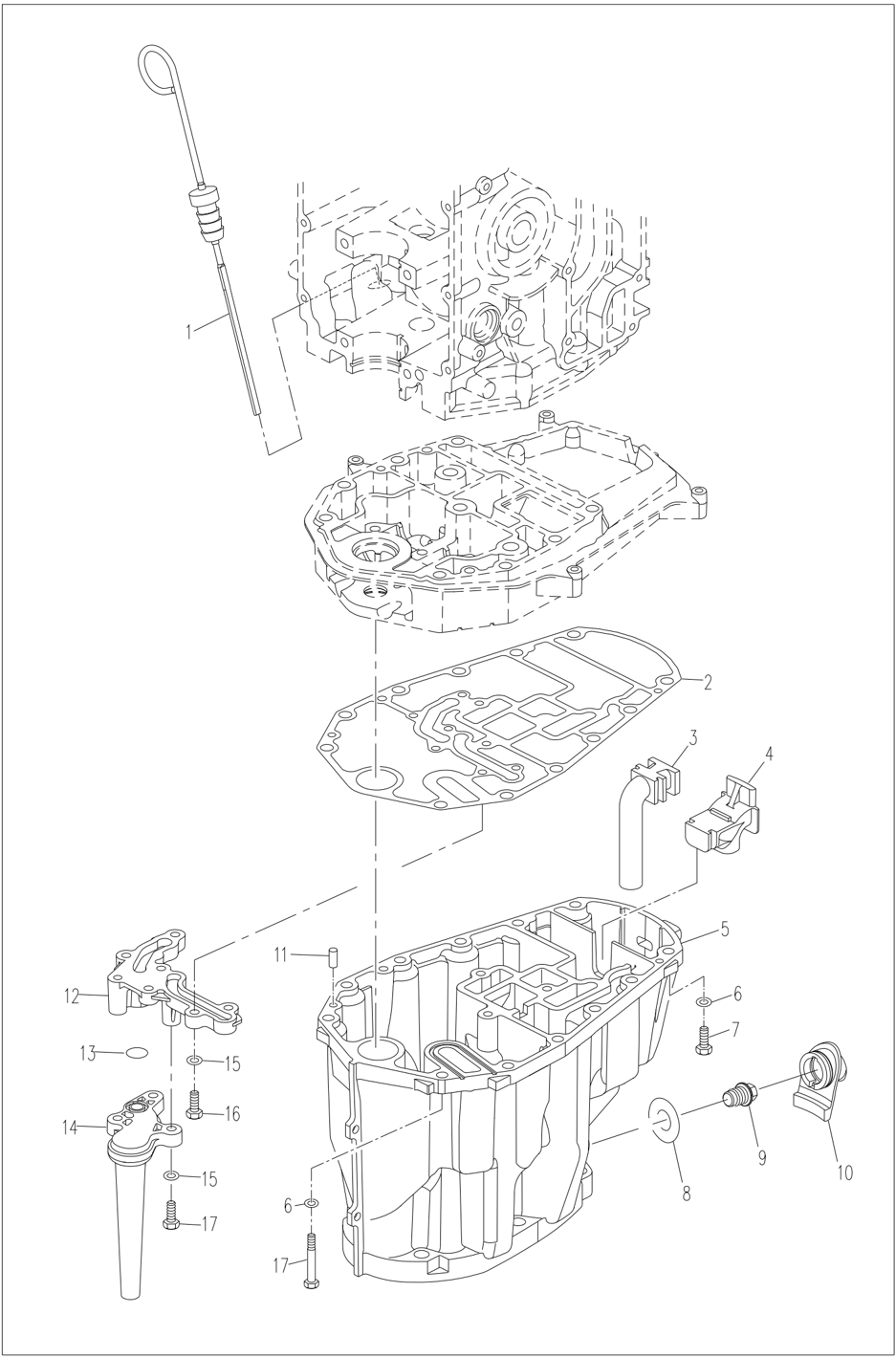
Ülemise üksuse lahtivõtmine ja kontroll
- Laske õli välja.
- Eemaldage ülemise üksuse kohal ja all olevad kinnituspoldid ning eemaldage ülemine üksus.
- Eemaldage väljalaskekollektori pesa ja õlivann.
- Eemaldage väljalaskekollektori pesast jämefiltri koost ja jämefiltri tugi.
- Eemaldage õlivannist väljalasketoru, õli tühjenduskruvi, õli tühjendamise kummihülss, kummikanal A&B ja väljalaskekollektor.
- Eemaldage õlivannist väljalaske vahesein ja väljalaskekanal.
- Eemaldage kahe avaga amortisaator, väljalaske vahesein, veetoru ümar kummirõngas ja veetoru.
- Kontrollige ülemise üksuse korpust ja õlivanni pragude või kahjustuste suhtes. Vahetage vajaduse korral.
- Kontrollige väljalaske vaheseina kahjustuste või pragude suhtes. Vahetage vajaduse korral.
- Kontrollige väljalaskekanalit ja kollektorit pragude või kahjustuste suhtes. Vahetage vajaduse korral.
- Kontrollige väljalaskekanali ja väljalaskekollektori tihendusrõngaid vananemise või pragude suhtes. Vahetage vajaduse korral.
Käsikallutusseade
Lahtivõtmise skeem
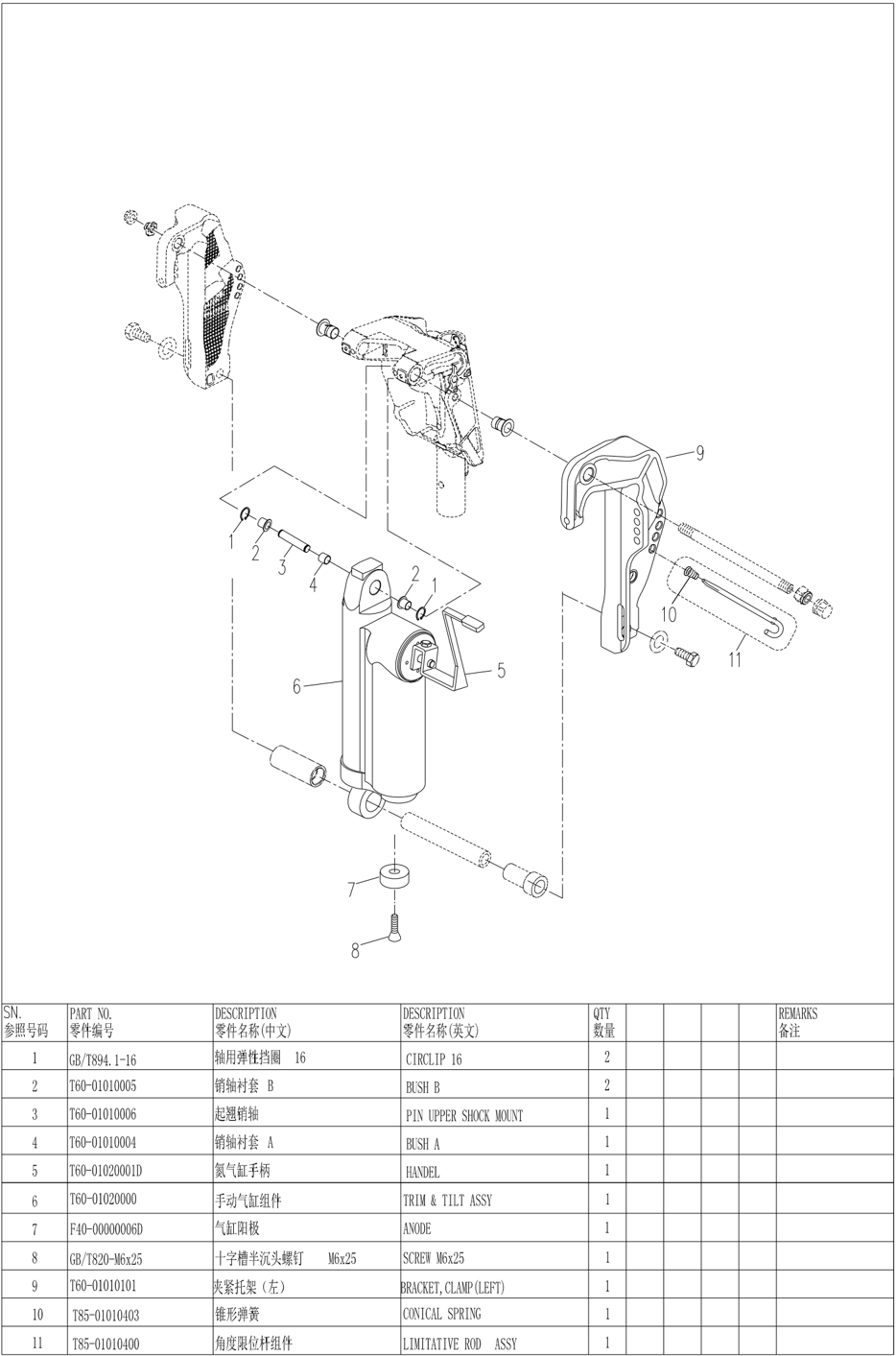
Käsikallutusseadme lahtivõtmine
- Kallutage päramootor täielikult üles ja laske tugiraam alla, et päramootorit toetada.
- Eemaldage võlli traadist lukustusrõngas ja kallutustihvti võll.
- Eemaldage polt ja hüdraulilise kallutuse paigaldusvõll.
- Käsisilindri koostu eemaldamine
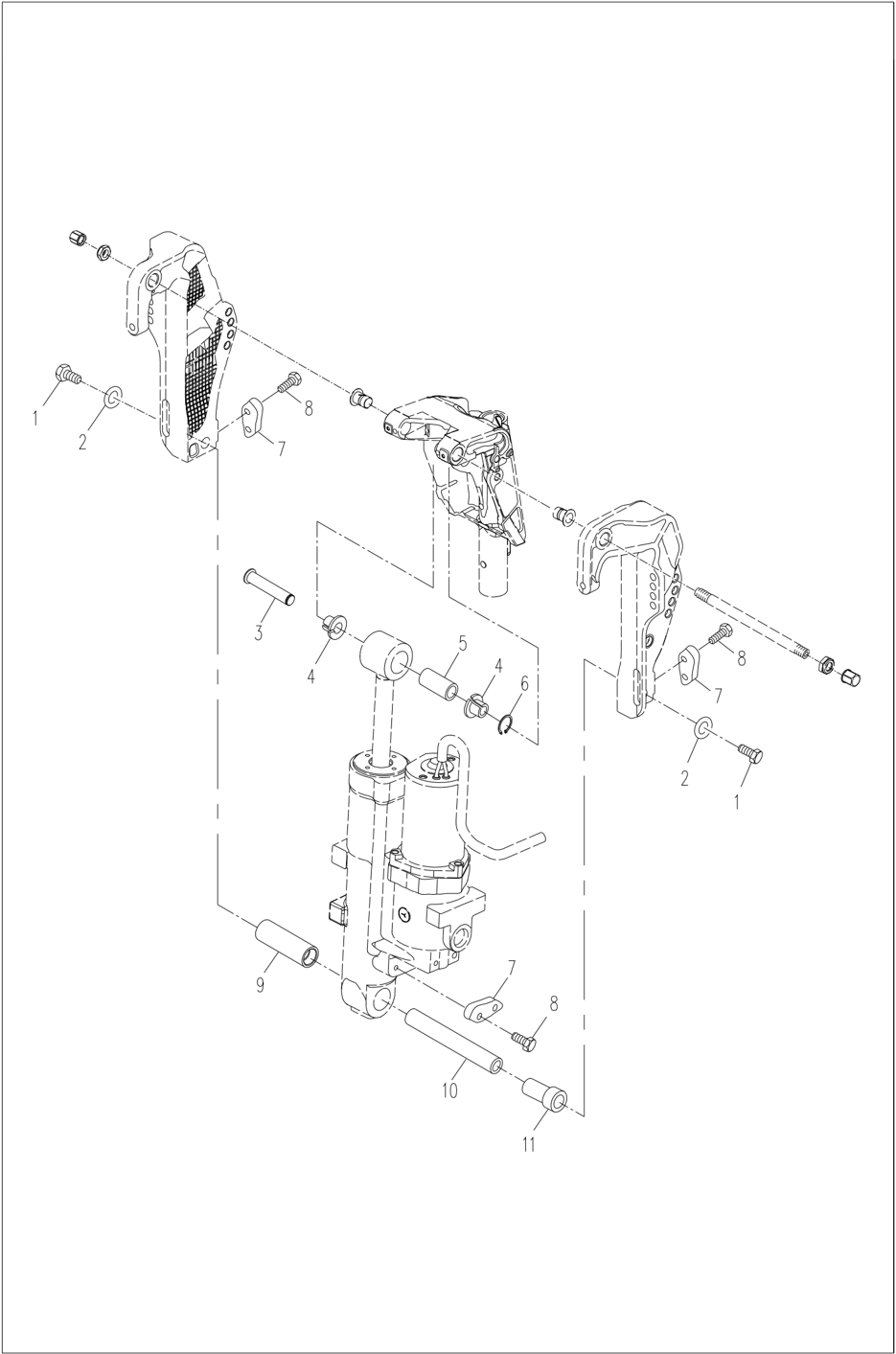
Hüdrauliline kallutusseade
Hüdraulilise kallutusseadme lahtivõtmine
- Kallutage päramootor täielikult üles ja laske tugiraam alla, et päramootorit toetada.
- Eemaldage võlli traadist lukustusrõngas ja kallutustihvti võll.
- Eemaldage polt ja hüdraulilise kallutuse paigaldusvõll.
- Eemaldage hüdraulilise kallutuse koost.
Õlitaseme kontroll
- Asetage ja kinnitage hüdrauliline kallutusseade vertikaalselt.
- Ühendage hüdraulilise kallutusseadme kallutusmootori juhe akuga.
- Pikendage tõukurvarras täielikult, eemaldage õlikruvi ning kontrollige õlitaset.
Märkus:
Vedelikutase peab ulatuma õliava servani,
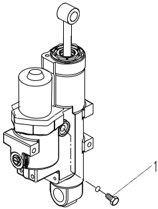
- Õli väljalaskekruvi
- Vajaduse korral lisage õli õliava servani.
- Paigaldage ja pingutage õli tühjenduskruvi.
Ettenähtud pingutusmoment: 6.5 Nm
Hüdraulilise kallutusseadme õliahela õhutamine
Pärast õli lisamist eemaldage õlist liigne õhk.
- . Ühendage hüdraulilise kallutusseadme kallutusmootori juhe akuga.
- Pikendage tõukurvarras täielikult.
- Vahetage positiivse ja negatiivse juhtme ühendused.
- Suruge tõukurvarras täielikult sisse.
- Korrake samme 1 kuni 4, et liigutada tõukurvarrast üles ja alla 4 kuni 5 korda.
- Pikendage tõukurvarras täielikult, eemaldage õlikruvi ning kontrollige õlitaset.
- Vajaduse korral korrake ülaltoodud samme, kuni õlitase on õige.
- Paigaldage ja pingutage õli tühjenduskruvi.
- Ettenähtud pingutusmoment: 6.5 Nm
Kui hüdraulilist tõsteseadet tuleb õhutada päramootorile paigaldatuna, järgige järgmisi samme.
- Pöörake käsijuhtklappi vastupäeva lõpuni.
- Kallutage päramootor täielikult üles ning laske sellel oma raskuse mõjul alla laskuda; korrake 4~5 korda.
- Pöörake käsijuhtklappi päripäeva lõpuni.
- Oodake õli stabiliseerumiseks 5 minutit.
- Hoidke kallutuslülitit all, kuni päramootor on täielikult üles kallutatud.
- Oodake õli stabiliseerumiseks 5 minutit.
- Eemaldage õli väljalaskekruvi ning kontrollige õlitaset.
- Vajaduse korral korrake ülaltoodud samme, kuni õlitase on õige.
- Paigaldage ja pingutage õli tühjenduskruvi.
- Käsijuhtklapp
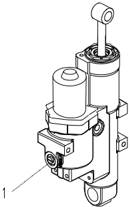
- Ettenähtud pingutusmoment: 6.5 Nm
Alumise korpuse osa
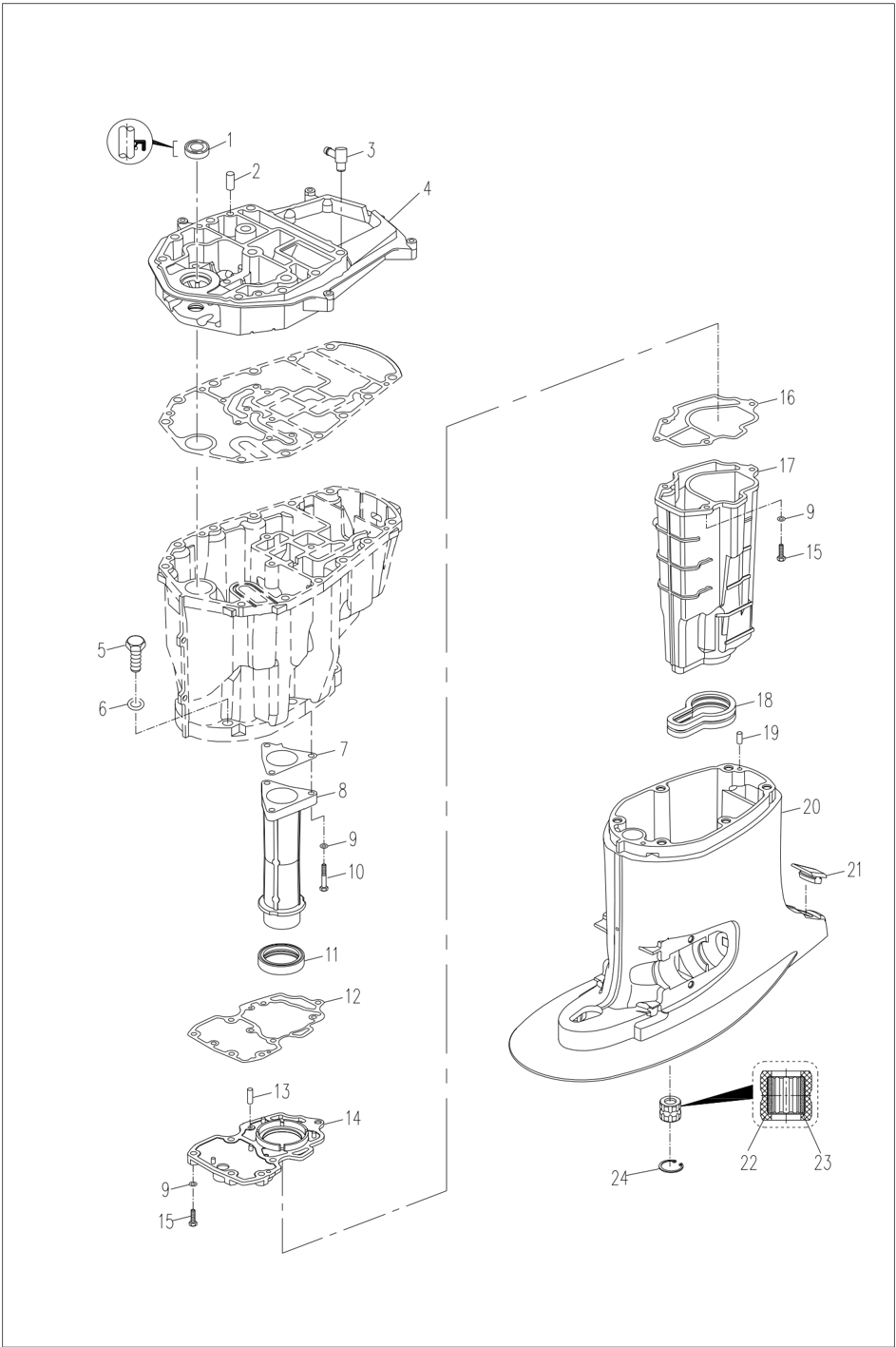
Lahtivõtmise skeem (D/T mudel)
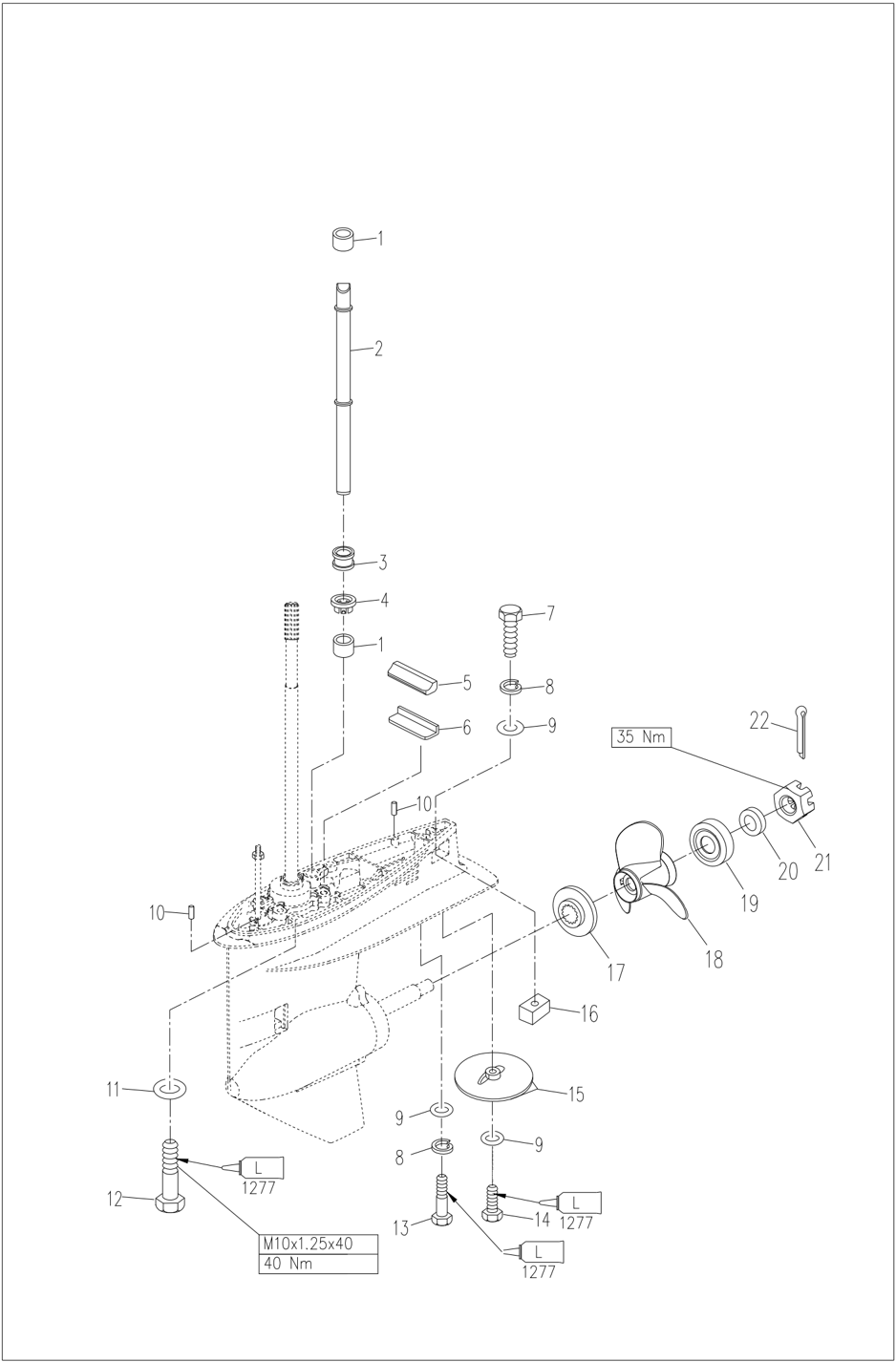
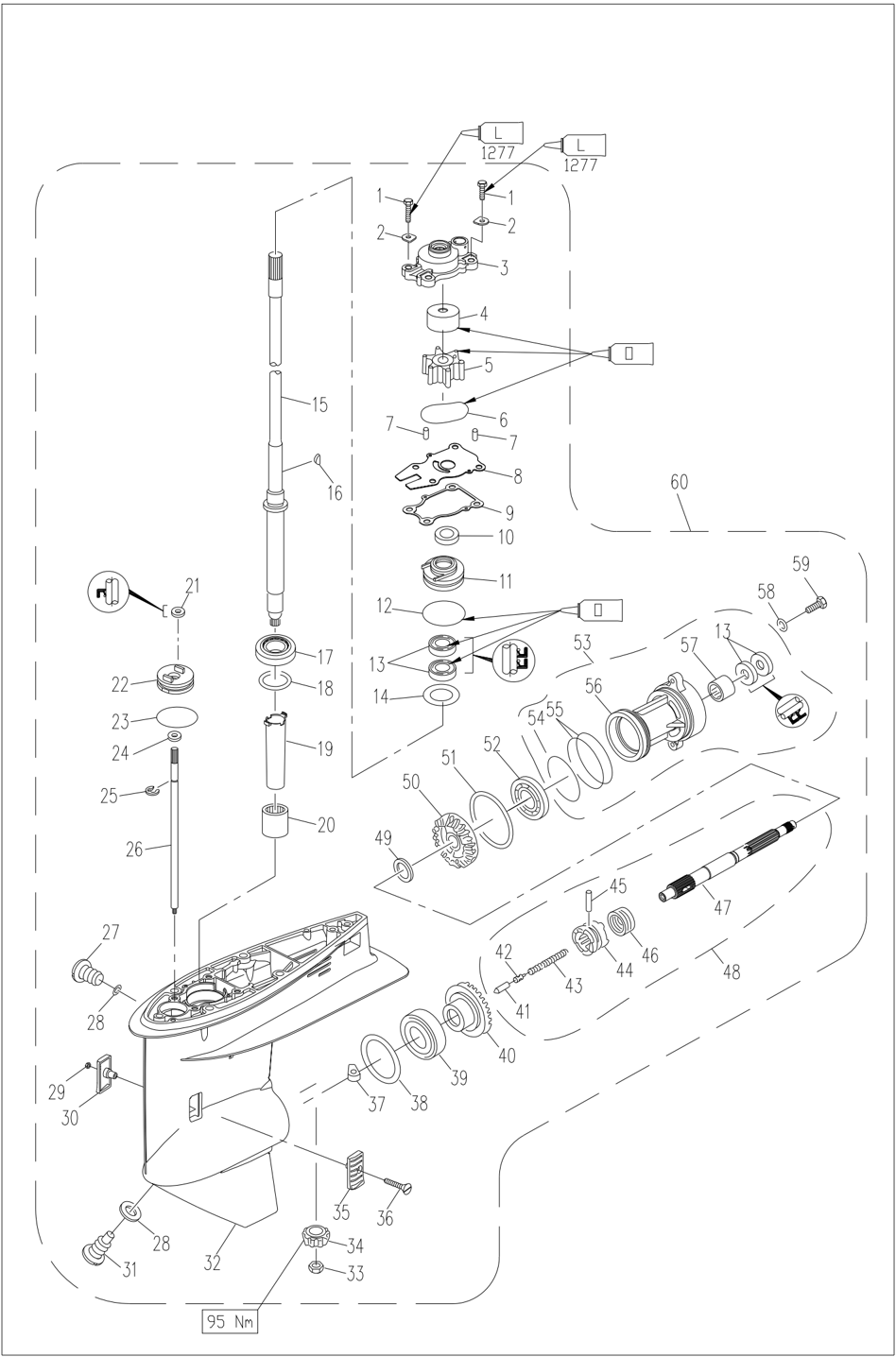
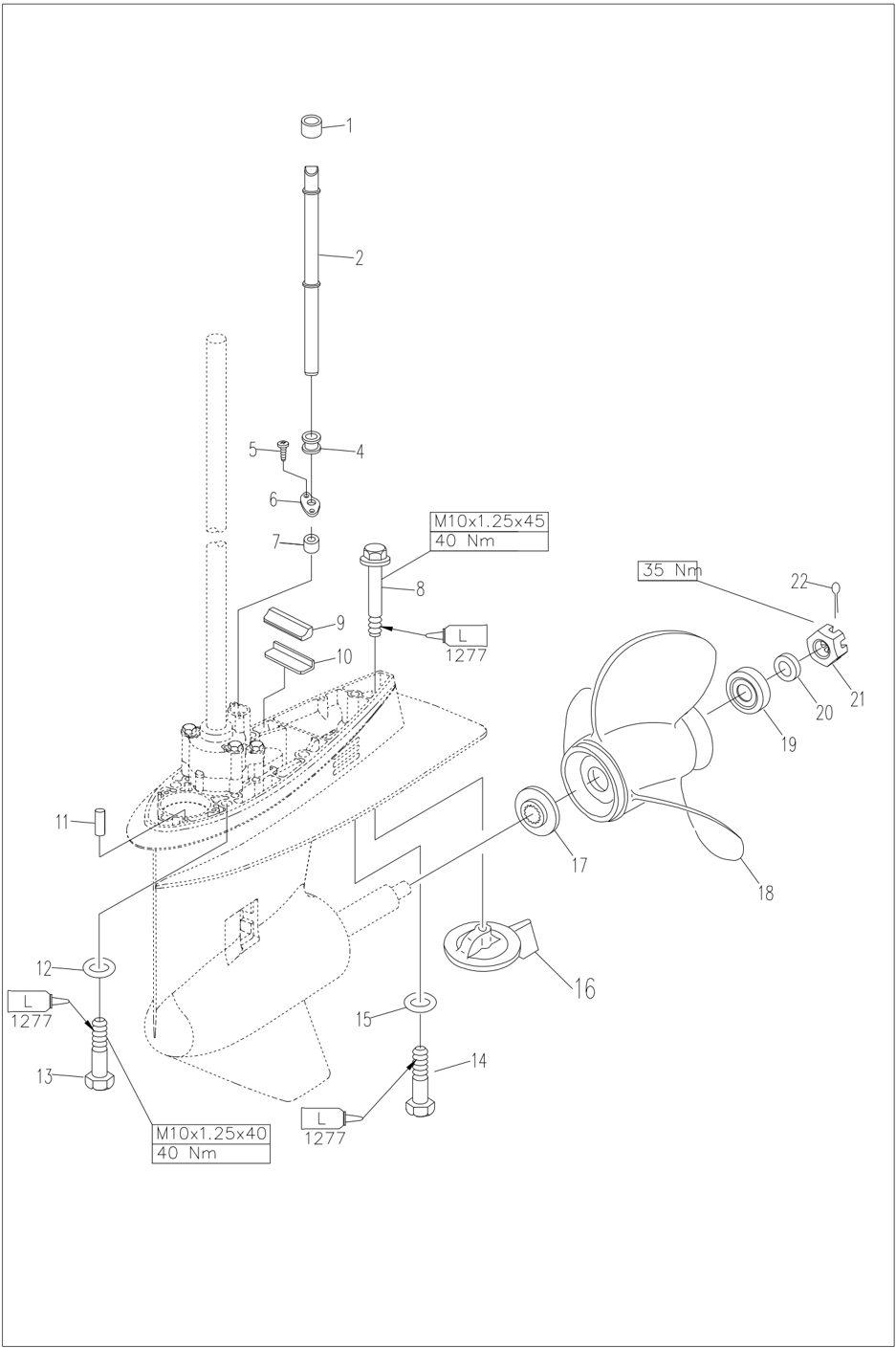
Lahtivõtmise skeem (CD/CT mudel)
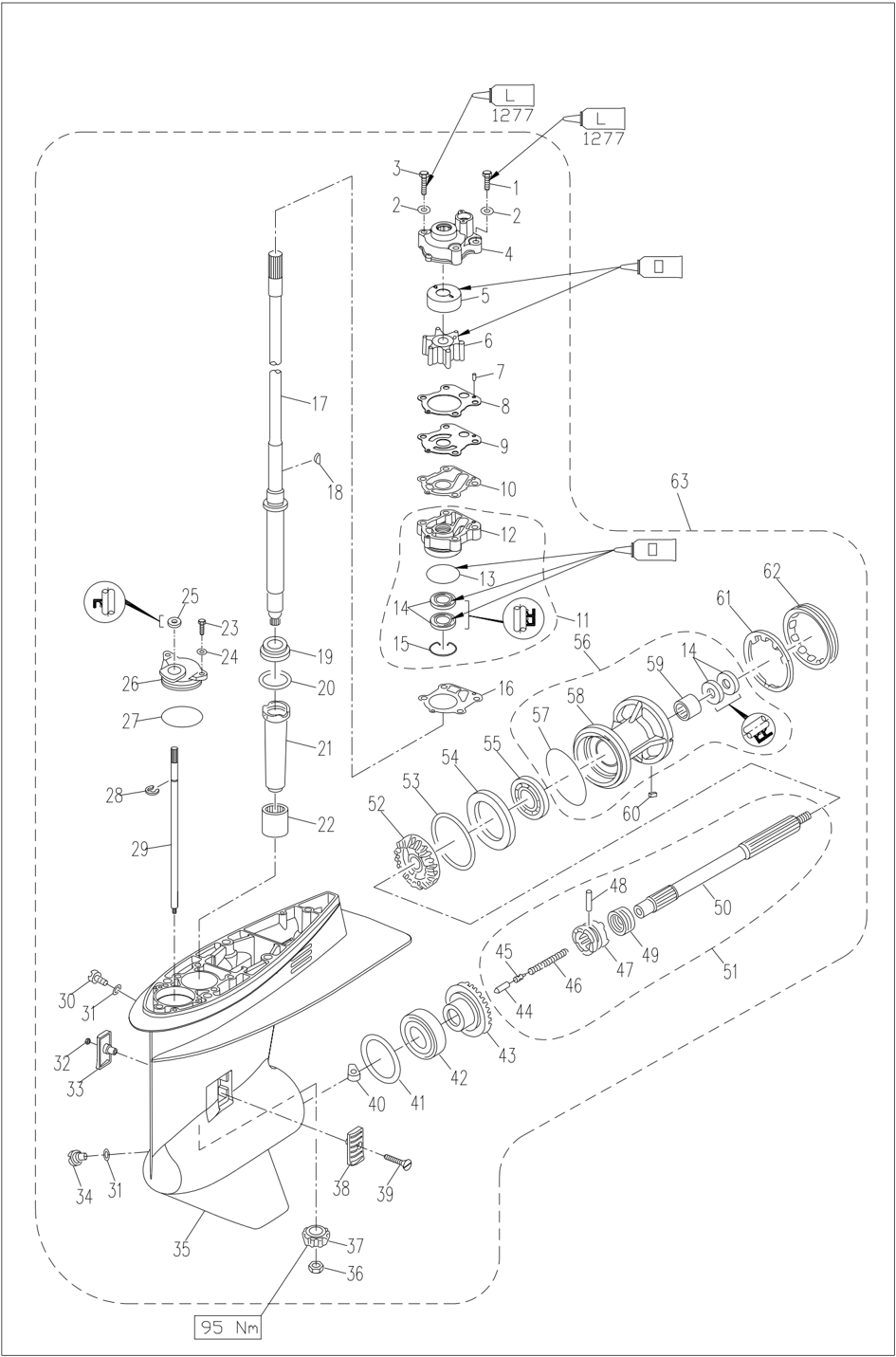
Lahtivõtmine ja kontroll
- Eemaldage veetoru.
- Eemaldage veepumba korpus.
- Eemaldage tiivik ja pumba sisekorpus.
- Eemaldage poolkuukiil ja väline vahesein.
- Kontrollige veepumba korpust ja välist vaheseina pragude, väändumise või kahjustuste suhtes. Vahetage vajaduse korral.
- Kontrollige veepumba sisekorpust ja tiivikut pragude, deformatsiooni, põlemise või kulumise suhtes. Vahetage vajaduse korral.
- Laske käigukastiõli välja.
- Eemaldage splint. Viige käigukang neutraalasendisse. Asetage ventilatsioonivastase plaadi ja sõukruvi vahele puutükk,
et vältida sõukruvi vaba pöörlemist.
- Eemaldage piludega kuuskantmutter, sõukruvi ja vaheplokk.
- Eemaldage anood ja vee sisselase.
- Eemaldage alumise korpuse üksuse kaas. Eemaldage tagasikäigu hammasratas, reguleerseib ja õlitihend.
- Eemaldage sõukruvivõlli koost.
- Eemaldage käiguvahetuse kolb.
- Eemaldage sidurirõngas, siduritihvt ja nukksidur. Eemaldage sidurivedru.
- Eemaldage õlitihendi korpus A. Eemaldage veepumba pesa (CD/CT mudel).
- Eemaldage väikehammasratta mutter sisenuutidega võtmega ja eemaldage veovõll.
- Eemaldage käiguvahetusnukk ja edasikäigu hammasratas. Eemaldage käiguvahetusnuki katteplaat ning käiguvahetusnukk. Eemaldage edasikäigu hammasratas (CD/CT).
- Eemaldage alumise korpuse üksuse nõellaager.
- Eemaldage õlitihendi korpuse A õlitihend ja edasikäigu hammasratta laager. Eemaldage veepumba pesa õlitihend ja edasikäigu
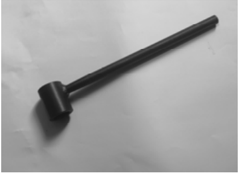
hammasratta laager. (CD/CT)
Sõukruvivõll ja siduriplokk
- Kontrollige nukksidurit; purunemise või kahjustuste korral vahetage see välja.
- Kontrollige sõukruvivõlli. Kulumise või painde korral vahetage.
Nukksiduri paigaldamine
- Paigaldage sidurivedru sõukruvivõlli tagaosas olevasse avasse.
- Paigaldage hammassidur. Suunake "F" või "●" edasikäigu hammasratta poole. Paigaldage siduritihvt.
- Paigaldage sidurirõngas ja käiguvahetusplunžer.

Märkus:
Uue tagasikäigu hammasratta ja laagri paigaldamisel reguleerige seibi vastavalt vajadusele.
Veovõll
Kontrollige veovõlli paindumise või kulumise suhtes. Vajaduse korral vahetage see välja.
Käiguvahetusnukk
Kontrollige käiguvahetusnukki kulumise või deformatsiooni suhtes. Vahetage vajaduse korral.
Hammasratas
Kontrollige edasikäigu hammasratast, tagasikäigu hammasratast ning väikest hammasratast kulumise või kahjustuste suhtes. Vajaduse korral vahetage need välja.
Alumise korpuse üksuse korpuse kaas
- Kontrollige laagrit rooste ja pööramisel tekkiva müra suhtes. Vajaduse korral vahetage.
- Eemaldage laager ja õlitihend laagritõmmitsaga.
Märkus:
Ärge eemaldage laagrit, kui seda ei vahetata.
- Eemaldage nõellaager eritööriistadega.
Märkus:
Õlitihendi ja nõellaagri uuesti paigaldamisel kasutage uusi detaile.
- Puhastage korpuse kaas pehme harja ja lahustiga.
- Kontrollige korpuse kaant. Pragude või kahjustuste korral vahetage.
Korpuse kaane õlitihendi ja laagri paigaldamine
- Paigaldage õlitihend.
- Paigaldage tagasikäigu hammasrattale uus laager.
Märkus:
Paigaldage õlitihend ja laager eritööriistadega. Pöörake tähelepanu paigaldussuunale ja -sügavusele. Veenduge, et laagri tootja märgis oleks tagasikäigu hammasratta poole. Paigaldussügavus:
| Nõellaager | Nõellaager | 31.0~31.5mm |
|---|---|---|
| Õlitihend | Sügavus 1 | 13.0~13.5mm |
| Õlitihend | Sügavus 2 | 6.0~6.5mm |
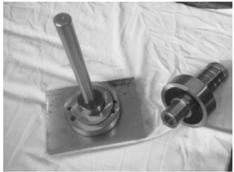
Laagri paigaldustööriist, õlitihendi paigaldustööriist, nõellaagri paigaldustööriist
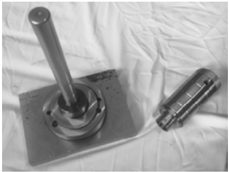
- Paigaldage tagasikäigu hammasratas ja reguleerseib.
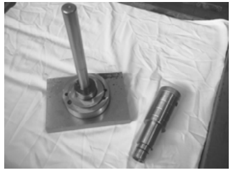
Edasikäigu hammasratta laager
Kontrollige laagrit rooste ja pööramisel tekkiva müra suhtes. Vahetage vajaduse korral.
Märkus:
Ärge eemaldage laagrit, kui seda ei vahetata.
Uue laagri paigaldamisel reguleerige seibi vastavalt vajadusele.
Alumise korpuse üksuse korpuse kontroll
Kontrollige alumise üksuse korpust pragude või kahjustuste suhtes ning jahutusvee sisselaset ummistuse suhtes. Vahetage vajaduse korral.
Veetoru kontroll
Kontrollige veetoru pragude, kahjustuste või ummistuse suhtes. Vahetage vajaduse korral.
Alumise üksuse korpuse kokkupanek
- Paigaldage nõellaager eritööriistadega.
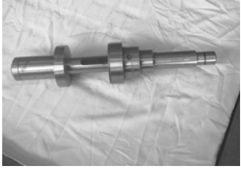
Nõellaagri paigaldustööriistade komplekt
- Paigaldage uus edasikäigu hammasratta laager. (Kui vahetate laagrit.)
Edasikäigu hammasratta laagrikorpuse paigalduskomplekt
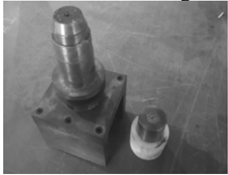
- Paigaldage veovõlli pesa õlitihend.
- Paigaldage käiguvahetusnukk, tihend ja õlipumba korpus A ning edasikäigu hammasratas, veovõll, reguleerseib ja väikehammasratas.
Veovõlli pesa õlitihendi paigaldustööriistade komplekt
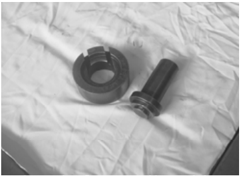
Paigaldage käiguvahetusnukk, tihend ja veepumba pesa ning edasikäigu hammasratas, veovõll, reguleerseib ja väikehammasratas.
Tähelepanu:
Uue veovõlli paigaldamisel reguleerige seibi vastavalt vajadusele.
- Pingutage väikese hammasratta mutter.
- Paigaldage sõukruvivõlli koost.
Ettenähtud pingutusmoment: 95 Nm
Märkus:
Kui mutri soon pole sõukruvivõlli splindiavaga kohakuti, pingutage mutrit edasi, kuni need on kohakuti.
Alumise korpuse üksuse paigaldamine
- Paigaldage asenditihvt.
- Viige käiguvahetusnukk edasikäigu asendisse. Paigaldage alumise korpuse üksus selle korpusesse ja pingutage poldid ettenähtud väärtuseni. Ettenähtud moment: 37 Nm
- Tehke käiguvahetus ja kontrollige, kas see töötab õigesti.
- Sisestage käigukastiõli tühjenduskruvi avasse survega täitmise seadmega.
- Paigaldage alumise korpuse üksuse korpuse kaas.
Alumise korpuse üksuse kaanekoostu paigaldustööriist
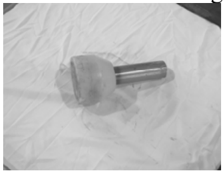
- Kontrollige käiguvahetuse hammasratta tööd.
- Paigaldage veepumba koost.
- Paigaldage anood ja vee sissevooluava.
- Paigaldage sõukruvi ja piludega kuuskantmutter ning asetage ventilatsioonivastase plaadi ja sõukruvi vahele puutükk, et vältida sõukruvi vaba pöörlemist. Pingutage mutter ettenähtud momendiga, sisestage splint ja painutage splindi otsad. Ettenähtud moment: 35 Nm
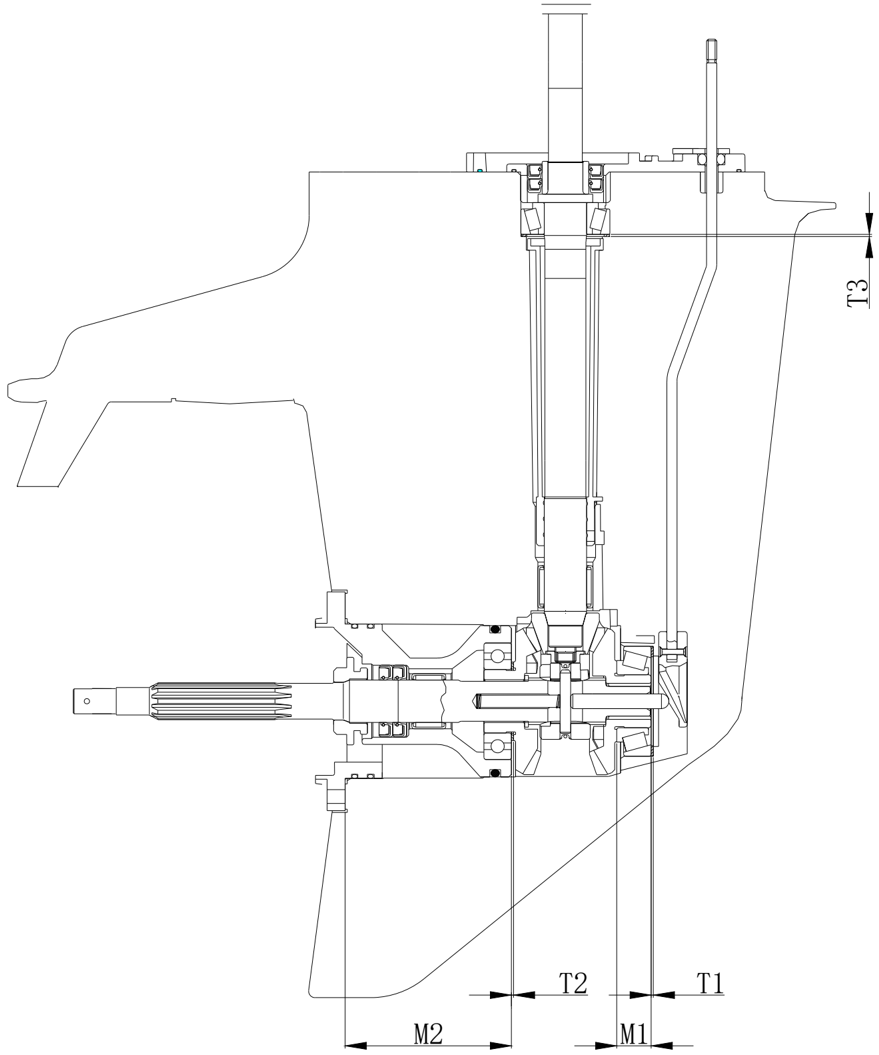
Reguleerseibide valik
Alumise korpuse üksuse sisemiste detailide vahetamisel või uue üksuse kokkupanekul reguleerige seibe vastavalt vajadusele.
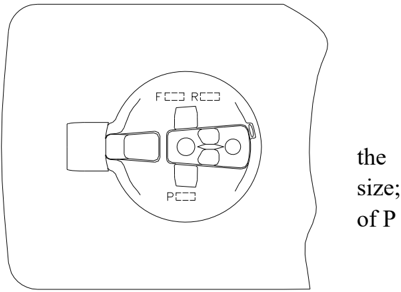
Hälbeväärtuse tähis
Alumise korpuse üksuse anoodi/suunareguleerimisdetaili paigalduspinnale on graveeritud kõrvalekaldemärgised F, R ja P. Need tähistavad üksuse korpuse tegeliku ja teoreetilise mõõtme erinevust.
Näiteks märgisele P järgnev +3 tähistab tegelikku mõõtmet, mis on teoreetilisest 0.03 mm suurem. Kui kõrvalekaldemärgisele numbrit ei järgne, loetakse väärtuseks 0.
Märkus:
Seibi paksus võib olla T2-st 0 ~ 0.05 võrra väiksem ja valitakse lähim mõõt. CD/CT korral võib seibi paksus olla T2-st 0 ~ 0.05 võrra suurem ja valitakse lähim mõõt.
Väikese hammasratta reguleerimisseib
- Kontrollige alumise korpuse üksusele graveeritud P väärtust.
- Kinnitage veovõll eritööriistale. Paigaldage väikehammasratas ja pingutage selle mutter ettenähtud momendiga.
Ettenähtud pingutusmoment: 95 Nm
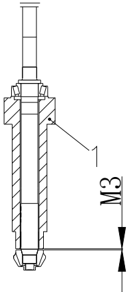
- Mõõtke eritööriista ja väikehammasratta vahelist lõtku kaliibriga,
Valem: T3=M3 - (P/100)
Valem CD/CT jaoks: T3=M3
Arvutage paksus T3 valemi järgi.
- (P/100)+0.1
- Valitavad reguleerimisseibid.
Märkus:
Seibi paksus võib olla T3-st 0 ~ 0.05 võrra suurem ja valitakse lähim mõõt.
Edasikäigu hammasratta reguleerseibid
- Kontrollige alumise korpuse üksusele graveeritud F väärtust.
- Pöörake edasikäigu hammasratta laagri välisrõngast nii, et rullik langeks täielikult laagrikorpusesse.
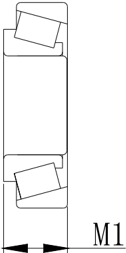
- Mõõtke laagri kõrgus ja arvutage paksus T1 valemi järgi.
Valem: T1=26.70 + (F/100) - M1
Valem CD/CT jaoks: T1=24.2 + -
(F/100) M1
Märkus:
Mõõtke paksust 3 punktis ja arvutage tulemuste keskmine.
- Valitavad reguleerimisseibid. 0.10, 0.12, 0.15, 0.18, 0.3, 0.4, 0.5 mm
Märkus:
Seibi paksus võib olla T1-st 0 ~ 0.05 võrra väiksem ja valitakse lähim mõõt.
Tagasikäigu hammasratta reguleerseibid
- Kontrollige alumise korpuse üksusele graveeritud R väärtust.
- Valem: T2=0.5 + (R/100) Valem CD/CT jaoks: T2=0.5 - (R/100)
- Valitavad reguleerimisseibid. 0.10, 0.12, 0.15, 0.18, 0.3, 0.4, 0.5 mm
Levinud rikked ja lahendused
| Põhjus | Lahendus |
|---|---|
| Kütusepaagis pole kütust | Täitke paak puhta värske kütusega |
| Kütus on saastunud või vana | Täitke paak puhta värske kütusega |
| Kütusefilter on ummistunud | Vahetage kütusefilter |
| Kütusepumba rike | Remontige või vahetage kütusepump |
| Kütusepaagi korgi õhutuskruvi pole lahti keeratud | Keerake õhutusventiili kruvi lahti |
| Süüteküünal on määrdunud või vale tüüpi | Kontrollige süüteküünalt. Puhastage küünal või asendage õiget tüüpi küünlaga |
| Süüteküünla piip on valesti paigaldatud | Kontrollige ja paigaldage süüteküünla piip uuesti |
| Süütejuhtme rike | Kontrollige juhtmestikku. Kinnitage lahtine juhe ja vahetage vananenud või katkine juhe. |
| Süütedetailide rike | Asendage |
| Mootori seiskamise turvanöör pole hädaseiskamislüliti koostuga ühendatud. | Ühendage nöör lülitiga |
| Mootori sisemiste detailide rike | Remontige |
| Süüteküünal on määrdunud või vale tüüpi | Puhastage süüteküünal või asendage õiget tüüpi küünlaga |
| Kütusesüsteem on ummistunud | Kontrollige kütusetoru kokkusurumise, keerdumise või ummistuse suhtes |
| Kütus on saastunud või vana | Täitke paak puhta värske kütusega |
| Kütusefilter on ummistunud | Vahetage kütusefilter |
| Vale süüteküünla elektroodivahe | Reguleerige vahe ettenähtud väärtuseni |
| Süütejuhtme rike | Kontrollige juhtmestikku. Kinnitage lahtine juhe ja vahetage vananenud või katkine juhe. |
| Vale õliklass | Vahetage ettenähtud klassi õli vastu |
| Termostaadi rike | Asendage |
| Kütusepumba rike | Asendage |
| Kütusepaagi korgi õhutuskruvi pole lahti keeratud | Keerake õhutusventiili kruvi lahti |
| Kütuseliitmik pole õigesti ühendatud | Ühendage õigesti |
| Õhuklapi käepide on välja tõmmatud | Viige algasendisse tagasi |
| Päramootori nurk on liiga suur | Viige normaalsesse tööasendisse tagasi |
| Sõukruvi on katki | Remontige või vahetage sõukruvi |
| Trimminurk on vale | Reguleerige trimminurk sobivaks |
| Päramootori paigalduskõrgus on vale | Reguleerige õigele kõrgusele |
| Paadi põhjal on veeorganismide kasv. | Puhastage paadi põhi |
| Käigukasti ümber on mähkunud veetaimed või võõrkehad | Eemaldage võõrkehad ja puhastage |
| Mootori jõuetus | Süüteküünal on määrdunud või vale tüüpi |
| Mootori jõuetus | Kütusesüsteem on ummistunud |
| Mootori jõuetus | Kütusefilter on ummistunud |
| Mootori jõuetus | Kütus on saastunud või vana |
| Mootori jõuetus | Vale süüteküünla elektroodivahe |
| Mootori jõuetus | Süütejuhtme rike |
| Mootori jõuetus | Süütedetailide rike |
| Mootori jõuetus | Mootoriõli klass on vale või õli on liiga palju lisatud. |
| Mootori jõuetus | Termostaadi rike |
| Mootori jõuetus | Kütusepumba rike |
| Mootori jõuetus | Kütuseliitmik pole õigesti ühendatud |
| Mootori jõuetus | Süüteküünla tüüp on vale |
| Päramootori liigne vibratsioon | Sõukruvi on katki |
| Päramootori liigne vibratsioon | Sõukruvivõll on katki |
| Päramootori liigne vibratsioon | Sõukruvi ümber on mähkunud veetaimed või võõrkehad |
| Päramootori liigne vibratsioon | Päramootori kinnituspolt on lahti |
| Päramootori liigne vibratsioon | Roolivõll on lahti |
| Päramootori liigne vibratsioon | Roolivõll on katki |